
The Sealer Does the Work
A resurfaced counter is a decorative finish with a sealer over it. That sealer is the only thing standing between the finish underneath and acid, heat, and oil.
That’s why the care advice depends on the exact sealer on your counter. Your written countertop resurfacing proposal typically names the sealer. When the job is done, we walk you through care, cure times, and upkeep for that product. How the counter holds up depends on following those steps. If a question comes up after the job, get in touch and we'll talk it through.
What to Do Every Day
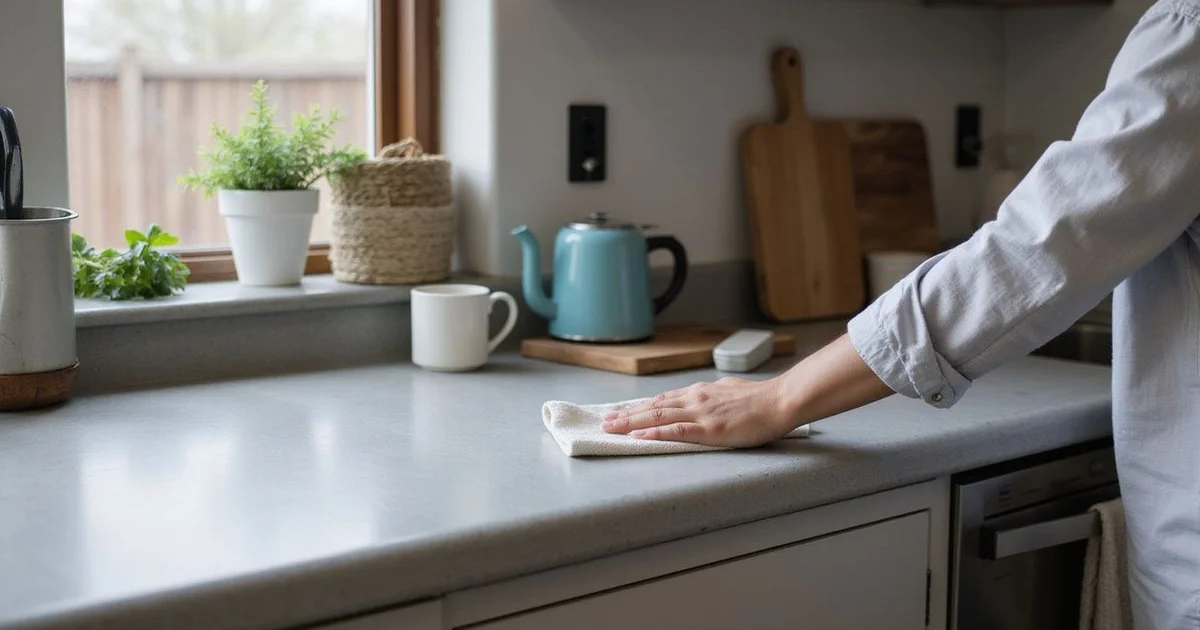
Wipe the counter down with a soft cloth and a mild, pH neutral cleaner made for sealed surfaces. That’s the whole routine.
Wipe up spills right away, especially anything acidic: citrus, vinegar, wine, tomato, and cola. Acid eats at concrete and at a lot of sealers. A citrus spill left overnight can leave a dull etch mark that cleaning won’t take out. Oil and grease need the same quick wipe, since they can darken the surface if they sit for long.
What to Keep Away From It
Anything scratchy. Scouring pads, powders, and magic eraser sponges all scratch the sealer. Once the shine is scratched, the only fix is refinishing.
Acidic cleaners. People often recommend vinegar and citrus cleaners as natural options, but they’re some of the worst things you can use here.
Bleach cleaners and other strong alkaline cleaners, like oven cleaner. These can dull or discolor a sealer over time.
Anything labeled a stripper or a heavy duty degreaser. They’re made to take coatings off.
Three habits that head off most damage
Trivets under anything hot. Boards under anything you cut. Wipe spills before they sit.
Hot Pans and Knives
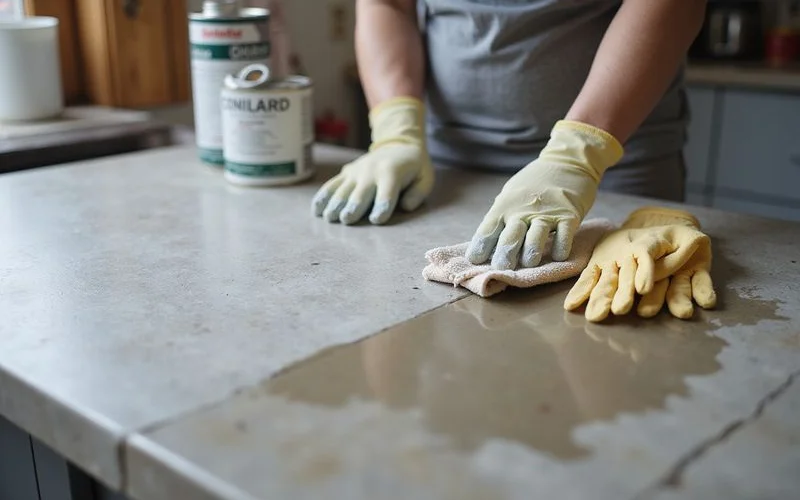
Heat does more damage to sealed counters than almost anything else. A pan straight from the burner or the oven can soften, discolor, or permanently mark a sealer. Slow cookers, kettles, and anything else that runs hot for a long time should sit on a mat too. Steady, moderate heat does its own quiet damage.
Cutting directly on the surface scratches the sealer and blunts your knives. Use a board.
How to Tell It’s Time to Reseal
The signs match what you’d see on a floor, on a smaller scale.
Water stops beading up and darkens the surface for a bit where it sits. Spills take more work to clean up than they used to. The area around the sink and where you do most of your prep has lost its shine compared with the quieter end of the counter. Or the surface looks tired even right after cleaning.
Any of those means the sealer is wearing thin where you use the counter most. Caught then, it’s usually an easy fix, so reseal at the first sign. If you wait until liquid is getting through to the finish, upkeep turns into a repair.
What Resealing Takes
It usually means a deep clean and degrease, a light scuff so the new sealer sticks, then fresh sealer left to cure. Before you use the counter again, follow the cure times we go over with you. That wait is usually shorter than the original install, but it isn’t zero. The new sealer has to work with what’s already on the counter, so if someone else did the original work, we’ll check it before adding anything.
What to Do About Marks You Already Have
Most counters pick up a mark or two in the first year, and what you do next matters more than the mark.
A dull ring from a hot pan is heat damage to the sealer. Cleaning won’t lift it, and scrubbing dulls the area around it so the ring stands out more. Leave it and ask us. We can often repair that one spot of sealer.
An etch mark from citrus or vinegar is the acid changing the surface itself, not something sitting on top. Same rule: stop, and don’t reach for something stronger.
A dark patch from oil may come out with a poultice, a gentle paste that draws the oil back out. It may not, depending on how far the oil spread and how long it sat.
Fine scratches in a satin or matte sealer often fade from view once the counter around them has aged a little. But in a gloss finish they stay obvious.
Every time, the urge is to try something stronger. Don’t. Small, fixable marks most often turn expensive after a hard scrub with a scratchy pad and a heavy duty cleaner. Send a photo and ask first. Sometimes the answer is “leave that alone.”
What to Expect
Is a resurfaced counter hard to live with? Not if it’s looked after. It’s a sealed decorative surface, so treat it the way you’d treat a natural stone counter, and it typically handles daily kitchen life fine. A little attention helps keep it looking good for years. This is general information. Follow the product maker's instructions, and bring any questions to a consultation with us.
If you want a counter you can ignore, decorative concrete isn’t it. We’d rather tell you now than have that talk later. For everything resurfacing does and doesn’t cover, read what countertop resurfacing covers.