How We Polish Concrete
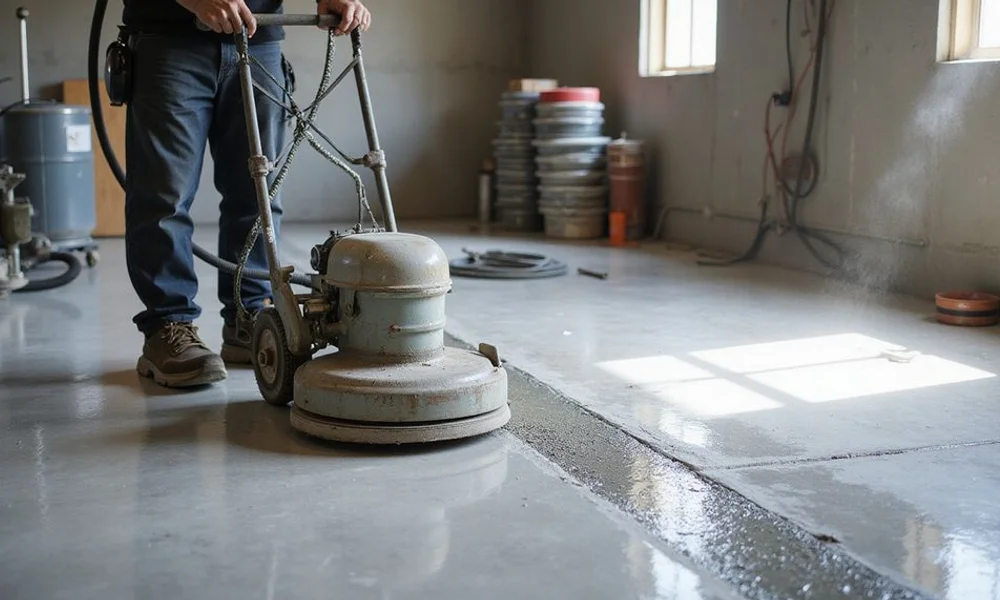
Polished concrete is made, not applied. We grind the slab with finer and finer diamond tools. Depending on the job, polishing can include a lithium silicate densifier that soaks in and hardens it. We keep refining until the concrete itself has the shine. Nothing sits on the surface, which is why a polished floor has no film to peel, blister, or wear through in a doorway. We've been serving Austin homes and businesses since 2001.
The difference matters for your wallet. The word “polished” sometimes gets used for floors that are only ground and sealed. Grind and seal is a perfectly fine finish. It's often cheaper up front, and sometimes it's the right call for a slab that won't take a real polish.
But it acts like a coating. That's what it is. So how do you tell them apart on paper? Ask which one you're being quoted, and ask how it'll look in five years.
Two Choices Decide How Your Floor Looks
Every polished floor comes down to two choices, and making them early keeps the quote honest.
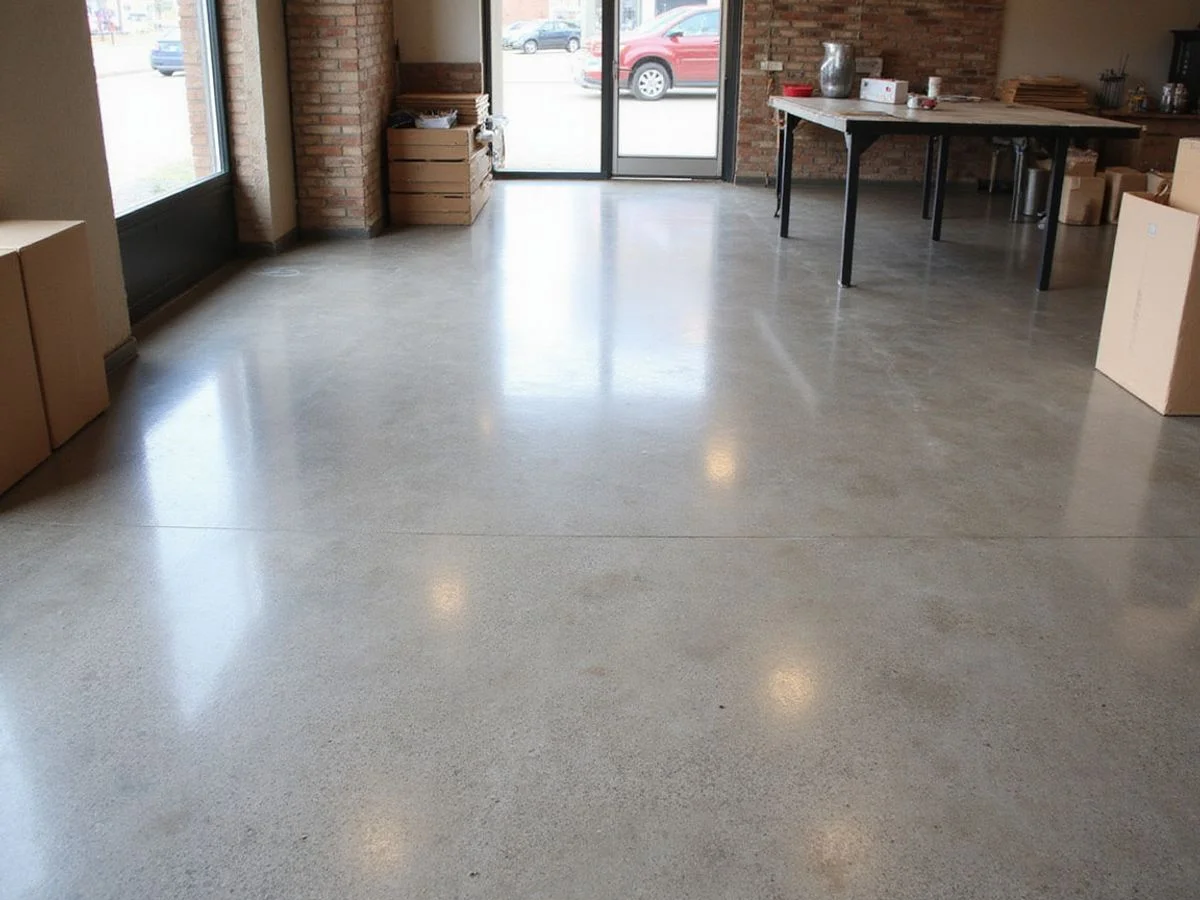
Aggregate exposure is how deep the first cut goes. A cream finish leaves the top layer of cement mostly alone, so you get a soft, even look. Salt and pepper cuts a bit deeper and shows fine sand and small stone. Full exposure brings up the bigger stones for something close to terrazzo. Your slab sets the limit here. How it was poured and finished decides how far we can go.
Gloss level is how far we take the grinding, from matte up to high gloss. More rounds of grinding mean more labor, so the shine you pick moves the price. It matters day to day too. The shinier the floor, the more dirt and wear it shows.
Where Polished Concrete Works and Where It Doesn't
Shops, cafes, offices, showrooms, warehouses, industrial buildings, garage slabs, and open plan homes all take polished concrete well. With proper care, it typically stands up to foot traffic with no coating to keep up. It bounces light around rooms without many windows, and cleans up with water and a neutral cleaner.
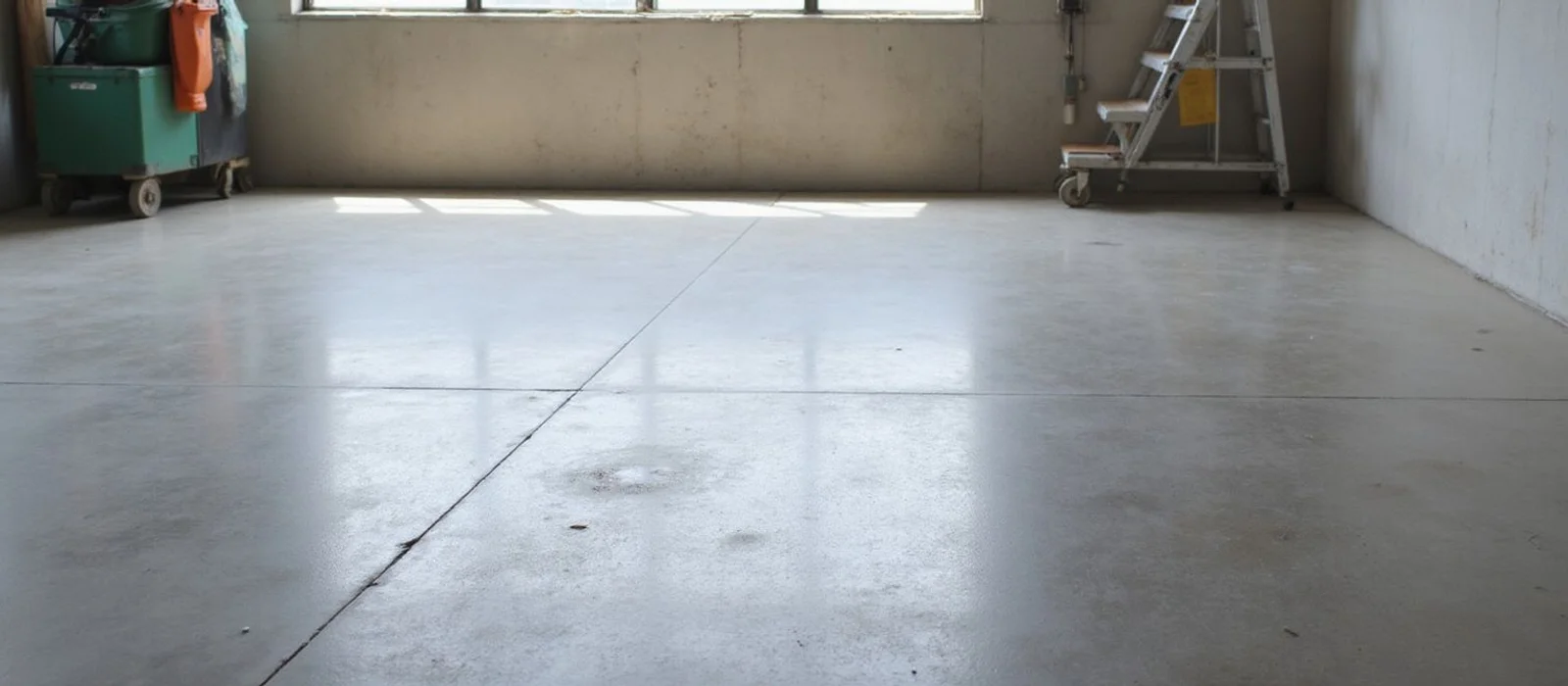
It's a harder sell in small rooms with lots of corners, where edge work eats up most of the cost and the big machine hardly gets to run. It's a poor fit on slabs that are soft, badly patched, cut up by trenches, or too uneven to grind evenly. Polishing shows every one of those problems instead of hiding them.
In those cases, a concrete overlay (a thin new layer over the old slab) gives you a fresh surface we can polish or finish another way. Wet areas are their own call. There, grip counts for more than shine or the photo you liked.
What Makes Concrete Polishing Cost More or Less in Austin
Polishing is priced on labor and supplies, and both go up with every pass the floor needs. Every gloss level adds grinding passes, so a higher gloss costs more than a lower one. Showing more stone costs more than a cream finish for the same reason. If the slab needs patching, joint filling, or an old coating taken off, that's extra prep time before we even start polishing.
Area works in your favor. A large open floor costs less per square foot than a small one, since the grinder spends its time cutting instead of turning. Small rooms can come with a minimum charge, and your quote lists it up front.
How to Take Care of a Polished Concrete Floor
Care is simple, and that's most of the appeal. Keep sand and grit off it. The grit that rides in on shoes from the back door is what dulls any floor. Dust mop or vacuum often, and damp mop with a pH neutral cleaner. Stay away from acidic cleaners, harsh alkaline cleaners, and coating strippers. There's no coating to strip, so those products eat into the hardened concrete instead.
Over the years, the paths people walk most will lose some shine. The fix is burnishing (a fast buffing pass) or a light repolish, sometimes called micro polishing. You typically don't recoat it, and that's the real upside over a floor with a coating on top. When the job is done, we walk you through care, cure times, and upkeep, including which cleaners to use and which products to keep away. How the floor holds up depends on following that guidance. If questions or concerns come up after the job, reach out and we'll talk it through.
We work for homeowners and commercial property managers in Austin and get requests from nearby towns like Round Rock, Cedar Park, Georgetown, and Pflugerville. We confirm coverage before we book. If you're comparing quotes, our guide on what polished concrete floors cost in Austin explains why two prices for the “same” floor can be so far apart. Our guide on polished concrete versus grind and seal covers how to tell the two apart. Our Austin decorative concrete crew offers seven finishes, and polishing is one of them. If your slab suits a different one, we'll tell you.