
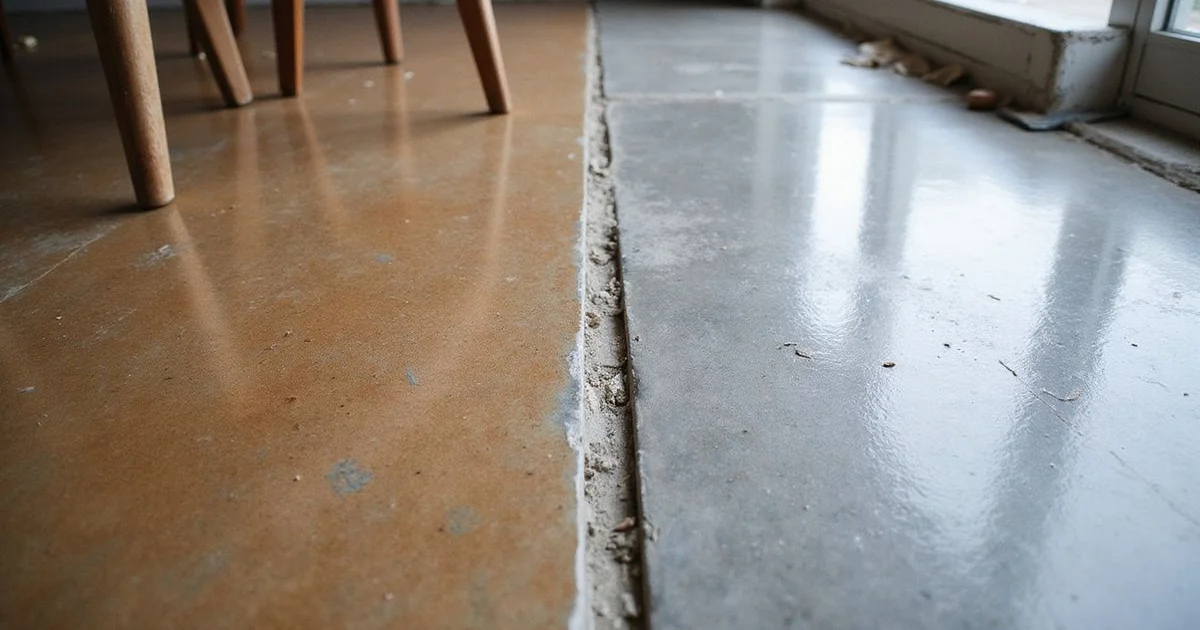
Color and Surface Are Two Separate Decisions
It's easy to mix these up. Both end with a concrete floor that looks finished on purpose, and neither one means laying anything down on top. But they do different things.
Staining is about color. It puts color into the surface of the slab and then protects it with a sealer. It doesn't change how flat, smooth, or shiny the concrete is, other than what the sealer adds.
Polishing is about the surface. It grinds the concrete smoother and smoother with diamond tools and hardens it with a densifier, a liquid that soaks in. The shine comes out of the concrete itself. It doesn't add color.
Since they change different things, you can have both. A stained and polished floor is a real, common option, and it's often the answer when someone can't pick between the two.
How They Stack Up
| Topic | Stained concrete | Polished concrete |
|---|---|---|
| What changes | Color of the surface | Texture, flatness, and shine |
| Where the shine comes from | The sealer | The concrete itself |
| How it looks | See through, mottled, all about color | Gray, up to visible stone, all about shine |
| What you maintain | The sealer | No coating. You buff it to bring back the shine |
| Stone in the mix (aggregate) | Stays hidden | Shows more or less, based on how deep we grind and your slab |
| Where it usually goes | Homes, restaurants, shops | Shops, commercial spaces, open plan homes |
What Polishing Gives You That Staining Doesn't
Polishing shows off what the slab is made of. How deep the first cut goes sets the look.
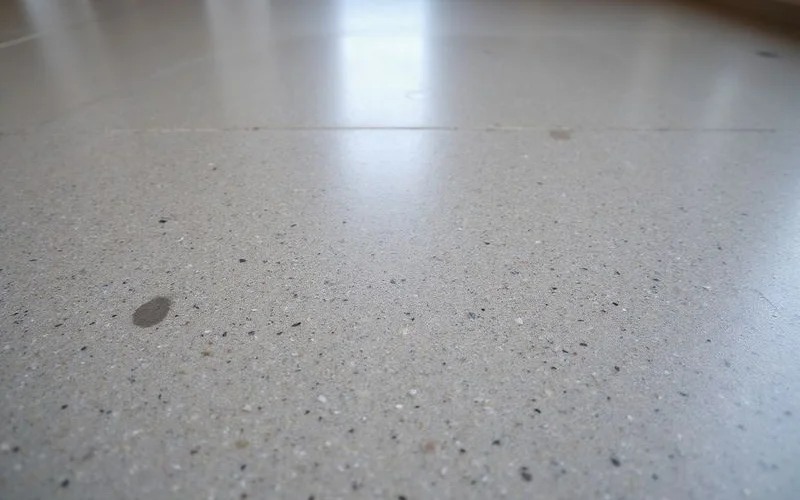
A light cut gives a cream finish with almost no stone showing. A bit deeper gives a salt and pepper look with fine stone (like the close up above). Go deeper still and you get full stone exposure that looks close to terrazzo. You don't get that choice with a stained floor, since the surface stays as it was.
With polishing, there's no film coating to keep up. Many polished floors do get a thin stain guard, which mostly soaks in. So there's little to peel, blister, or wear through in a doorway. When a busy path goes dull, you buff it instead of recoating it. We go into more detail in what polished concrete is.
Polishing can't give you warm, see through, varied color. Dye adds color, but it looks different from acid stain. The surface under it has been ground smooth instead of left the way it was poured.
What Staining Gives You That Polishing Doesn't
Character, mostly. An acid stained floor has movement and depth that a gray polished floor doesn't. It can feel warm in a way polished concrete rarely does. It's usually the less disruptive job too, with fewer passes across the floor and less equipment.
Staining is more forgiving of slabs that wouldn't polish well. That means soft concrete, uneven surfaces, floors with lots of patches, and slabs where the stone sits too deep to bring up. Our guide on whether you can stain existing concrete helps you check if your floor is a good fit.
How to tell what you're being quoted
Ask whether the gloss comes from grinding or from a coating. If the answer mentions a sealer, you're being quoted a sealed floor. That could be a stained and sealed floor or a grind and seal. Both are fine options. But neither one is true polished concrete, and neither should be priced like it.
Doing Both
For a stained and polished floor, the dye goes in partway through polishing, usually around the 200 or 400 grit step, and then we finish the polish. You end up with color and no coating on top. That's about as low maintenance as a decorative concrete floor gets.
It costs more than either one alone, since polishing already runs higher than staining, and it has to be planned from the start. Adding color to a polished floor after it's finished isn't simple.
How to Choose
So which one fits your floor? Go with staining if color and warmth matter most, or if your slab isn't a good fit for polishing. It's the right call, too, when you want the finish that looks least brand new.
Go with polishing if you want a smooth, shiny, low maintenance surface and the slab is solid and flat enough to take it. Gray with visible stone should be a look you want, not one you're settling for.
Doing both makes sense when you want color with no coating to maintain and your budget has room for a longer job.