
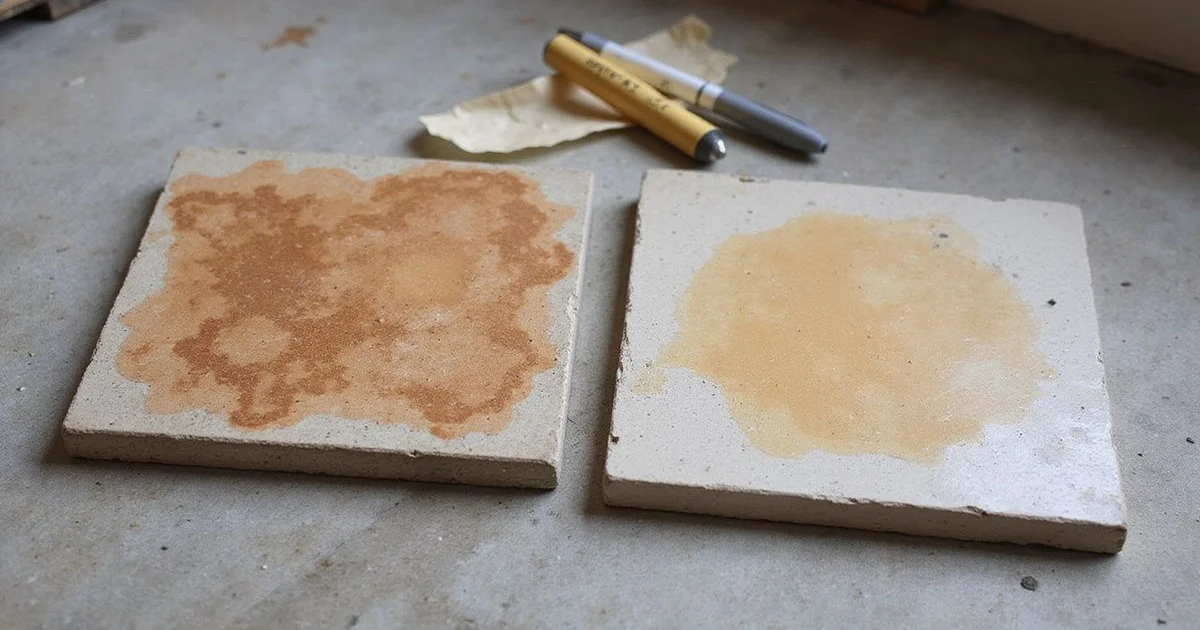
How Each Stain Colors Concrete
These two products color concrete in different ways, and knowing how each one works makes picking a color for your stained concrete floor a lot easier.
Reactive acid stain is metal salts mixed into a mild hydrochloric acid. On concrete, the acid opens up the surface and the salts react with the lime in the cement. What's left is color that becomes part of the concrete. It isn’t sitting on top like a coating, so with the sealer kept up, it typically doesn’t wear off the way a coating can. What you give up is predictability, since the reaction depends on what’s in your slab.
Water based stains are fine pigment in water, with an acrylic binder that holds it in place. There’s no chemical reaction. The pigment soaks into tiny pores in the surface and stays there under the sealer. You get far more colors to choose from and a more even result. But how the installer puts it down matters more.
Dyes go even further in that direction. They’re dissolved color, not ground pigment, so they soak in deep and even. Sunlight fades most dyes, so they belong indoors or over an acid stain base.
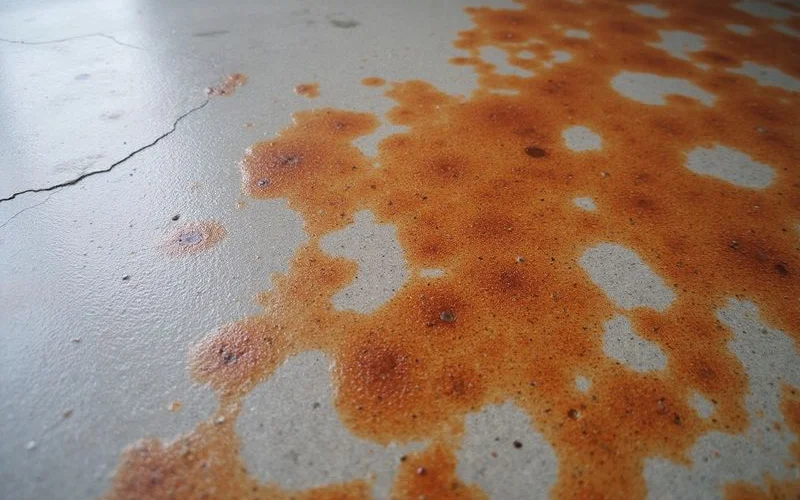
Side by Side
| Topic | Reactive acid stain | Water based stain |
|---|---|---|
| How it adds color | Reacts with the lime in the concrete | Pigment settles into tiny pores |
| Color range | Earth tones, grays, limited by chemistry | Wide, including cool and bright tones |
| Variation | A lot, with mottled, cloudy movement | Less, but still follows how the slab soaks it up |
| How predictable it is | Depends heavily on the slab | More predictable, but still not perfectly even |
| How it goes on | Has to be neutralized and rinsed | Simpler, but the installer’s technique shows |
| Pick it for | Character, depth, natural movement | Color control, modern tones |
What Each One Needs From Your Slab
Acid stain needs lime to react with, so it works well on plain concrete that’s open enough for the acid to soak in. Thin overlays with polymers mixed in can take acid stain (usually only in the first three days, before the surface gets too hard). Dense slabs that were troweled smooth and hard react slowly and can come out lighter than you’d expect. Older, more open concrete can react hard and come out much deeper in color.
Water based products don’t depend on a reaction, so they’re the usual pick on overlays and thin microtoppings, where acid stain has less lime to work with. They make sense on new or dense slabs too, as long as prep opens the surface enough to take the pigment.
Both need the same prep: everything taken up, the surface roughened, and every bit of residue gone. Neither one will save a slab that wasn’t prepped properly, so don’t let anyone rush prep to save a day.
Where people get tripped up
Water based doesn’t mean uniform. It means more consistent. Say your slab has patches, a filled trench, or spots that sat covered for thirty years right next to spots that didn’t. Either product will still show that difference. Even color only comes from an even slab.
How to Pick One
Choose reactive acid stain if you want depth, movement, and a floor that looks like natural stone or aged leather. It fits when your slab is plain concrete that soaks up water well and you’re fine with color that lands in a range, not an exact match.
Water based stain or dye is the pick if you need a color acid stain can’t make or you want a more even look. It’s the better fit on an overlay, a dense new slab, or a room where the floor has to match a set color scheme.
Want both? Layering puts acid stain movement underneath and a dye on top to adjust the overall color. It costs more and takes longer. But it gives you the most control you can get over a floor that varies by nature.
Why We Test Either Way
Whichever product you pick, a test area on your own slab is the only honest preview. That goes double for acid stain. A sample board made on someone else’s concrete can’t tell you much, since the stain reacts with what’s in your concrete.
Testing turns up problems too. You might find residue that got past prep, patches that take stain differently, or one part of the room that soaks up more.
For picking the color itself, including how the sheen changes what you see, read stained concrete colors and finishes. Then look at test areas in your room’s own light before anybody orders product.