Why We Diagnose Before We Quote
Austin Stained Concrete Floors has restored floors finished with acid stain and water based stain since 2001. Most people call us about a symptom. The floor has gone dull, it’s peeling near the door, there’s a white haze that won’t mop away, or the color looks washed out in front of the window. Each of those can have more than one cause, and the cause decides the fix.
So diagnosis comes first. We look at how the floor failed across the whole room, not just the worst patch. We check for moisture when the symptoms point that way, figure out what products are already on the concrete, and run small test areas when the answer isn’t obvious. Only then is it worth putting a price on the job.
Recoating a floor without knowing why the last finish failed is a common mistake, and it’s an expensive one. You end up paying for the same failure all over again.
What Each Symptom Usually Means
- Dull traffic paths, color intact. That’s sealer wear, usually the easy case.
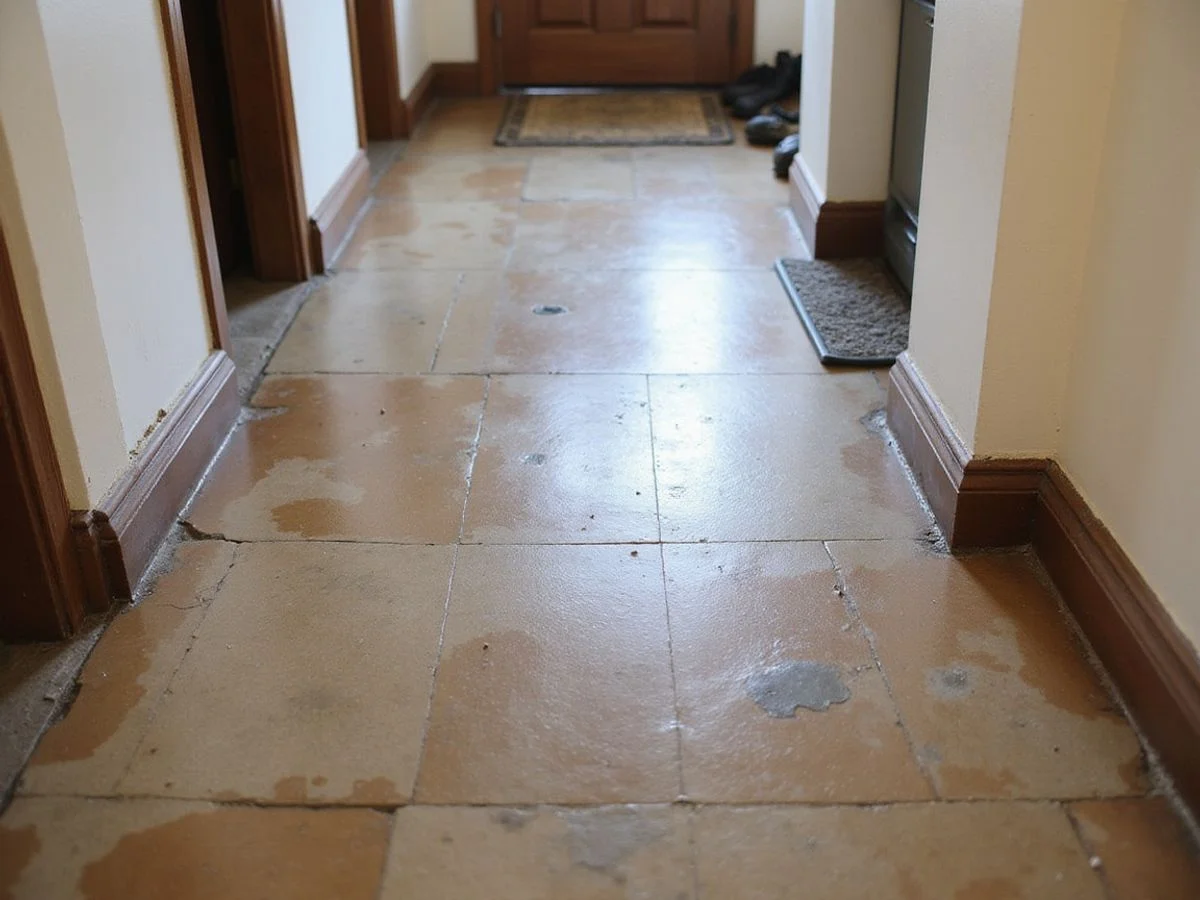
- Peeling or flaking film. The coating has come loose, often from moisture or poor prep.
- Milky or cloudy whitening. Moisture trapped under a sealer that sits on top of the slab.
- White powdery residue. Efflorescence, meaning salts carried to the surface by moisture.
- Faded color, not just dull sealer. Usually foot traffic wearing through the colored top layer, or sun fading a dye.
- Dark patches that won't lift. Spills that got through a failed sealer, or soaked in where there was no sealer at all.
Stained Concrete Resealing vs. Full Restoration
These are two different jobs and we quote them differently.
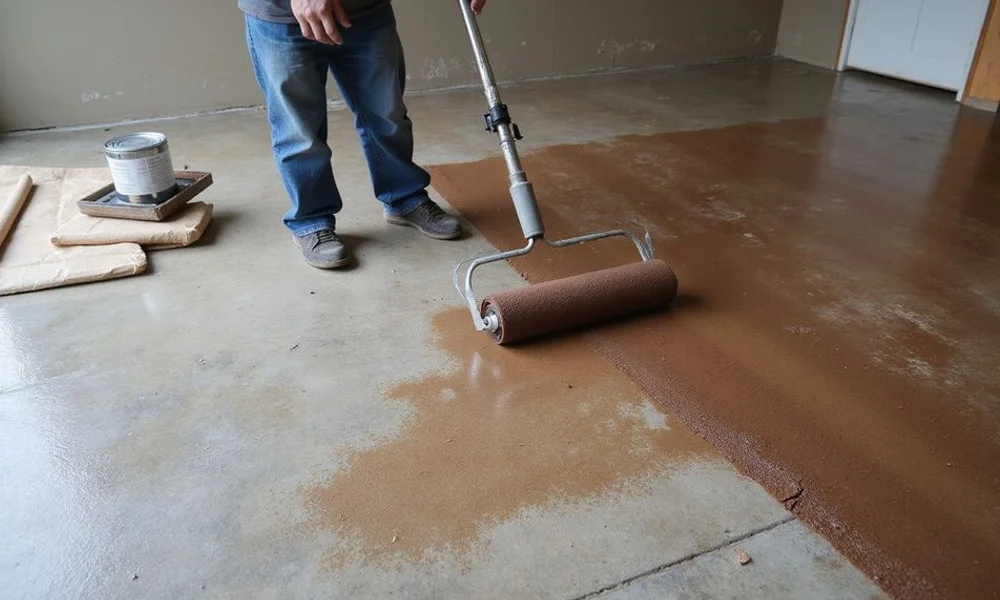
A reseal makes sense when the color is still good and the sealer has worn thin. We sand down or partly strip the old sealer, clean the floor well, make any repairs it needs, and put down fresh sealer. It’s the cheaper option, and for living areas, patios, and driveways it’s the right one more often than people expect.
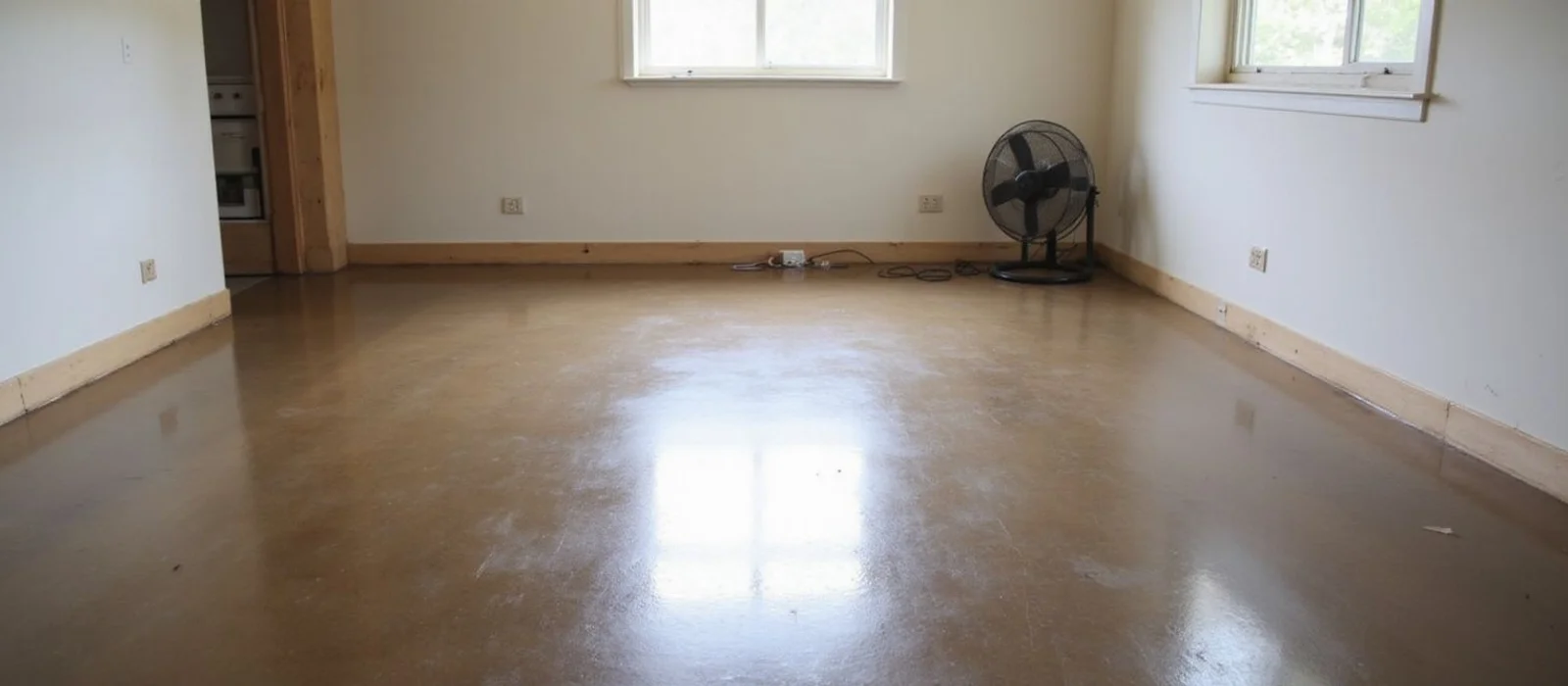
A full restoration is what the floor needs when the finish itself has failed. That means the color is worn through, the coating has to come off completely, or the surface is damaged and a new sealer would only make it stand out. The job covers stripping, surface work, bringing the color back, and sealing the floor again. We take full restorations on homes and commercial buildings in the Austin area, and we confirm coverage before we book. We recommend one when a reseal won’t fix what’s wrong.
What Moisture Does to Central Texas Slabs
A lot of floor failures here start under the floor.
Our weather swings between heavy rain and long dry spells, and when the ground under a slab is wet, vapor moves up through the concrete. Any sealer that forms a film on top of a slab with a lot of vapor coming through can turn white or peel. It can happen in homes across Austin, Round Rock, Cedar Park, and Georgetown.
If the symptoms point that way, we test the slab for moisture with a calcium chloride test or relative humidity probes. If the readings confirm it, the plan changes. The moisture may need a fix first, or we may switch to a sealer that lets the slab breathe. Drainage fixes are outside our decorative work, and we’ll talk through who handles them during the consultation. For a slab that keeps pushing vapor through, the right call is sometimes no coating on top at all. That’s not as nice to hear as “we’ll recoat it next week.” But it’s the answer that helps keep you from doing this again in two years.
What We Won’t Do
We won’t tell you a decorative restoration will fix a structural problem. We won’t coat over a moisture problem that’s still active and call it fixed. And we won’t pass off a sample image as our own work.
Taking Care of Your Restored Floor
Once a floor is restored, upkeep matters more than usual. The floor has already shown you how it wears. Keep grit off the surface (tracked in sand works like sandpaper on a sealer). Clean with a neutral cleaner made for your sealer, wipe up coffee or wine spills fast, and put mats at the doors. Those habits help the new finish last longer.
When the job is done, we walk you through care, cure times, and upkeep for the sealer we put down. We go over the signs it needs attention, instead of a date on a calendar. How the finish holds up depends on following that guidance. If questions or concerns come up after the job, reach out and we’ll talk it through.
Can’t tell which job you need? Our guide on when to reseal versus restore a worn stained floor walks through the decision. The one on resealing versus full floor restoration compares what each job includes and costs. We’re a decorative concrete contractor in Austin, and we’d rather quote the job your floor needs than push you toward the bigger one.