What Countertop Resurfacing Covers
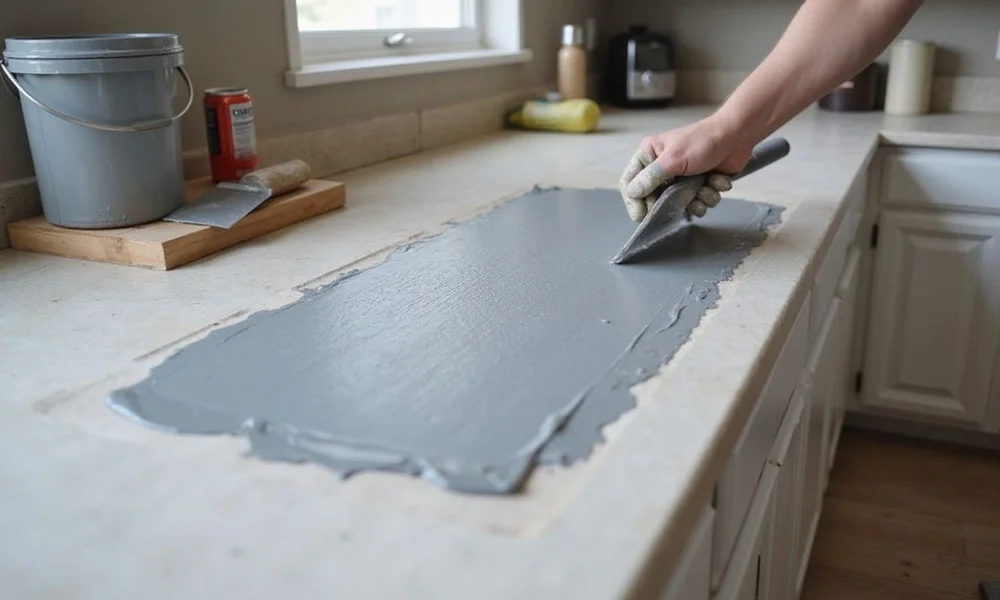
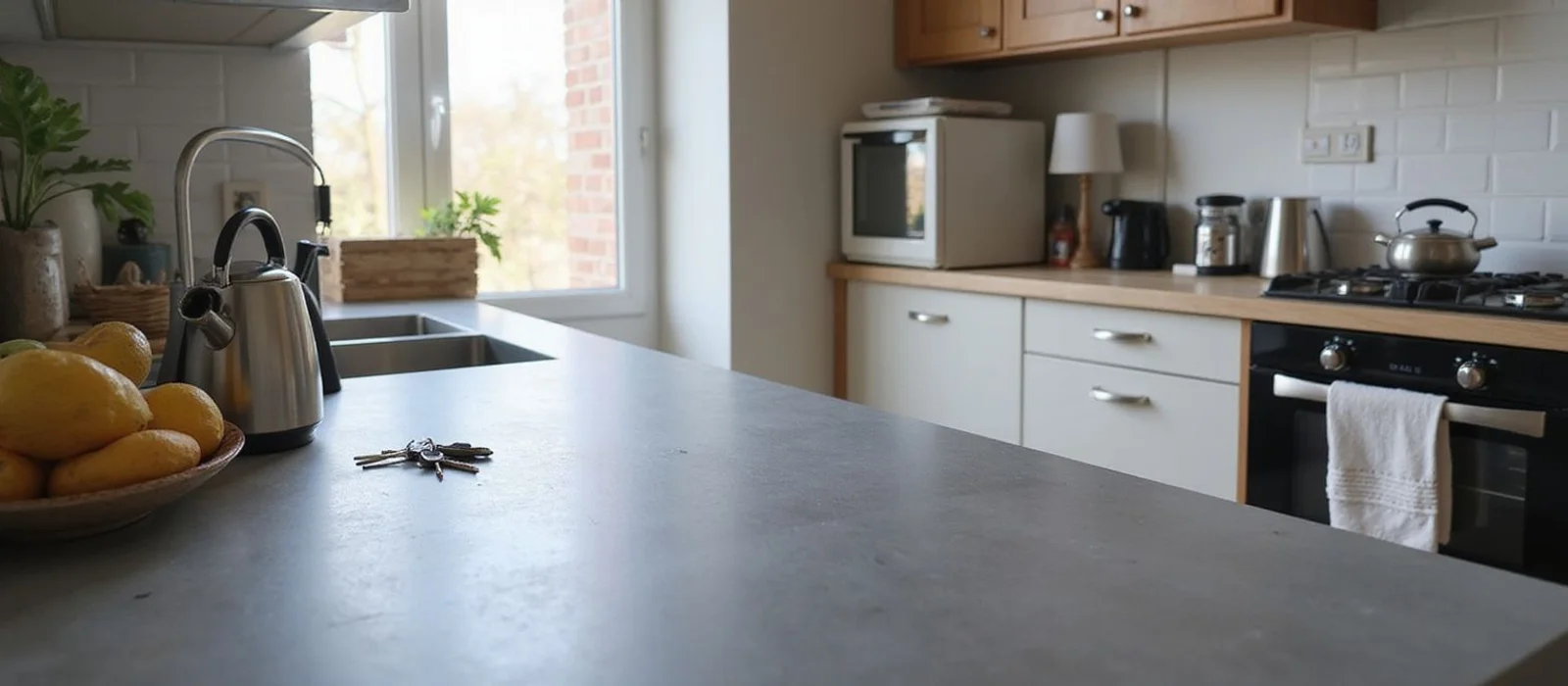
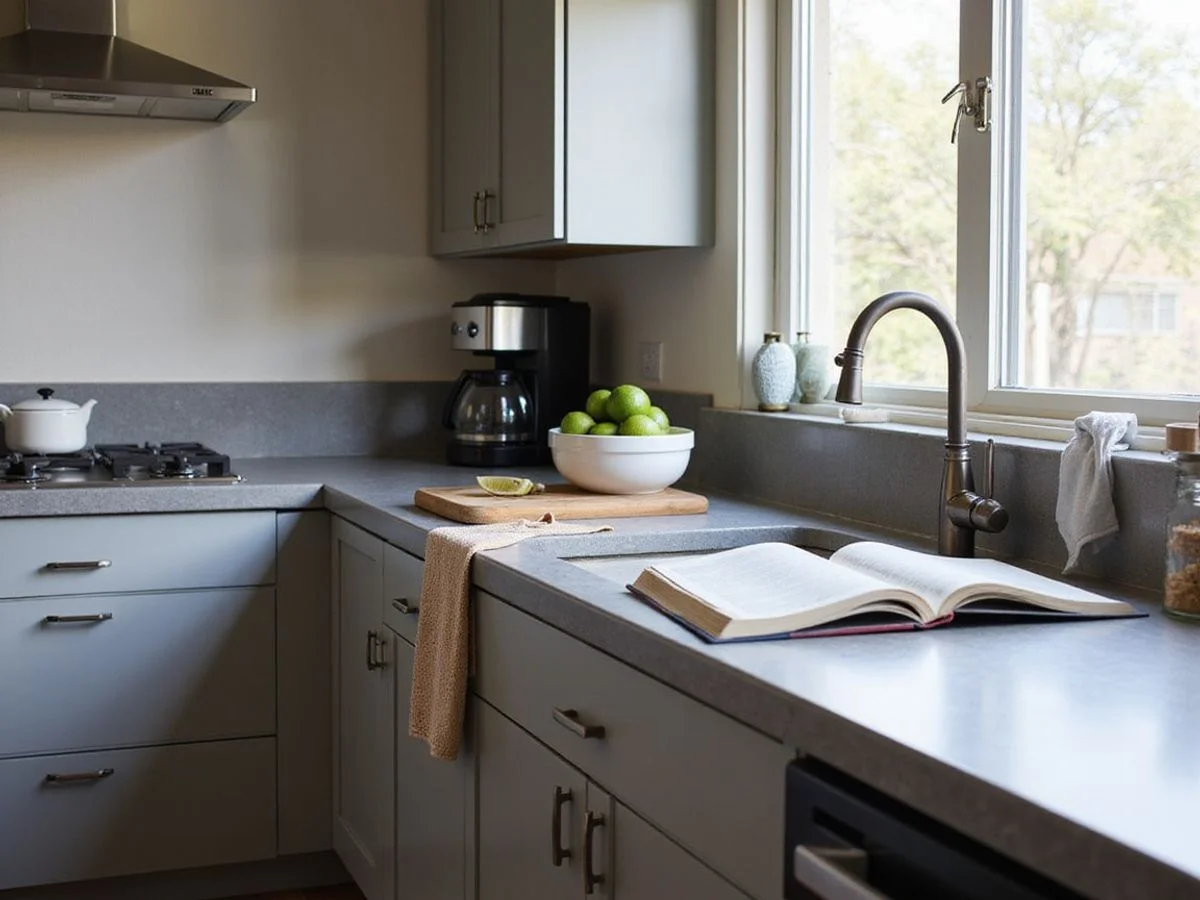
Countertop resurfacing puts a thin finish that looks like concrete over the counter you already have. That can be laminate, tile, or another material we can work on. Your old counter stays where it is. We prep the surface, put the material on in coats, shape the edges and sink openings by hand, and seal it for kitchen use. We've served Austin since 2001.
We're careful with the words here. In the trade, “concrete countertops” can mean two things: a new top cast to order, or a refinishing coat over the counter you already have. The price, the timeline, and how they hold up are all different.
This page is about the second one. If your project needs a new cast top, we'll tell you straight.
Is Your Counter a Good Candidate?
Your current counter has to be solid, firmly attached, and not moving. A thin layer won't fix a counter that flexes when you lean on it, has water damage by the sink, or is peeling or lifting. The new layer moves with whatever it's stuck to, the same way a floor overlay moves with the slab under it.
Laminate and tile counters in good shape often work well for this. Granite and marble can sometimes be resurfaced too, after we check. Most people who have them already like the look, though.
Prep has to get down to a clean surface too. Kitchen counters build up years of cooking oil, cleaning products, and polish (think of the strip beside the stove). All of it has to come off before anything will stick. Degreasing and roughing up the surface are where this job is won or lost.
Where Most of the Work Goes
- Edges and wrapped ends. These are what you touch and see most, and they're all done by hand.
- Sink and cooktop openings. Along with faucet holes, they take far longer per foot than a straight run.
- Corners and seams. L-shaped and U-shaped kitchens have more of both than one straight counter.
- Where the counter meets the wall. We settle how to finish that edge before work starts.
Picking the Right Sealer for a Kitchen
A kitchen counter works harder than any other flat surface in the house. It takes acid, heat, oil, knives, and constant cleaning. The sealer is what helps protect the finish from all of that.
Picking the sealer is the biggest decision on the job.
That choice comes down to how you actually cook. A counter that gets heavy daily use, small kids, and red wine needs different protection than a guest kitchen counter or a bathroom vanity. Whatever we put down, the rules are about the same. Use trivets and wipe up spills right away. Clean with a mild neutral cleaner that won't hurt the sealer, and keep scrub pads and gritty cleaners off it.
What to Expect Once It's Done
Expect some variation. A resurfaced counter will have small shifts in shade and pattern. That's what makes it look like concrete and not like laminate pretending to be concrete. If you want a perfectly even surface that looks factory made, that's a different product, and we'll tell you so.
The finish isn't indestructible either. It's a sealed decorative surface, and it needs the same care you'd give granite or marble. Heat marks and deep scratches need a repair, not a wipe with a sponge.
What We Take On in Austin, and When
This service has clear limits. Before we quote, we confirm whether your counter will work, an estimated start date, and which system we'd use. A web page can't settle those for your kitchen. We take countertop jobs in Austin, Round Rock, Cedar Park, Pflugerville, and Dripping Springs, and we confirm coverage before we book. If your counter won't work for this, we'll say so and talk through other options with you, even when they're not something we offer.
Want more detail? Our guide on what concrete countertop resurfacing covers explains how resurfacing differs from a new cast top. Our care guide for resurfaced counters shows what daily use looks like before you commit. Countertops are the smallest of the seven services we offer as a decorative concrete contractor in Austin.