
Serving Austin since 2001

Epoxy Floors for Austin Garages and Workshops

We install epoxy floors in Austin garages, workshops, and businesses, and we'll tell you straight which system fits your slab and what prep it needs.

Pricing: We quote for the system you pick and put what's included, what isn't, and any minimum charge in writing.

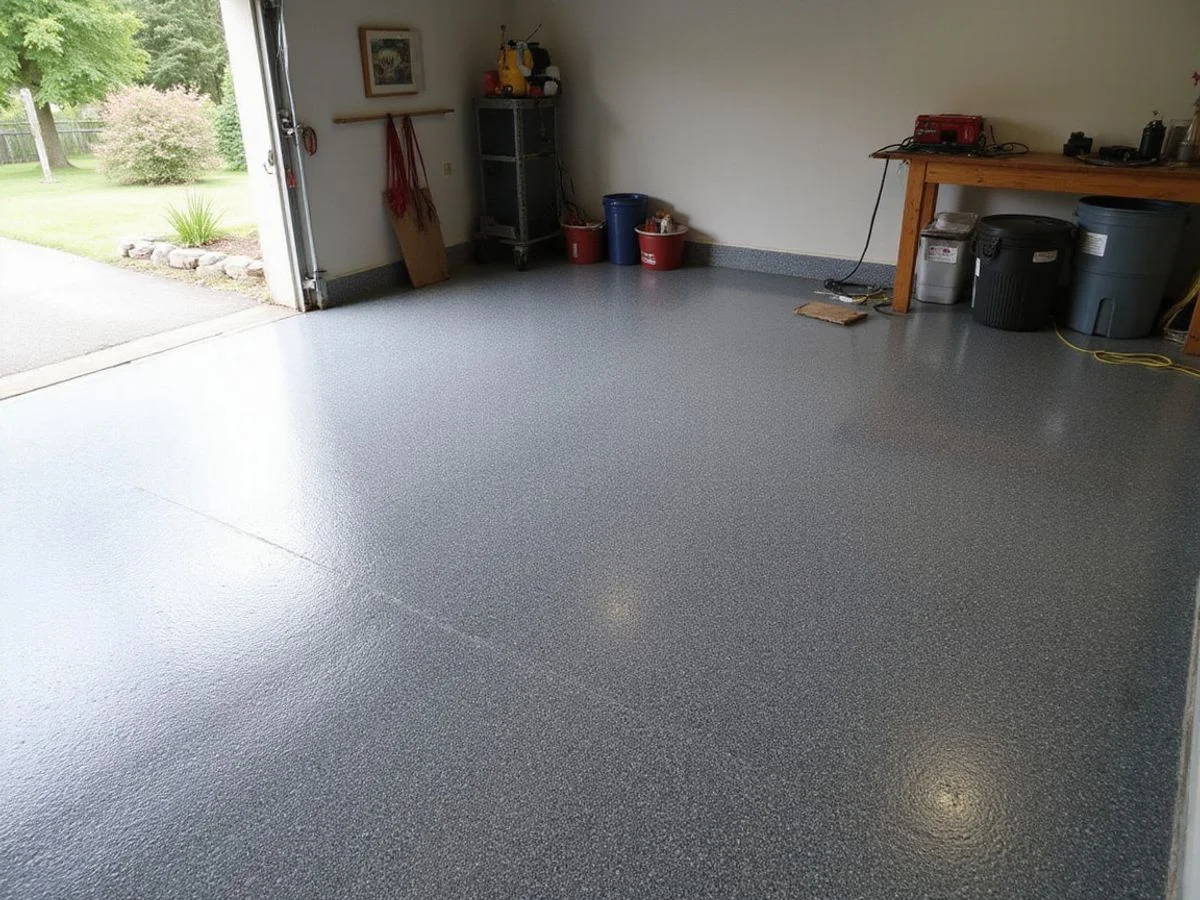
Gray flake epoxy coating on a residential garage floor
  • Serving Austin since 2001
  • Decorative concrete specialists, not a general remodeler
  • Seven confirmed service lines
  • Published editorial standards and technical review

What Makes Epoxy Different

An epoxy floor is a coating. It sits on top of the concrete instead of changing it, and that one difference drives everything else.

A stained or polished floor works with the slab. But a coating lives or dies by how well it's stuck to it. Get the bond right and you have a tough floor built to stand up to chemicals, clean easily, and shrug off a workshop. Get it wrong and you have a floor that looks fine for a year and then starts lifting at the edges.

Three things decide which one you get: grinding the slab, moisture, and how thick the coating goes on. You can't see any of them in the finished floor. That's why it pays to ask how each quote handles them. That goes for a home garage, a showroom, or a warehouse.

The Systems We Install

  • Standard epoxy. It goes on thick for garages, workshops, and commercial floors that need to stand up to wear and chemicals.
  • Metallic epoxy. We work metallic pigment through the wet resin to get swirls with real depth and shine. It's a decorative choice for floors that are meant to be seen.
  • Vinyl flake systems. We scatter chips into the base coat and seal them under a clear coat. You get texture, more grip, and a floor that hides dust.
  • Polyaspartic topcoats. They cure fast and resist yellowing in sunlight better than standard epoxy. We put them over epoxy so you get the floor back sooner and it stands up better to hot tires.

How Slab Prep and Moisture Testing Work

Prep depends on the job. When the slab calls for it, we diamond grind it before a coating goes down.

Grinding roughs up the surface so the coating has something to bite into. It takes off grime and the weak top layer, and it shows us what the slab looks like underneath. Most DIY kits tell you to acid etch. That doesn't rough up the surface nearly as well, and it can leave salts behind that weaken the bond later.

Whether we test for moisture depends on the slab and the system. A lot of Central Texas slabs sit on clay soil that swells and shrinks with the seasons. Moisture vapor coming up through a slab poured right on the ground is one of the most common reasons coatings fail. A calcium chloride or relative humidity test gives us a real number instead of a guess.

If the reading is high, we tell you. Then your options are a primer that blocks moisture, a system that can handle more of it, or sometimes our advice not to coat at all. We'd rather have that talk before you pay for a floor than after it blisters.

Why Austin Garage Slabs Need Extra Care

Garage slabs are their own animal. That's as true under a ranch style home in South Austin as under a brand new house in Pflugerville or a shop with several bays. They see hot tires, oil and brake fluid, dropped tools, and everything that comes in off the driveway. They're usually the least carefully finished slab in the house too. Expect a slope toward the door, control joints (the cut lines) across the middle, and pitting where the slab meets the driveway.

A flake system handles this well. The flakes add texture for grip, hide the dust and marks a solid color shows off, and cover small flaws in the slab. Underneath, the same rules apply: prep, moisture, and a coating thick enough to survive a hot tire parked on it in August.

What Makes an Epoxy Floor Cost More or Less

We list what moves the price in the pricing section below. The short version: the system you pick, the prep, and moisture control make up most of the gap between quotes. Only the system shows in the finished floor.

So why might one quote come in way under the others? Check whether it assumes the slab is clean and dry, leaves out grinding, or prices a thin coat. You can't see those differences in the first few months. Ask every contractor four things: their CSP (how rough they grind the surface), whether moisture testing is included, how many coats they priced, and the written warranty terms.

When We'll Tell You Not to Coat

We'll advise against coating a slab that's actively wet, or one that's failing in a way a coating would only cover up. Structural problems are outside our decorative work, and we'll talk through options during the consultation, including who handles that work. We'll steer you away from epoxy in a living room too. Stained or polished concrete usually works better there.

Recommending the wrong system is a quick way to sell one job and lose the next five.

Before you compare numbers, read what epoxy floor coatings cost in Austin to see where the gap between quotes comes from. Then read slab preparation and moisture testing before epoxy to see the step to check in every quote. As a decorative concrete contractor in Austin, we do a lot more than coatings. We get requests for garages and commercial floors across Austin, Round Rock, Cedar Park, Georgetown, and San Marcos, and we confirm coverage before we book. If your slab needs a different finish, we'll point you to it.
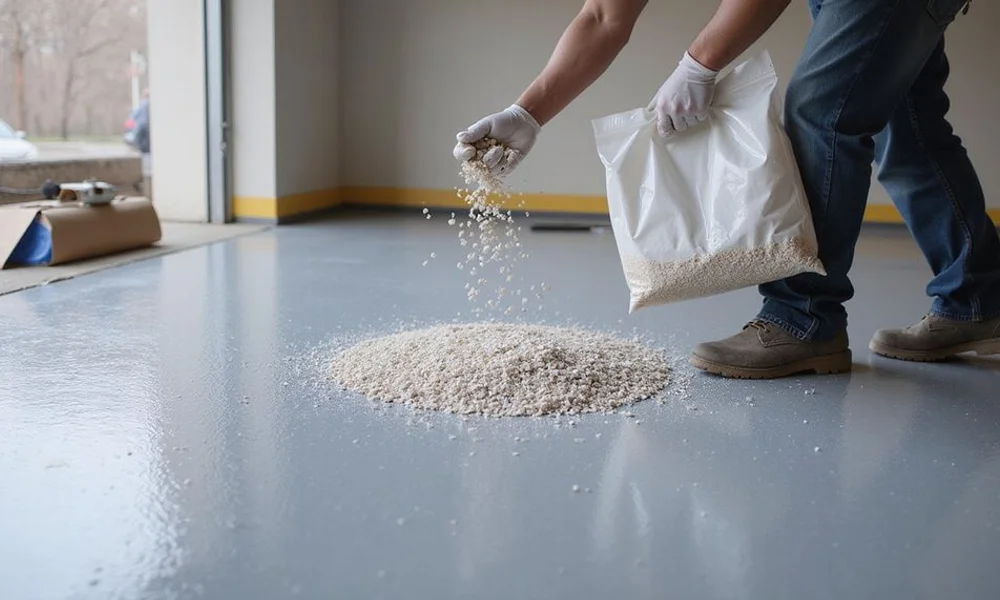
Vinyl flakes scattered into a wet epoxy base coat on a garage slab
Vinyl flakes scattered into a wet epoxy base coat on a garage slab. This is an example image, not a photo of one of our finished jobs.

What's typically included

  • Epoxy, metallic epoxy, and polyaspartic systems picked for how you'll use the floor
  • Garage floor flake and chip coatings, including options with added grip
  • Diamond grinding when the slab calls for it, so the coating has a proper surface to grip
  • Moisture testing when the slab and system call for it
  • Straight advice on which system fits, including when not to coat
Pricing

How much do epoxy floors cost in Austin?

We quote based on your slab and the job. Here's what moves the number, so you can compare quotes apples to apples.

Which system you pick: standard epoxy, metallic epoxy, a flake floor, or a polyaspartic topcoat.

Square footage, and whether it's one open bay or several smaller spaces.

Slab prep, since diamond grinding the surface rough enough is what makes a coating stick.

Moisture test results, and whether you need a primer that blocks moisture before we coat.

Repairs: pitting, flaking concrete (spalling), control joints, and old failed coatings that have to come off.

How many coats, and whether you want slip additives or an extra clear coat.

Cure time, since polyaspartic systems that get you back on the floor fast cost more than epoxy that takes several days.

Minimum charges on one bay garages, where getting the crew and gear out there is most of the cost.

What your quote should include

A good quote ties the price to the prep, the products, access to the space, and what's left out. Ask to see the full scope. Your written proposal spells that out, including any minimum charge.

Every job starts with a look at your slab. The scope, the price, and what you can expect depend on your slab's condition, the setting, and the job itself. This page describes our work in general terms. Your signed written proposal is what governs the actual work. If we find something once work starts that we couldn't see before, like moisture or damage under old flooring, we talk it through with you before we go on.

Get My Free Epoxy Floor Quote
Why us

Why people pick us for epoxy floors

Moisture shapes which product we pick

Coating failures in Central Texas often come from moisture nobody measured. Whether we test depends on the slab and the system. Your proposal will say.

Diamond grinding over acid etching

An acid wash from the hardware store doesn't rough up the surface enough. Diamond grinding does, and that's what the coating grips. Your written proposal lists the exact prep for your job.

Metallic means metallic

Those swirls come from real metallic epoxy. We don't sell it as stained or polished concrete.

Straight talk about hot tires

Hot tires can pull up thin coatings. We choose systems designed to take the heat, and we'll tell you when a budget job won't.

We plan for wet floors

A glossy garage or entry gets slippery when wet. We add grit for more grip when the floor needs it, not to upsell you. Keep wet areas dry and use mats where people walk in from outside.

Estimated times to use the floor

Your proposal gives estimated times to walk on the floor and park on it. Weather, material availability, and site conditions can change them. When the job is done, we walk you through care, cure times, and upkeep.

Process

How an epoxy floor job runs

  1. 1

    We check the slab

    We look at the slab and any old coating. Depending on the slab and the system, we may test for moisture. Moisture has a lot to do with whether a coating lasts.

  2. 2

    We prep and fix the slab

    When the slab calls for it, we diamond grind the surface. We fix pitting, flaking spots, and joints.

  3. 3

    We lay the base coat and flakes

    We put down the primer and base coat, then add flakes or metallic pigment to the wet coat if your floor calls for it.

  4. 4

    We topcoat it and let it cure

    Then comes a clear coat or polyaspartic topcoat, plus any slip additive, and the floor needs to cure before you use it. Stick to the care and cure steps we go over with you. If questions or concerns come up after the job, reach out and we'll talk it through.

Finish examples

Examples of epoxy finishes

Here's what each finish we talked about above looks like. Photos of our real projects are on the projects page. Results vary by slab condition, prep, setting, and product.

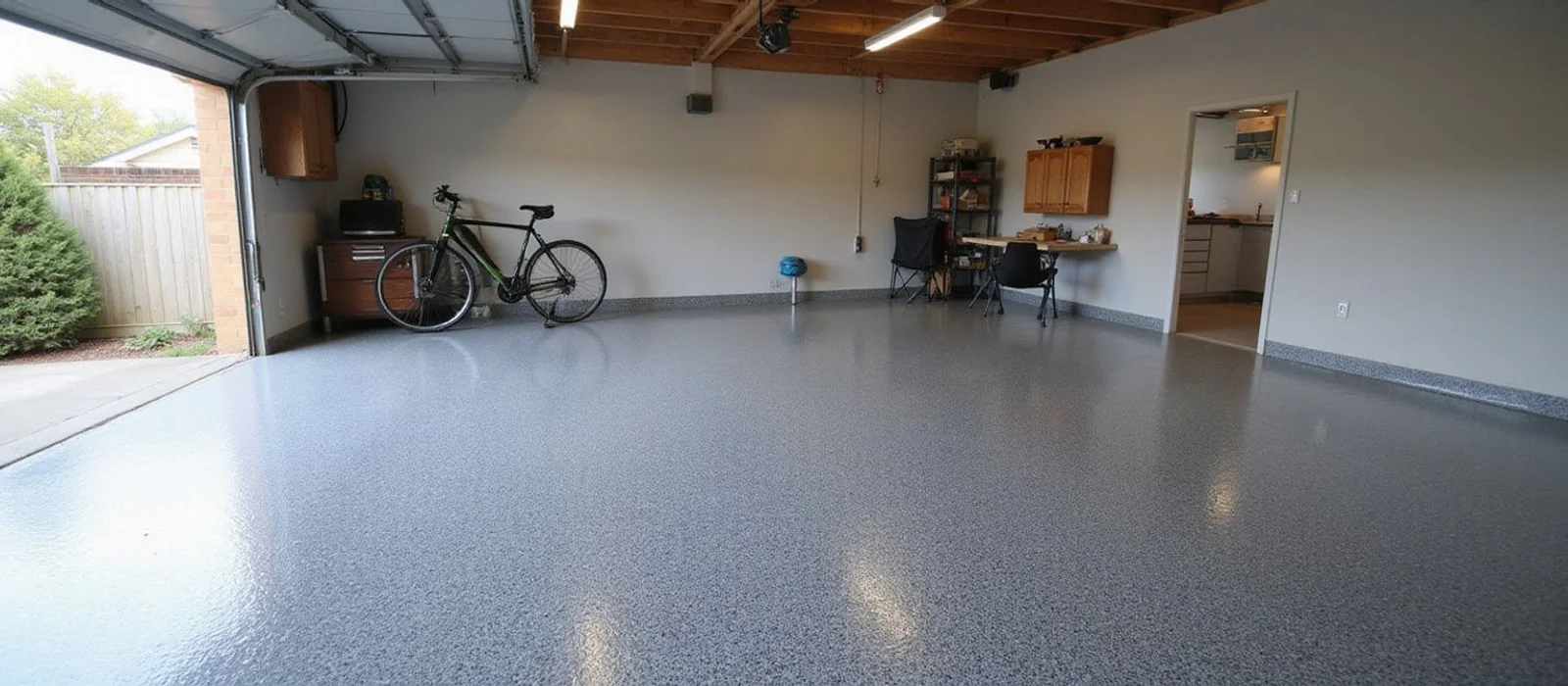
These are sample images of each finish type. They aren't photos of jobs we've completed.

How We Quote Epoxy

Use this list on any epoxy quote, ours included. Your written proposal lists the exact prep, products, and coats for your job.

What to compareWhat to check in any quoteHow we quote it
How the slab gets preppedIs the grinding method listed?Listed in your proposal when the job calls for it
MoistureIs moisture testing listed?Listed in your proposal when the job calls for it
What it's calledIs the coating type named?Epoxy, metallic, or polyaspartic named in the scope
TopcoatIs the coat count written down?Coat count typically listed in your proposal, chosen with sun and hot tires in mind
Slip resistanceIs a slip additive offered where floors get wet?Grit for more grip offered where the space needs it
Real projects

See our concrete projects

Look through photos of our concrete work and what went into each job. Compare the finish with your own goals, then ask us what would be different on your slab.

Questions

Epoxy floor questions

Why does slab prep matter so much for epoxy?
A coating is only as good as its bond. Epoxy needs a surface that's been ground open so it has something to grip. The industry calls that a concrete surface profile, and you want CSP 2 to 3. That means diamond grinding, not washing or acid etching. An acid etch from the hardware store eats away a little of the top layer but leaves the concrete mostly closed. It can leave salts behind too, and those push the coating off later. Peeling garage floors usually come down to skipped prep, untested moisture, or both.
What is moisture vapor transmission, and why test for it?
Your slab sits on ground that holds water, and that water moves up through the concrete as vapor all the time. That's moisture vapor transmission. Epoxy doesn't let vapor through. If more pushes up than the system can handle, pressure builds underneath and the coating lifts in patches or blisters. When the job calls for it, calcium chloride and relative humidity tests tell us what's going on in your slab before we pick a product. If the numbers are high, the answer is a primer that blocks moisture or a different system, not crossing our fingers.
What is the difference between epoxy, metallic epoxy, and polyaspartic?
Epoxy is the workhorse. It's a two part resin that builds thickness, bonds hard to prepped concrete, and typically holds up well to chemicals. Metallic epoxy is regular epoxy with metallic pigment in it. We move the pigment around when it's still wet to get those swirls and that shine. It's a look you choose, not a stronger floor. Polyaspartic cures fast and usually goes on as the topcoat. It handles sunlight and hot tires better than standard epoxy, and you can use the floor again sooner. A lot of good floors use both: an epoxy base for thickness and grip, and a polyaspartic top for toughness and speed.
Will an epoxy garage floor peel from hot tires?
If the slab is prepped properly and the system fits the job, the coating is designed to hold up to hot tires. Thin budget kits put over concrete nobody ground often do get pulled up, and that's where the bad reputation comes from. Tires come off a Texas highway hot, and chemicals in the rubber soften any coating that isn't bonded well. What protects you is real prep, a thick enough coating, and a topcoat picked for the job.
How long before you can park on it?
That comes down to the system. With a fast polyaspartic system, you can usually walk on it the same day and park on it within about 24 hours. Standard epoxy takes longer. It's often several days before the car goes back in, but you can walk on it lightly before that. Your proposal lists an estimated schedule for your system. Weather, material availability, and site conditions can change it, so follow the cure guidance we go over with you. We'd rather you wait an extra day than mark up a floor that hasn't finished curing.
Can you make it slip resistant?
We can add more grip. We scatter a fine grit or polymer additive into the topcoat. It adds texture, and a fine grit usually keeps the floor easy to clean. It's worth adding anywhere that gets wet, and that includes garages where cars drag rain in. Coarser grit gives more grip but holds more dirt, so there's a tradeoff we'll walk you through. No wet surface is fully slip proof, so keep wet areas dry and use mats where people walk in from outside.
Is a flake floor better than a solid color?
For garages, usually yes. The flakes add texture, hide dust and tire marks, and cover small flaws in the slab that a solid color puts on display. Solid colors look cleaner in a showroom or a commercial space where the floor is kept clear. Neither one is stronger on its own. The strength comes from the prep and how thick the coating is.
Can epoxy go over an existing coating?
Sometimes, after testing, but usually the old coating comes off. If it's peeling or lifting anywhere, it has to go. A new coat bonds to the old one, not the slab, so it fails wherever the old one fails. Grinding it off costs money, and it's money well spent.
Is epoxy right for a living space?
Usually not. Epoxy is made for garages, workshops, and commercial spaces that take spills and hard knocks. In the rooms you live in, stained or polished concrete usually looks better and wears better over the years. Some people pick metallic epoxy for a feature area like a bar, a retail floor, or a reception. It stands out, but it looks nothing like a stained floor, so choose it on purpose.
Is epoxy flooring cheaper than tile?
That depends on the whole job. Epoxy on a well prepped garage slab often costs less per square foot than good tile with backer board and grout. It goes in faster too, so you're out of the space for less time. In living areas, tile may be the better value over the long run. The fair way to compare is the total installed cost with slab prep included, not the price of the material alone.

Still deciding?

Send us a few photos of the floor and tell us how you use the space. We'll give you a straight answer, and we'll say so when epoxy isn't the right fit.

Get My Free Epoxy Floor Quote

Ready to talk about epoxy floors?

Send the room sizes, what's on the floor now, and a few photos. We'll tell you whether epoxy suits your slab before anyone quotes a number.

  • We check the slab before we recommend a system
  • What drives the cost, explained in writing
  • Serving Austin since 2001