
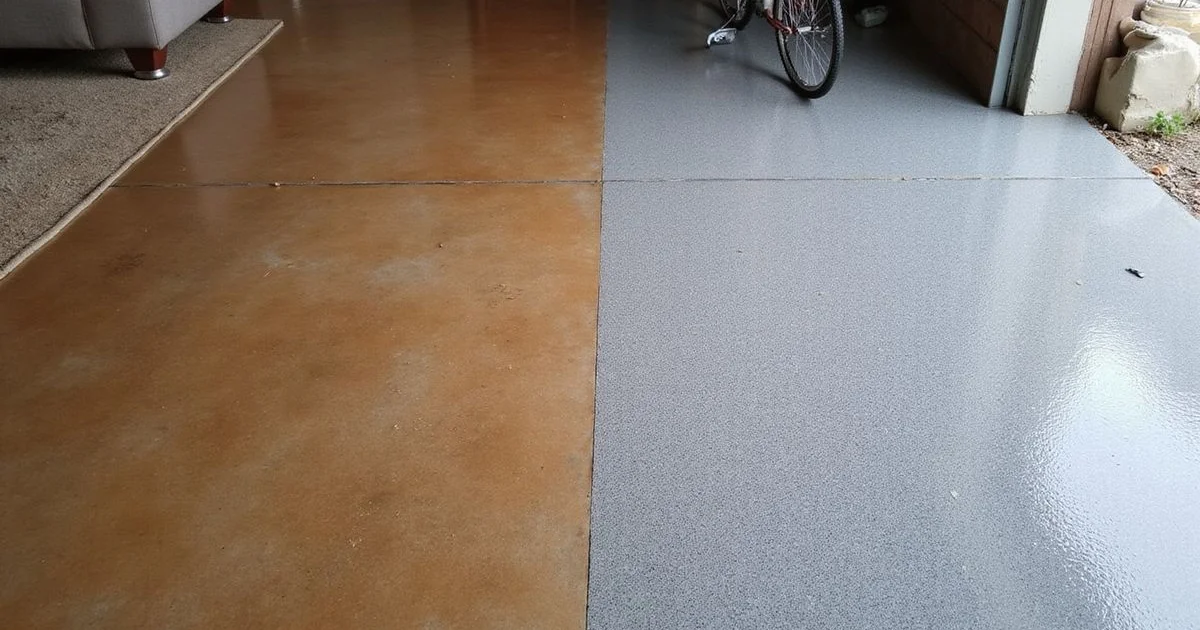
Different Systems, Not Different Grades
First thing to know: these aren't a cheaper and a better version of the same floor. They're different systems that do different jobs.
A stained concrete floor puts color into the surface of the slab and protects it with a sealer. The concrete is still the floor. An epoxy floor is a coating that goes on top of the slab. It builds up real thickness and becomes a new surface that takes all the wear.
That one difference shapes everything else: how they look, where they belong, what prep they need, and how they fail.
Side by Side
| Topic | Stained concrete | Epoxy coating |
|---|---|---|
| What it is | Color in the slab, sealed | A coating on top of the slab |
| How it looks | See through, mottled, natural | Solid color, flake, or metallic swirl |
| Where it usually goes | Living areas, shops, restaurants | Garages, workshops, commercial spaces, feature areas |
| Stands up to chemicals | Fair, comes down to the sealer | Strong |
| Heavy knocks and cars | Fine for foot traffic | Built for it |
| Prep it needs | Opening up the surface, removing old glue | Diamond grinding plus moisture testing |
| How much moisture bothers it | Less, especially with a sealer that soaks in | A lot. It's one of the top reasons it fails |
| How it fails | Sealer wears down where people walk most | Coating lifts or peels |
| How you refresh it | Reseal | Recoat, sometimes after stripping it all off |
Where Each One Belongs
Stained concrete belongs where the floor is part of the living space: kitchens, open plan areas, hallways, entries, cafes, shops, and offices. It looks like a natural material and ages in a way that's easy to live with. Upkeep comes down to a fresh coat of sealer now and then.
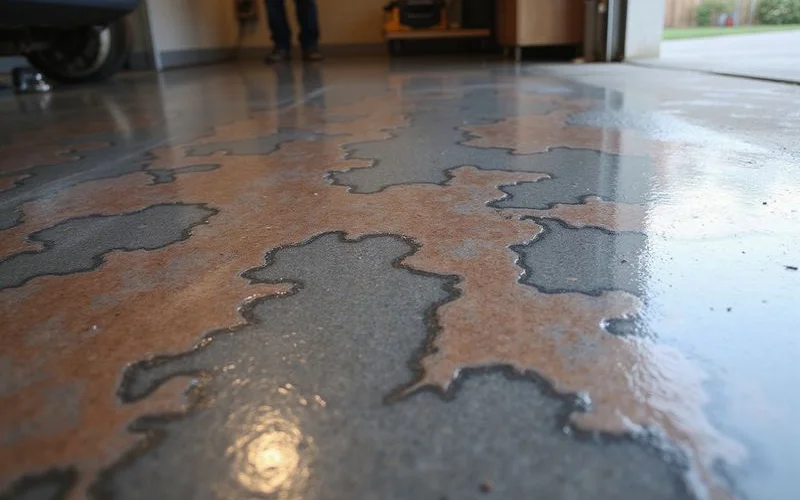
Epoxy belongs where the floor has a job to do. Think garages with cars and dropped tools, workshops with solvents and oils, equipment rooms, and anywhere that gets hosed down. Metallic epoxy is the exception (the swirl in the photo above is one). It's a decorative pick for feature areas, bars, retail floors, and showrooms, since it gives a swirling, liquid look that stain can't.
A common mistake
Someone picks epoxy for a living area after hearing it's “more durable”. It does stand up better to chemicals, but a living room has none to fight. Epoxy’s own weak spots are all still there, mostly moisture coming up and making the coating peel.
Prep and Moisture Make or Break Both
Both systems need real surface prep, and neither one survives a shortcut. Epoxy needs more, since a coating is only as good as its grip on the concrete.
Moisture is where they split apart. Water vapor coming up through a slab builds pressure under a coating like epoxy and can push it right off the concrete. That's why epoxy work should start with a moisture test. A stained floor with a sealer that soaks in usually handles the same conditions much better, since the vapor can pass through it.
In Central Texas, the clay soil under many slabs swells when wet and shrinks in drought, so conditions under a slab change with the seasons. That doesn't rule epoxy out. But it's why moisture comes up before color on an epoxy job. Whether we test for moisture depends on the slab and the system, and your proposal will say.
How to Compare the Two Quotes
People compare quotes for these two unfairly all the time. A stain and seal quote might cover prep, one acid stain color, and two sealer coats. A flake epoxy quote usually covers diamond grinding, moisture testing, primer, base coat, the flakes, and a clear topcoat. Those are two different jobs, so why would the prices match?
Look at what each one includes: how they prep, what products they use, how many coats, what testing, and what's left out. Then hold that up against what the room needs. Paying for chemical protection in a bedroom is as much a waste as cutting corners on prep in a workshop. If you're leaning toward staining, what it costs to stain concrete floors in Austin walks through the same questions from that side.
When the Answer Is Both
Plenty of places end up with both. That's usually the right call. Stained or polished concrete goes inside, where the floor is part of the room. The garage gets a flake coating in epoxy or a similar coating called polyaspartic, since that floor has work to do.
If your question is about the garage, read garage floor epoxy and flake coatings. If it's about the living area, our staining guides will help you more.