
A Coating vs. the Slab Itself
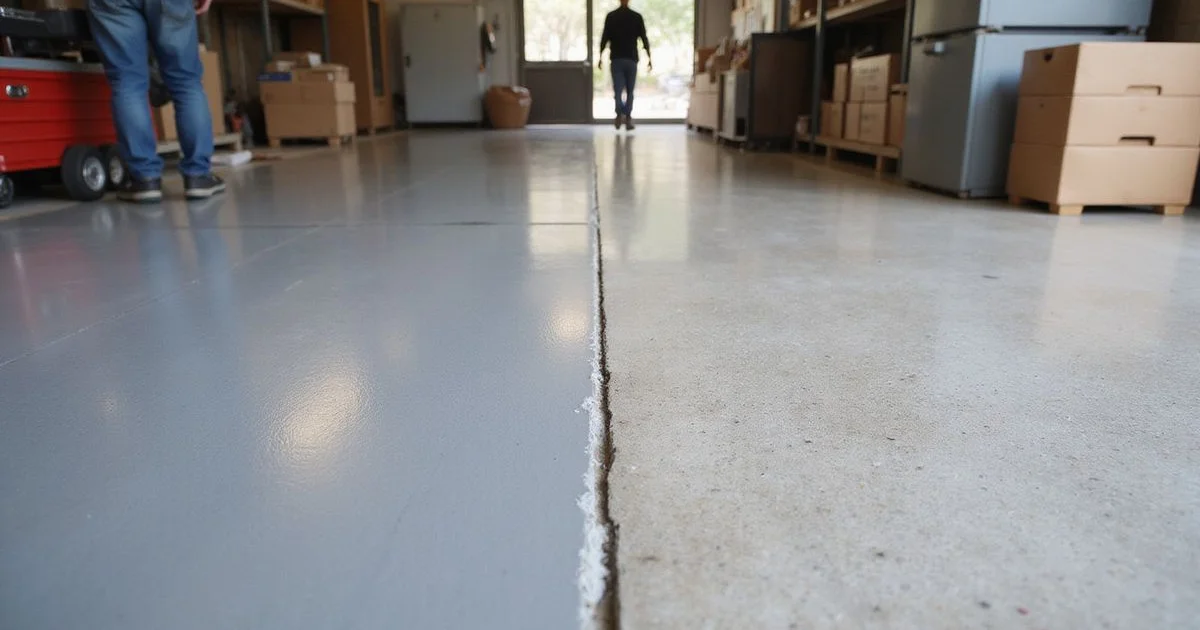
People often get quotes for both side by side. But they're two different ways to treat the same slab, and it comes down to whether you add material or take it away.
Epoxy adds material. A resin coating goes over the prepped concrete. It builds up real thickness and becomes a new surface that takes all the wear and does all the protecting.
Polished concrete removes material. We grind the slab with finer and finer diamonds until the concrete itself is the finished floor. Depending on the job, a hardening treatment called a densifier can toughen it, with no film on top.
That one difference shapes everything: what they hold up to, how they age, how you fix them, and where they belong.
Side by Side
| Topic | Epoxy | Polished concrete |
|---|---|---|
| What it is | A coating over the slab | The slab itself, ground smooth |
| Holds up to chemicals | High | Moderate, can add a protective coat |
| Holds up to impact | Good, takes the hit and spreads it | Only as tough as the slab |
| How it wears | Coating wears, then needs a new coat | Wears slowly, burnish to refresh |
| Trouble with slab moisture | High, needs testing first | Low, no film to lift |
| Looks you can get | Solid color, flake, metallic | Plain gray up to exposed stone, dye optional |
| Slip resistance | Needs a grit additive for more grip | Varies. Higher gloss grips a little less when wet. |
| Freshening it up | Strip or prep, then recoat | Burnish or polish again |
| Ongoing cost | A new coat every so often | Cleaning plus a burnish now and then |
Where Epoxy Comes Out Ahead
Epoxy wins anywhere chemicals, oils, or solvents hit the floor: workshops, equipment rooms, commercial kitchens, labs, and garages. It wins where tools and equipment get dropped, too. The coating takes the hit and spreads it out, where bare concrete would chip.
Pick it when you want a color or look that concrete can't give you, like metallic swirls or a bright brand color. And if the slab is too rough to polish well, we'd coat it. A coating hides the slab. A polish shows it off.
Where Polished Concrete Comes Out Ahead
Polished wins in busy public spaces, where upkeep costs matter most. Stores, showrooms, galleries, restaurants, and hotels take huge foot traffic, and there's no film to wear through.
It's the lower risk pick on a slab with moisture problems, since there's no film on top to peel or lift. Choose it when you want the look of the concrete itself (exposed stone included), which no coating can fake. It fits anywhere that closing for a new coat every so often would cost you real money. Polished floors get freshened up in place with a burnisher.
The question that settles most cases
What does the floor need to hold up against? If it's chemicals, cars, or dropped steel, you're looking at epoxy. If it's only feet and time, polished concrete typically outlasts epoxy with less work.
Why Slab Moisture Matters in Central Texas
This one matters around here, since the moisture in a slab can shift through the year. Vapor pushing up through the slab is one of the most common reasons coatings fail.
Whether we test for moisture depends on the slab and the system, and your proposal will say. If the readings come back high, you need either a moisture blocking primer or a different plan. Polished concrete carries far less of that risk. There's no film for vapor to push against.
That doesn't rule out epoxy. But an epoxy quote with no testing in it has a risk built in that nobody priced. Slab preparation and moisture testing before epoxy walks through what that testing looks like and what the readings mean.
Cost Over Time
Install cost swings too much from one system to the next for an average to help you. Comparing the two over many years tells you more.
With epoxy, the ongoing cost is a new coat every so often (how often depends on traffic), plus the hassle of shutting the space down. With polished concrete, it's cleaning and a burnish now and then, with no new material and little downtime.
So for a home garage, the difference isn't worth much thought. For a 10,000 square foot commercial floor, it's often the biggest factor in the decision.
When the Answer Is Both
Plenty of properties are better off with both. They put polished or stained floors where people live, work, and shop, and a coating where the building does its work. That's not being indecisive. It's picking each floor for how the space gets used, which is the whole point.