
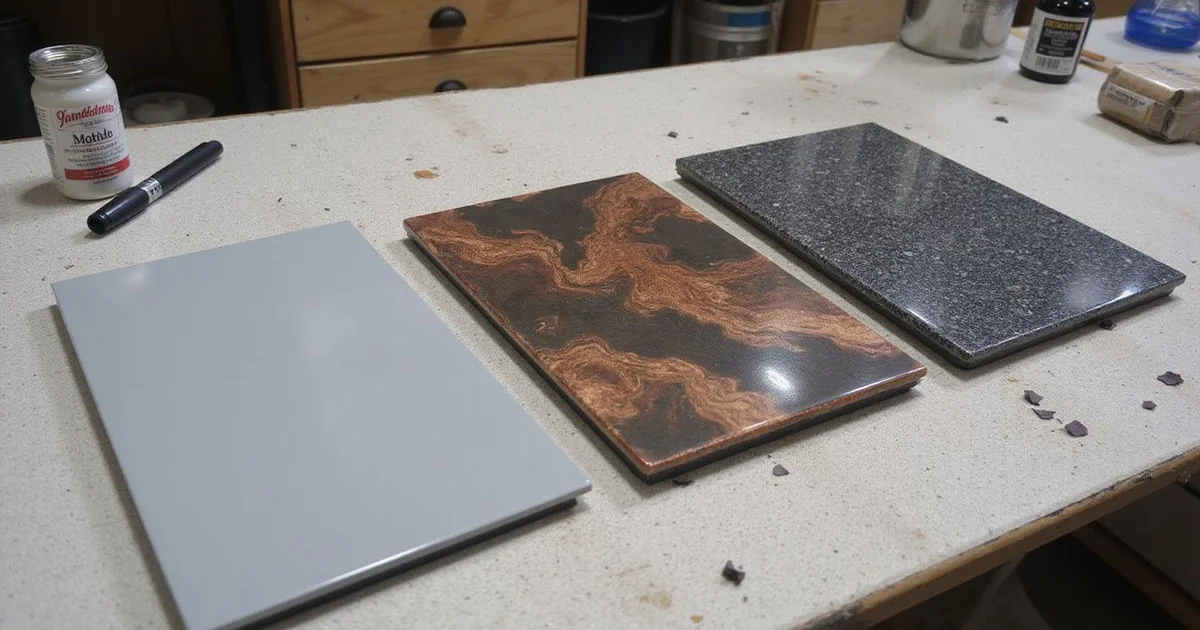
Three Names People Mix Up
Talk to anyone about coated concrete and you'll hear epoxy, metallic epoxy, and polyaspartic tossed around like brands of the same thing. They aren't. Two are different types of resin and one is a decorative look. Knowing which is which changes what you should pay.
All three fall under our epoxy floors service, and all three depend far more on prep than on which product you pick.
100% Solids Epoxy
This is the workhorse, a two part resin that hardens by chemical reaction, not by drying out. So the thickness you put down is the thickness you keep.
Epoxy builds thickness, grabs hard onto concrete that's been ground right, and stands up to a lot of chemicals. That's why it's the base layer in most good systems.
The downsides: sunlight turns it yellow over time (ambering), and it takes days to cure, not hours. It's more brittle than newer coatings too, so how thick it goes on and how well the slab is prepped both matter.
Metallic Epoxy
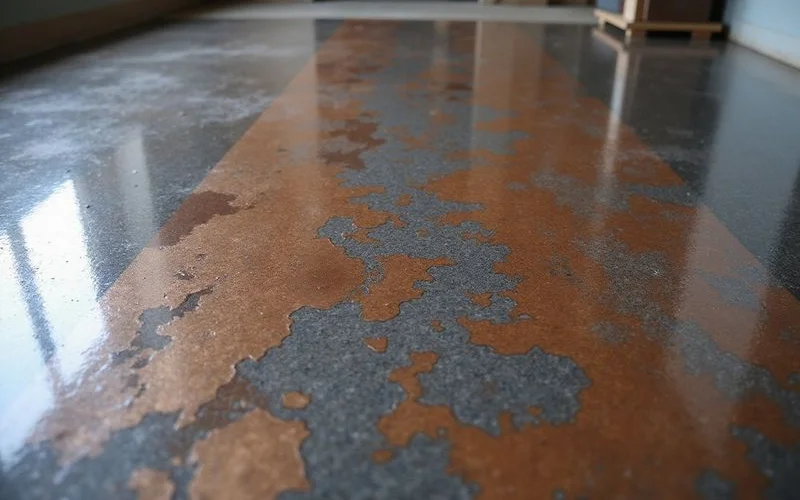
Metallic epoxy is regular epoxy with shiny metallic pigment mixed in. The installer works the pigment around before the resin sets. That creates swirls, pools, and a sense of depth that's hard to get any other way.
You pick it for looks, not for toughness. The resin underneath does the same job it does in a solid color floor. It's only as tough as the prep and thickness under it. How it turns out depends on the installer more than almost any other floor. Two crews using the exact same product will give you floors that don't look alike.
We only call it metallic epoxy when that's what it is. A swirled look isn't stained concrete or polished concrete, and the difference matters for upkeep and price.
Polyaspartic
Polyaspartic is a type of polyurea, a different family of resin from epoxy. It usually goes on as the top coat. Its big plus is speed. With many systems you can walk on it that evening and park on it the next day. And it's made to resist yellowing in the sun, where epoxy ambers over time.
A good one is designed to handle hot tires too, and that matters in any Texas garage. Put on thin over an epoxy base, it's the layer that takes the wear and the abuse.
It isn't cheap, though. It costs more per coat and gives the crew far less working time than epoxy. Since it cures fast, the crew has to know exactly what they're doing. There's no time to figure it out on the fly.
How They Usually Work Together
| Layer | Typical product | What it does |
|---|---|---|
| Primer | Epoxy primer, or one made for damp slabs | Helps it stick and, if needed, holds back moisture |
| Base | 100% solids epoxy | Thickness, sticking power, color or metallic look |
| Flakes (scattered on the wet coat) | Vinyl flake, optional | Texture, added grip, looks |
| Topcoat | Polyaspartic or clear epoxy | Takes the wear, helps resist sun, and holds any grit for added grip |
The part that decides everything
No coating can make up for bad prep or a moisture problem nobody fixed. A top shelf polyaspartic on a slab that wasn't ground or tested will likely fail sooner than a basic epoxy on one that was.
Which One to Pick
We'd go with a solid color epoxy and a clear topcoat for workshops, equipment rooms, and commercial floors where function comes first and some downtime is fine.
Garages are where a flake system earns its keep. Texture, more grip, and hiding dust and marks all matter there. Our garage floor guide goes deeper on flake floors.
Pick metallic epoxy when the floor is meant to be looked at: a showroom, a bar, a shop, or a room you want to stand out. Know going in that the result is partly art, and ask to see the installer’s own floors.
Pick a polyaspartic topcoat when sun, hot tires, or getting back on the floor fast matter. In Central Texas garages, that's most of the time.
What to Ask For in a Quote
Ask for the product name for each layer and the total thickness. Ask how rough the slab will be ground, how they'll test for moisture, when you can walk and drive on it, and whether grit for grip is included. If a quote only says “epoxy floor” and a price, what exactly are you paying for? You can't tell from that.