
The Two Things That Decide Whether a Coating Lasts
A coating is only as good as how well it grips the slab, and whether the slab lets it keep that grip. That's it. Which product you pick matters far less than either one.
Neither one shows in a finished floor, so check that both are written into any quote. If you're reading about epoxy floors and wondering why quotes are so far apart, this is often part of it.
Grinding the Slab First
The top of a finished slab is a smooth, tight layer of cement paste. That layer is the weakest part of the slab. Coat right over it and the coating is stuck to something that can let go.
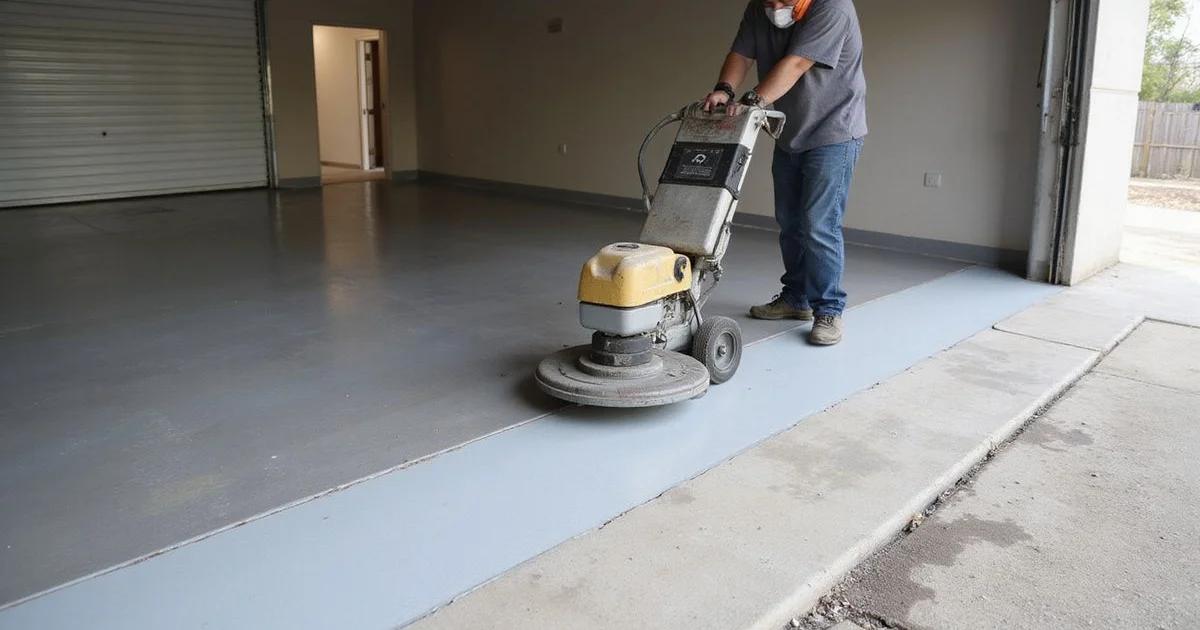
Diamond grinding removes it, along with grime, curing compounds, old sealer, glue residue, and any old coating. It opens up the pores so the resin can physically grip the concrete.
The trade calls the target a concrete surface profile, or CSP. For most coatings we aim for CSP 2 to 3, which feels like sandpaper instead of smooth.
Why acid etching isn't real prep
Store bought kits tell you to etch since it needs no equipment. Acid eats away some of the surface paste, but it doesn't rough up the slab the same way. It won't remove oil or old coatings, and it can leave salts behind that weaken the bond later. Failed DIY garage floors are often ones that were etched, not ground.
What Moisture Actually Does
Concrete slabs sit on ground that holds water. Vapor moves up through the slab all the time, pushed by the difference in humidity between the ground below and the air above.
On bare concrete, that vapor leaves the surface and nobody notices. Put a coating on top that won't let vapor through, and it gets trapped underneath with nowhere to go. Pressure builds. The coating blisters, then peels up, usually in patches that look random but aren't.
Central Texas makes this harder to predict. We get long dry spells and then heavy rain, so slab moisture swings a lot from season to season. A floor coated in a dry August can sit on a much wetter slab by spring.
How We Test for Moisture
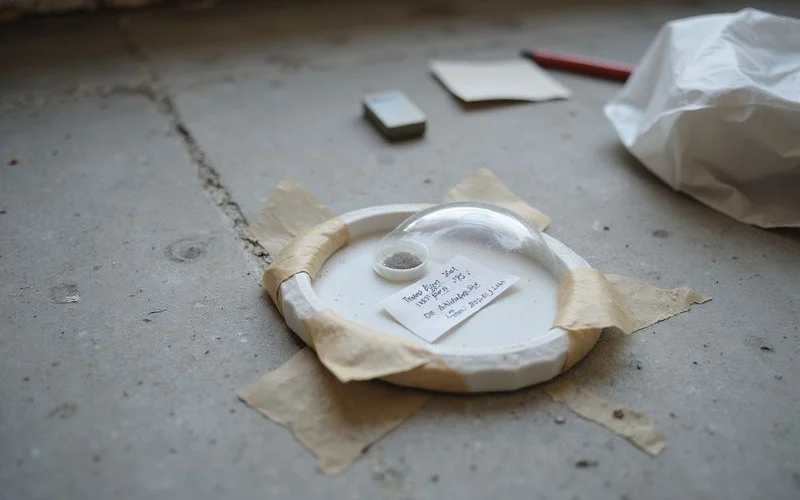
There are two standard tests. Calcium chloride testing puts a dish, weighed ahead of time, under a sealed dome on the slab. It measures how much moisture comes out of the surface over a set time. That tells you how fast vapor is leaving the slab.
For relative humidity probe testing, we drill into the slab and read the humidity down inside it. A lot of people in the trade trust it more to show what the slab will do over time.
Both tests need the slab at the temperature and conditions it will live in. The probe needs at least a day, and the dome runs about three. Whether we test depends on the slab and the system, and your proposal will say. When we do, we schedule it ahead of the coating, not the morning of.
Taping a plastic sheet down overnight is a rough check, not a real test. It'll catch an obvious problem and miss a borderline one.
What If the Reading Comes Back High
The options are simple, and crossing your fingers isn't one of them.
One fix is a moisture blocking primer that goes down first. It handles vapor pressure the finish coat can't. It costs more, and this problem is exactly what it's for.
Another route is a coating that handles moisture better. It breathes more than a standard thick epoxy, so vapor isn't trapped the same way.
And sometimes our honest advice is not to coat at all. If a slab is wet from a drainage or plumbing problem, that needs fixing first. That's outside our decorative work, and we'll talk through options during the consultation, including who handles it. The coating can wait.
Repairs to Make Once the Slab Is Bare
Once the slab is ground bare, you can see the damage and get to it easily. Pits and chipped or flaking spots get filled. Control joints (the cut lines in the slab) need a decision: fill them, leave them open, or bridge over them. Each choice has trade offs. Cracks get checked for movement, since a coating over a moving crack will split right along it. A moving crack can point to a structural issue, which is outside our decorative work. If we see that, we'll say so and talk through who handles it.
Doing these repairs during prep costs far less than doing them after a coating has failed over them.
What to Ask Your Contractor
Ask four things. How rough will the slab be ground? Which moisture test will they use, and when? What readings does the quoted system need? And what's the plan if the readings come back high?
Ask for those answers in writing before you sign. Once the prep is right, our guide on epoxy versus metallic epoxy versus polyaspartic helps you pick what goes on top.