
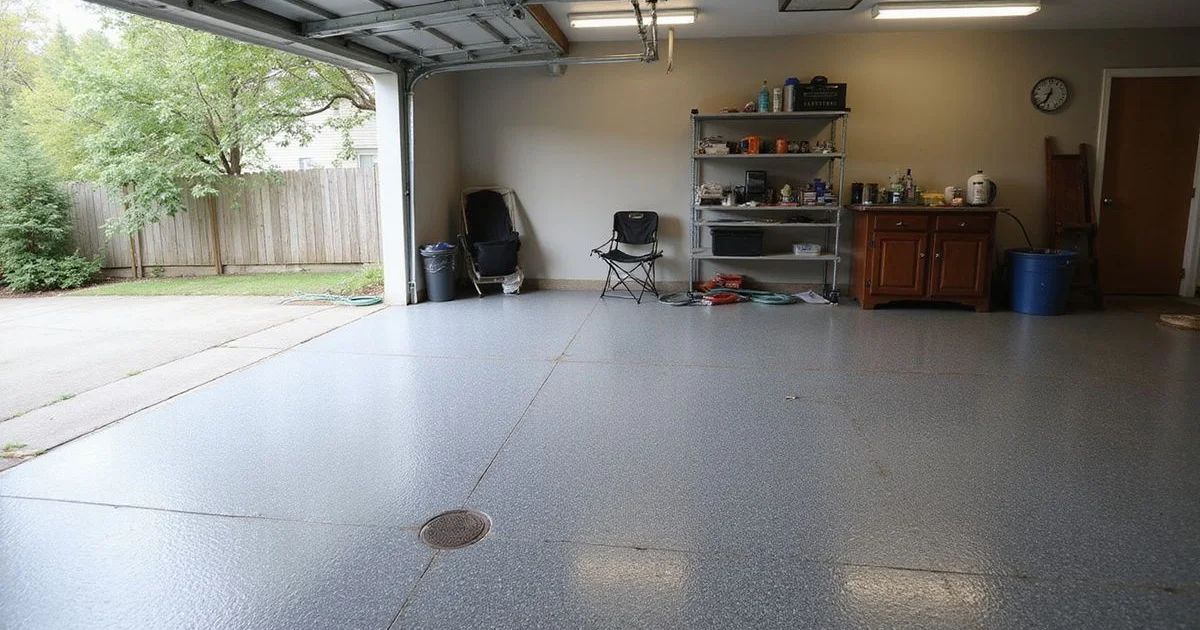
Why a Garage Floor Is Its Own Job
A garage floor takes more abuse than anything inside the house. Think tires hot off a Texas highway, dropped tools, oil and brake fluid, grit dragged in from the driveway, and standing water every time it rains.
It's usually the slab that got the least care when it was finished, too. The slab slopes toward the door, with control joints (the cut lines) running through the middle. Pitting near the apron, where the garage meets the driveway, is common, and nobody ever meant for that floor to be looked at.
That makes it a good fit for a coating, and a bad fit for a sloppy one. This falls under our epoxy floors service, and the details below are what make a garage job different.
Why Most Garages Get Flake Systems
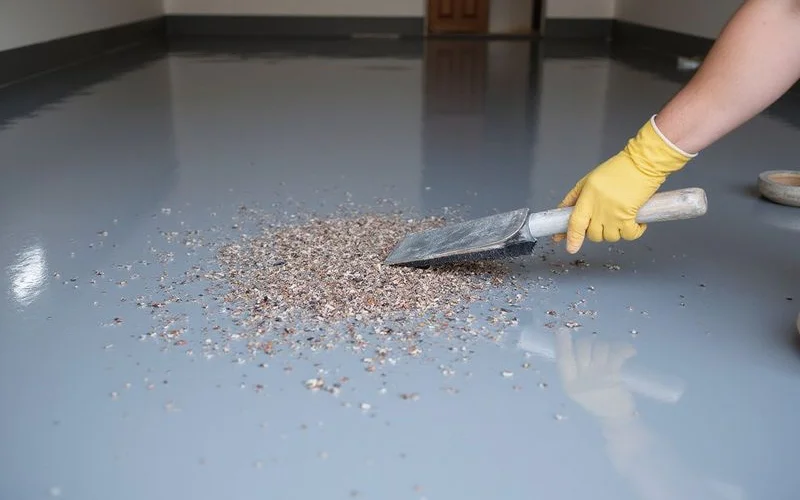
Here's how a flake system works. A tinted base coat goes down, and we toss vinyl chips into it before it dries. That's called broadcasting. Once it cures, we scrape off the extra chips and a clear topcoat seals everything in.
That gives you a few things a solid color doesn't. The texture adds some grip. The busy pattern hides dust, tire marks, and the small flaws every garage slab has. And the chips add a little thickness to the coating.
You get to pick how many chips go down. A light scatter lets the most base color show through, and a full broadcast buries the floor in chips from wall to wall. That full coverage gives the most texture and hides the most, but you'll pay more in material and labor for it.
What Hot Tires Do to a Coating
Hot tire pickup is the problem people ask about most, and it deserves a straight answer.
A tire coming off a hot road is soft, and chemicals in the rubber called plasticizers attack coatings. If the coating isn't stuck down well, is too thin, or isn't fully cured, the tire pulls it up. What's left looks like the coating got peeled off in patches. That's exactly what happened.
So what stops it? Not a magic product. It's grinding the slab right so the coating grabs hold, and putting down enough coating to stand up to the heat. Then you add a topcoat that suits the job and let it fully cure before the car comes back. A good polyaspartic topcoat resists hot tires better than plain epoxy, which is why so many garage systems finish with one.
The easiest way to ruin a new garage floor
Park on it too early. The floor feels hard long before it's fully cured. A hot tire on a floor that's almost there will mark it for good. Ask for both dates: when you can walk on it and when the car can come back.
Prep and Moisture Still Matter
Garage slabs sit right on the ground and often have less of a moisture barrier under them than a slab inside the house. Moisture testing matters here. We cover it in detail in slab preparation and moisture testing before epoxy.
Prep changes from slab to slab. It can include diamond grinding, and your written proposal lists the exact prep for your job. Acid etching is the shortcut a lot of DIY kits use, and it can make them fail early.
Expect repairs too. Pitting near the apron, chipped and flaking concrete along the door line, and open control joints usually need fixing before any coating goes on. A coating laid across a joint that moves will crack right along it.
One Day or Several?
| Topic | Fast polyaspartic system | Standard epoxy system |
|---|---|---|
| Install time | Often one day | Usually two to three days |
| Foot traffic | Usually the same day | Usually the next day |
| Vehicle traffic | Usually around 24 hours | Usually several days |
| Cost | Higher | Lower |
| Holds up to sunlight | Better | Yellows over time |
Neither one is better for everyone. If the garage is the only way into the house, the fast system is often worth the extra cost. If you can leave it alone for a week, the epoxy system usually costs less.
What to Ask For
Ask for the product name for each layer and how they'll grind the slab. Ask how they'll test for moisture, how heavy the chips go, whether a slip additive is in there, and both cure dates. Then ask what happens if the moisture test comes back high. A good answer is that the plan changes. That tells you the test actually counts.