
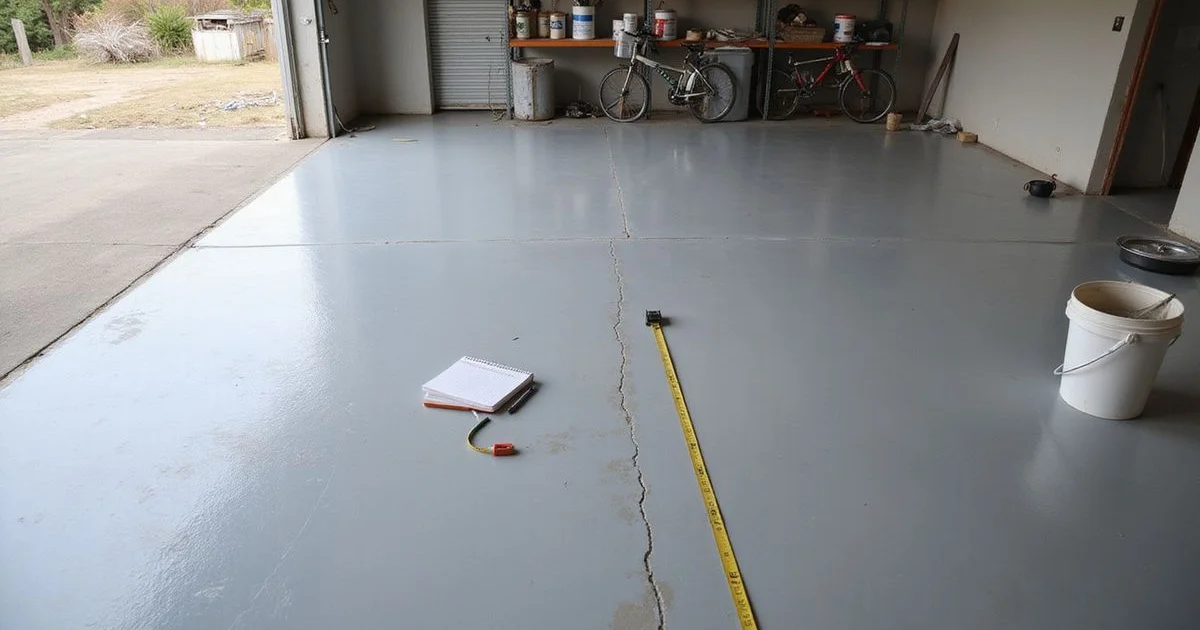
Why the System You Pick Matters Most
Epoxy quotes can swing a long way from one contractor to the next. “Epoxy floor” covers everything from one thin coat to a floor built up in layers: primer, base coat, a layer of flakes, and a topcoat.
Before you compare numbers on an epoxy floor quote, figure out which system each contractor is quoting. A thin rolled on coating and a full flake floor aren't two prices for the same thing.
What Drives the Price
1. Which system and how many layers. The choices run from one coat of color, to several coats of solid color, to flakes, to metallic. Each step up adds layers, material, and labor. With flakes, how thick you want the chips spread changes the price too.
2. Area and layout. Bigger open floors cost less per square foot than a one car garage. Setup, getting the crew out, and equipment cost about the same either way. Chopped up spaces with lots of edge work cost more.
3. Getting the slab ready. Prep depends on the job, and diamond grinding is common for epoxy. How much grinding comes down to what's on the slab: old coatings, sealers, glue, or paint all add passes. We explain it in our guide to slab prep and moisture testing.
4. Moisture testing and moisture barriers. Testing doesn't cost much. If the readings are high, a moisture barrier is a real extra layer with its own material and labor cost.
5. Repairs. That means small pits, chipped and flaking concrete near the garage door, filling the cut lines in the slab, and fixing cracks. Most garage slabs need some of this.
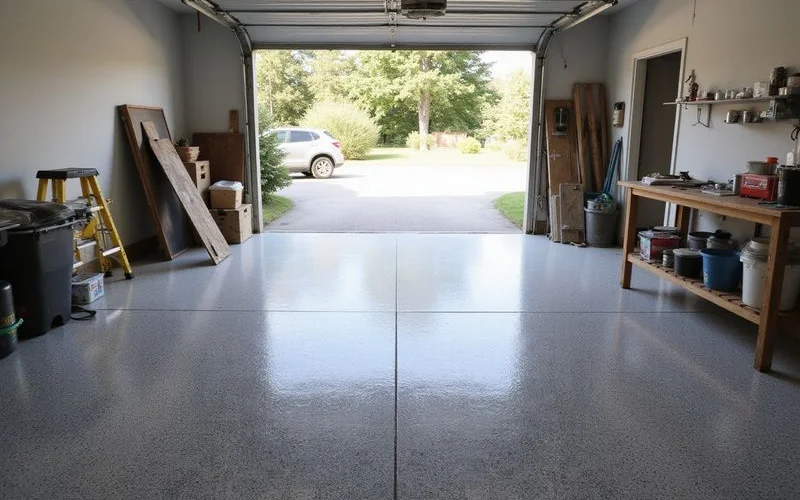
6. Topcoat and additives. A polyaspartic topcoat costs more than clear epoxy. You typically get better sun resistance and a floor you can use sooner. Slip additives cost a little and help reduce slipping when someone walks in with wet shoes. No wet floor is fully slip proof, so use mats where people walk in from outside.
7. How fast it cures. Systems that let you use the floor sooner cost more. If the garage is your only way into the house, we'd usually pay the extra.
8. Access and minimums. This covers stairs, tight parking, limited work hours in commercial buildings, and minimum charges on small areas.
What to Check in a Much Cheaper Quote
When one epoxy quote is much cheaper, check what it lists. Is grinding listed, or a wash or acid etch? What about moisture testing? And is the coat count written down?
You can't see any of that the day the job's done. You see it when the first hot tire peels up a patch, or when moisture pushes bubbles up through the floor in a wet spring.
What it costs to do it twice
Taking off a failed coating can cost nearly as much as putting down a good one. Grinding off a coating that stuck and then failed is slow, dirty work, and nothing new can go down until it's done. Saving money on the first job often means paying twice.
Where the Money Is Well Spent
Along with slab conditions and care, four things do the most to decide how well the floor holds up. They're grinding, moisture testing, enough coating thickness, and a topcoat that fits the sun and wear it gets. Skimp on any of them and you get a floor that only looks good in photos.
How thick the chips go and what color you pick are about looks. You can change them to fit your budget without putting the floor at risk. A fast cure is about convenience. Metallic is a style choice.
None of them decide whether the coating stays stuck down.
DIY Kits and Their Real Cost
Store bought epoxy kits are cheap. For a small utility room where you don't expect much, they sometimes do the job. So why do they cost so little?
They're thin. Many are water based, and about half of what's in the can is water that dries off. A kit coat cures to about 3 mils, or three thousandths of an inch. A pro coat of 100% solids epoxy runs about 9 to 12 (three to four times as thick).
They rely on acid etching instead of machine grinding, and etching doesn't give the coating nearly as good a grip. And their only moisture check is a plastic sheet taped down for a day. That's a rough test for a big risk.
You end up with a floor that looks good for a season, then peels up under a hot tire or bubbles where moisture pushes through. By then, fixing it often costs more than the pro quote would have, since the failed coating has to be ground off first.
If your budget won't stretch to a full system, do a smaller area the right way instead of a big area done thin. With proper care, a one car garage done right will typically outlast a whole workshop done with a kit. And you're far less likely to get stuck with a bill to tear it off.
How to Get Quotes You Can Compare
Ask each contractor for the same five things in writing. You want the product for each layer, how rough they'll grind the slab, and how they test for moisture and what happens if it's high. Add the total number of coats and two estimated times: when you can typically walk on it and when you can drive on it.
Then compare. Once everyone is quoting the same work, the prices usually land a lot closer together. Where they don't, you can usually see which line explains the gap.