
Core service Serving Austin since 2001

Stained Concrete Floors for Austin Homes and Businesses

We stain concrete floors in Austin with acid and water based stains, and we check your slab before we pick either one.

Pricing: Our cost guide has budget ranges for staining. Your final quote depends on your slab and what the job includes.

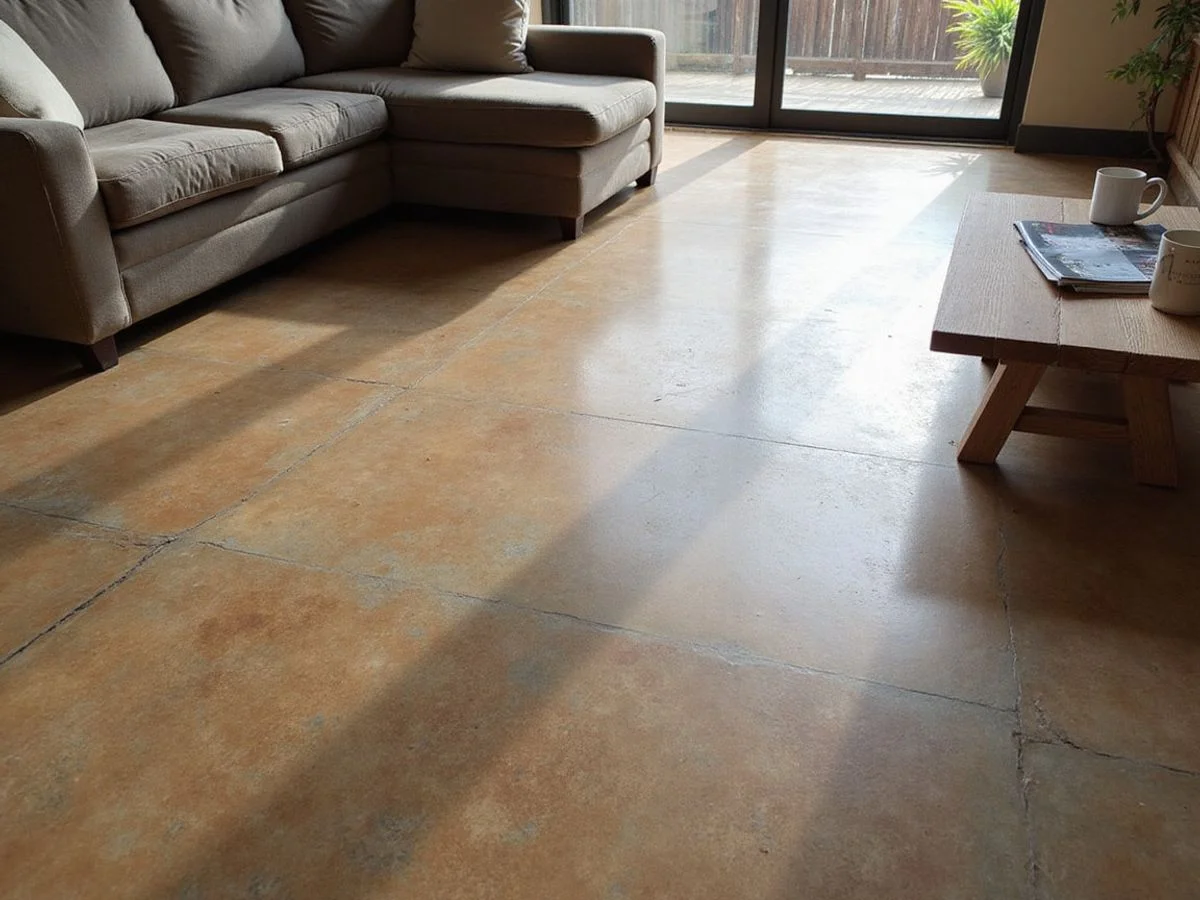
Warm acid stained concrete floor running through a large open living room
  • Serving Austin since 2001
  • Decorative concrete specialists, not a general remodeler
  • Seven confirmed service lines
  • Published editorial standards and technical review

We're Austin Stained Concrete Floors, and we've done decorative concrete floors around Austin since 2001. Where it helps, we test color on your concrete, and we pick the stain that fits its condition and the look you want.

How Acid Stain, Water Based Stain, and Dye Differ

Staining colors the concrete you already own. Rather than laying something on top, the color goes into the surface of the slab, and a sealer protects it. That's the whole idea, and it's why a stained floor looks like stone or leather instead of paint.

There are two main kinds of stain, and you can't swap one for the other. Acid stain has metal salts that react with the lime in the concrete. The result is mottled color you can see into, and it shifts across the slab. Water based stains and dyes carry pigment into the surface instead. They give you more colors to pick from and a tone that's easier to predict.

Dye gives the most even, strong color, but some dyes fade in sunlight. Integral color is a different product, mixed into the concrete before it's poured. You can't add it to a floor that's already there. We pick the product after we see your slab, not before, so we aren't left hoping the concrete cooperates.

The Stained Finishes We Offer

  • Reactive acid stain. Browns, tans, terra cotta and soft greens with natural swirls of color. A good pick if you like seeing the marks and quirks in your slab.
  • Water based stain. More color choices and more even coverage, but it still shows where the concrete soaks up more or less.
  • Dye. The strongest color, often used indoors or layered over acid stain.
  • Stain plus polish. We grind the slab, add color partway through the polishing steps, then keep polishing to a smooth surface with no coating to peel.
  • Stain over a concrete overlay. A thin overlay called a microtopping gives you a fresh, even surface when the slab is too damaged or patched to stain.

Can Your Slab Be Stained?

This question decides everything else, and we can't answer it from a photo alone.

Carpet usually leaves tack strip holes, leftover glue, and staple marks behind. Pull up ceramic tile and you'll find ridges of thinset mortar that have to be ground down. Vinyl leaves a layer of glue that keeps stain from soaking in at all until it's removed. Newer slabs often have a clear coating from when they were poured, called a curing compound, and you won't see it until you try to stain through it.

Any of these can be dealt with. But each fix takes real work that belongs in the quote, and skipping it is how a lot of stained floors go wrong.

The other big factor is how much the concrete soaks up (pros call it porosity). A slab finished with a power trowel in a newer Austin subdivision is dense and takes color slowly. An older slab with a more open surface can take it faster. Patched areas take color differently from the original pour.

If a slab has been under a few different floors already, the finished stain will show that history. Is that character or a problem? It comes down to what you were expecting, and we'd rather have that talk before any work starts.

How Much Does Staining Concrete Cost in Austin?

We don't post a price per square foot. The number that matters comes from your floor, not a chart. You'll find the main cost factors in the pricing section below. Those are the things to ask about when two quotes come back far apart.

Two quotes that look alike on paper often split apart on prep work. One includes tile removal, grinding the whole surface, crack repair, and two sealer coats. The other includes a clean and a single coat. Both say “stained concrete floor.” But they aren't the same job.

Ask what prep is included, what's left out, how many sealer coats are in the price, and whether there's a minimum charge. We make a habit of answering all four in your written quote.

When Another Floor Makes More Sense

Stain isn't the right fit for every floor, so here's when we'd point you elsewhere.

Stained concrete is a hard surface. Rugs are the only fix for that. It shows off flaws instead of hiding them, so if you need a floor that looks even, an overlay or another floor covering is a better fit.

Stain can't fix structural problems. Structural repair is outside our decorative work, but we'll talk through options during the consultation, including who handles that work. And if the slab has a moisture problem, we need to understand it before any coating or sealer goes down. Trapped moisture is what turns a nice floor into a peeling one.

Picking a Sealer and Living With the Floor

The sealer isn't an afterthought. It decides how the color looks, how the floor feels under your feet, and how much light bounces around the room. It changes how slippery the floor gets when wet and how it wears where people walk most (think of the path from the back door to the fridge).

Matte finishes hide dust and scuffs better than the others and look the most natural. Satin sits in the middle, and it's what we suggest for most living rooms. Gloss makes the color look deeper, but it shows every scuff and is the hardest to live with in an entry or kitchen. Penetrating sealers soak into the concrete instead of sitting on top, so there's no coating to peel. Acrylics and polyurethanes form a coating on the surface. They give more shine and more protection, but they'll need redoing at some point.

When the job is done, we walk you through care, cure times, and upkeep for the sealer we put down. We go over which cleaner to use, what to avoid, how to deal with grit and spills, and the signs it's due for a touch up. How the floor holds up depends on following that guidance. If questions or concerns come up after the job, reach out and we'll talk it through. We don't set one resealing schedule for everyone. Foot traffic, sunlight, and upkeep decide when it's time.

If you're still comparing quotes, our guide on the cost of staining concrete floors in Austin shows which line items actually move the number. Our acid stain versus water based stain guide covers the product difference people mix up most often. We're a decorative concrete contractor in Austin, and staining is one of our seven services. We take jobs across the metro, from Round Rock and Cedar Park to Pflugerville and Lakeway, and we confirm coverage before we book. If our look at your slab points to a different service, we'll tell you.
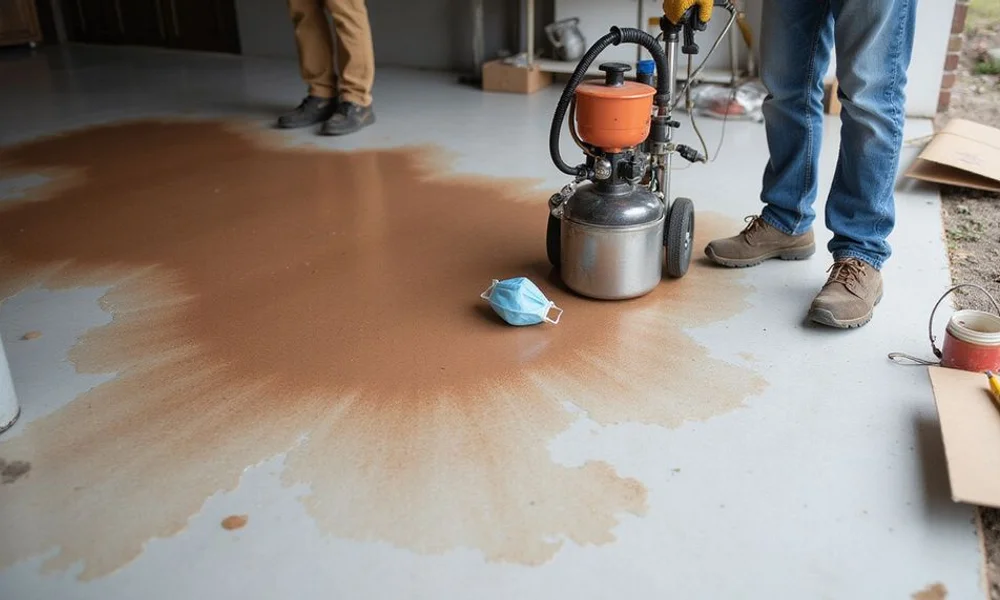
Installer putting acid stain on a prepped concrete slab in a home
Installer putting acid stain on a prepped concrete slab in a home. Sample image, not a photo of one of our finished projects.

What you get

  • A plain look at acid stain, water based stain, and dye
  • A check of your slab and the prep it needs, covering patches, how much it soaks up, old glue, and coatings
  • A sealer and shine level picked for how you use the room, from matte to gloss
  • Costs tied to your actual floor, not a city average
  • Homes and businesses across the Austin metro, with coverage confirmed job by job
Pricing

How much do stained concrete floors cost in Austin?

Our quotes come from your slab and the work it needs. Here's what moves the price, so you can compare quotes line by line.

Square footage and how many separate rooms or levels there are. Edges, doorways, and the spots where one room meets the next take more labor than you'd think.

Taking up what's on the floor now: carpet and tack strip, ceramic tile and thinset, vinyl and its glue, or a failed coating.

Prep: grinding the surface, taking off old glue and curing coatings, and getting down to concrete that takes color more evenly.

Repairs: patching, fixing cracks, and how much of the slab's existing marks you're happy to leave showing.

Color: acid stain, water based stain, dye, or a mix layered together.

The sealer, the number of coats, and how much shine you want.

Access, power, moving furniture, and whether the space can stay empty until it's dry and cured.

Any minimum charge on small rooms, which your quote lists before you commit.

What your quote should include

A good quote ties the price to the prep, the products, access, and what's left out. Ask for the scope in writing, along with any minimum charge. If you want a number to plan around first, our cost guide has budget ranges for staining.

Every job starts with a look at your slab. The scope, the price, and what you can expect depend on your slab's condition, the setting, and the job itself. This page describes our work in general terms. Your signed written proposal is what governs the actual work. If we find something once work starts that we couldn't see before, like moisture or damage under old flooring, we talk it through with you before we go on.

Get My Free Stained Concrete Quote
Why us

Why choose us for stained concrete

We check the slab before we sell

If your slab isn't a good fit for stain, we'll say so and talk through other options during the consultation.

We call products by their real names

Stain, dye, paint, sealer, and integral color are different products. We quote the one that suits your floor and say why.

We can test on your concrete

Acid stain color changes from slab to slab. Where it helps, a test on your floor gives you a closer idea of what to expect before you commit.

Prep work spelled out, not assumed

Removal, grinding, and repairs are written into your quote when the job calls for them, so you can compare it with others.

Sealer chosen for the room

Shine, grip, and wear matter in different ways in a kitchen, a hallway, and a storefront. We pick the sealer for how the space gets used.

Serving Austin since 2001

We've worked on Austin area slabs since 2001, from patched floors in older homes to dense concrete in new builds.

Process

How a stained concrete job goes

  1. 1

    Checking your slab

    We look at how much the concrete soaks up, old glue, patches, cracks, and any coating already on it. Then we point out what we see that could change the color.

  2. 2

    Test area

    If the color is a question mark, we test on your slab so you get a better idea of what to expect from your concrete, not a sample photo.

  3. 3

    Preparation

    Prep depends on the job. We take up the old floor, clean, and grind when the slab calls for it, so the surface takes stain as evenly as the slab allows. This is most of the work.

  4. 4

    Color and seal

    We put the stain down, then rinse off the acid residue or let it dry, depending on the product. Then the sealer goes on at the shine level you picked.

Finish examples

What stained concrete finishes look like

Here's roughly how each finish we talked about looks. Photos of our real projects are on the projects page. Results vary by slab condition, prep, setting, and product.

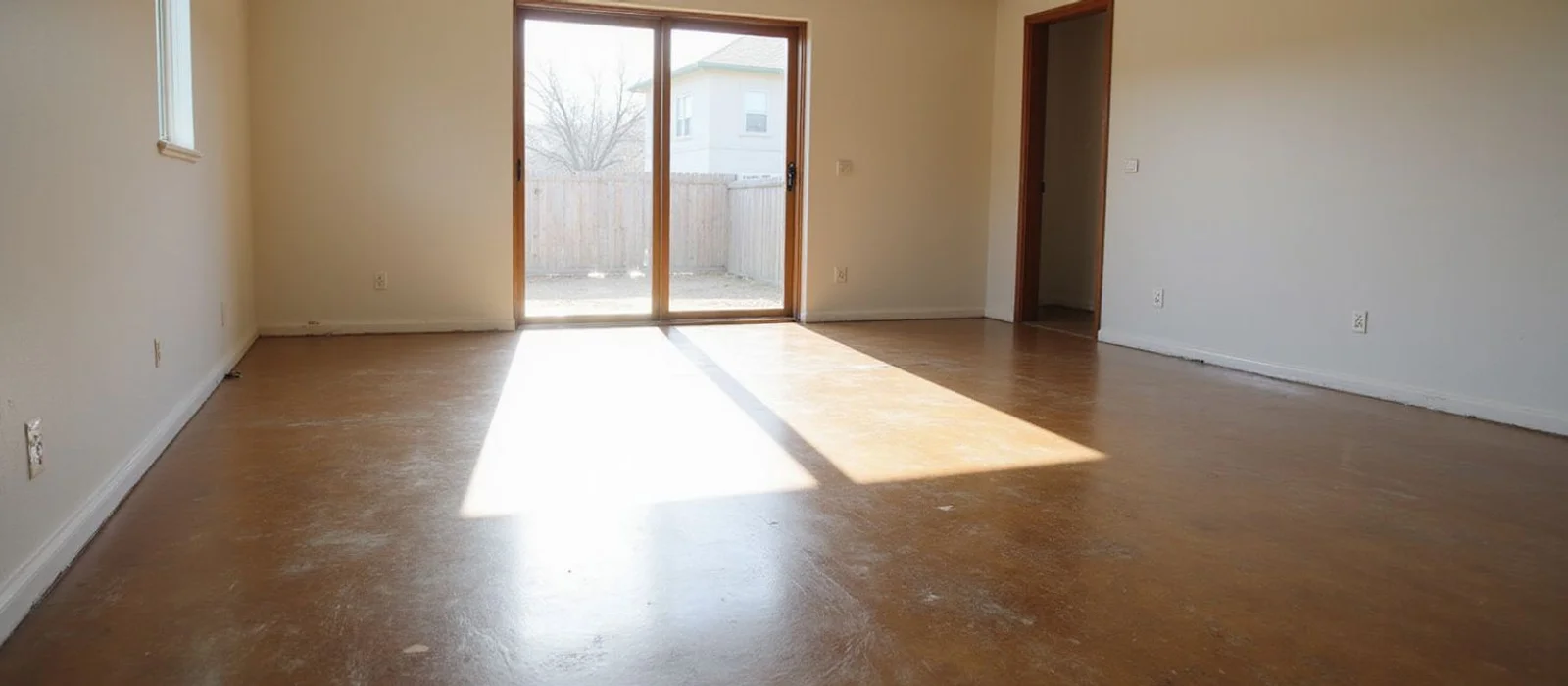
These are concept images, not photos of our finished projects.

What to Check in Any Stained Concrete Quote

Use this list on every quote you get, ours included. Our column shows how we typically quote and plan a job.

What to compareWhat to check in any quoteHow we quote it
What color to expectDoes it say how color will be checked on your slab?Typically a test patch on your slab where it helps, before you commit
PreparationAre removal, grinding, and repairs listed?Listed in your proposal when the job calls for it
PricingIs the price tied to your job, with exclusions and any minimum listed?Typically built on your job, with what's left out and any minimum spelled out
SealerIs the coat count written down?Sealer name, shine level, and coat count typically listed in your proposal
Care after the jobAre care steps matched to the sealer?We go over care for your sealer with you when the job is done
Real projects

See our concrete projects

Look through photos of our concrete work and what each job included. Find the finish closest to what you want, then ask us what would change on your slab.

Questions

Stained Concrete FAQs

Can an existing concrete floor be stained?
Often yes, but the slab decides. Once the tile or carpet comes up, you may find thinset, leftover glue, bits of tack strip, patches, and saw cuts. The concrete can soak up stain differently from one side of the room to the other. All of that changes how deep the stain goes and how the color looks. We look at the slab, test a small spot where that helps, and tell you what prep it needs before you commit. Sometimes an overlay gives you a better floor than staining the concrete you have. Older tile and black adhesive can contain asbestos, so if your flooring may be decades old, it needs testing before anyone removes it. We'll talk that through during the consultation.
What's the difference between acid stain and water based stain?
Acid stain has metal salts in it that react with the lime in the concrete. That gives you a mottled, earthy color that lets the concrete show through and shifts across the slab. Water based stains and dyes carry pigment into the surface instead. You get more color choices and a tone that's easier to predict, but the color still won't be perfectly even. We match the stain to your concrete and to the look you want.
Will cracks, patches, and saw cuts still show?
Yes, and it's worth knowing before you start. Stain lets the concrete come through, so it shows off every mark in the slab instead of covering it. A lot of people want exactly that. To them, a floor with some history in it looks real, not damaged. If you want an even surface with no shadows from old repairs, a thin overlay called a microtopping gives you a fresh surface to color. We'll tell you when that's the better way to go.
How much does a stained concrete floor cost in Austin?
The price comes from your actual floor, not a city average. The big factors are square footage, what has to come off the floor first, and how much prep and repair the slab needs. Then there's the color, the sealer and number of coats, access, and any minimum charge. Our quotes typically list what the price covers and leaves out, so you can line them up against other quotes.
How long does the job take?
Putting the color down is usually the quick part. First comes removal and prep, which takes as long as the slab needs. After that come color, sealer coats with drying time between them, and curing before furniture and foot traffic come back. Humid weather slows it down, and each extra sealer coat adds time. Your proposal gives an estimated timeline, including when you can typically walk on the floor and move everything back. Weather, material availability, and site conditions can change it. Then stick to the care and cure steps we go over with you.
Can you match a specific color?
No. With acid stain, an exact match isn't realistic. Acid stain color comes from a chemical reaction with your slab, so the same product on two floors gives you two different results. We can show you a realistic range with samples and test patches, and water based products get closer to a set color. So think of it as a target range, not a guaranteed match.
Is stained concrete slippery?
How slippery it gets comes down to the sealer and the shine level, not the stain. A high gloss sealer in a kitchen or a wet entry will be more slippery than a matte or satin one. Where that matters, we can mix a grit additive into the top coat for better grip. No wet surface is fully slip proof, so keep wet areas dry and use mats where people walk in from outside. We pick the sealer for how you actually use the room. Sometimes that means talking you out of the shiniest floor you've seen in photos.
How do you look after a stained concrete floor?
Day to day care is simple: keep grit off the floor, dust mop or vacuum often, damp mop with a pH neutral cleaner, and wipe up spills right away. What changes from floor to floor is the sealer. A sealer that soaks in, an acrylic, and a polyurethane all wear down and get redone in their own ways. When the job is done, we walk you through care for the sealer we put down. How the floor holds up depends on following that guidance. We don't give a set schedule for resealing. How much traffic the floor gets and how it's cared for decide that.
Can stained concrete go over radiant heat or in a bathroom?
Both are possible and both need checking first. With radiant heat, the system usually gets turned off a couple of days ahead so the slab is at room temperature when we stain and seal. Bathrooms bring up questions about slipping and moisture. What usually decides it is the slab's condition and moisture, not which room it is, so we check before we say yes.
Do you work on commercial floors?
Yes. We take on stores, restaurants and hotels, offices, garage floors, and light industrial spaces in Austin, Round Rock, and Georgetown. We confirm coverage before we book. Commercial slabs come with their own issues: more patching left over from past tenants' buildouts, bigger areas to keep even, and tighter schedules around business hours. We check the slab the same way. The planning takes more back and forth.
Is staining cheaper than replacing the floor with tile or hardwood?
Staining often costs less than new tile or hardwood. It uses the slab you already have instead of adding new material on top. The gap gets smaller when the slab needs a lot of prep, like removing old glue, fixing cracks, or grinding off a failed coating. When it's close, we can price both options so you can compare real numbers for your floor.

Still deciding?

Ask us about your slab, and we'll tell you what it needs before you commit to anything.

Get My Free Stained Concrete Quote
Learn first

Stained Concrete guides

These guides go deeper than this page on the questions we hear most.

Acid Stain vs. Water Based Concrete Stain

Acid stain vs. water based stain: how much the concrete shows through, how much the color varies, and how much control you get. It covers the real limits too.

Can You Stain Existing Concrete? (After Tile or Carpet)

Whether your slab can be stained comes down to old glue, patches, cracks, and how much the concrete soaks up. It covers what to check and why a test patch matters.

Cost to Stain Concrete Floors in Austin

What drives stained concrete cost in Austin: square footage, removal, prep, repairs, sealer, and minimum charges. It includes published industry numbers and shows how each job's details change the price.

How Stained Concrete Is Prepared and Installed

How stained concrete is prepped and installed: removing old glue, cleaning, grinding the surface, and which products work together.

How to Choose a Concrete Staining Contractor in Austin

How to choose a concrete staining contractor: samples, a written scope, what's left out, references, warranty terms, and comparing quotes side by side.

How to Clean and Care for Stained Concrete Floors

Everyday care for stained concrete based on your sealer: which cleaners to use, dealing with spills and scratches, and protective finishes.

Stained Concrete Pros & Cons

What staining does well, the flaws you will live with, the upkeep it asks for, and when another finish is the better call.

Stained Concrete Colors & Finishes

The earth tones and cooler shades staining can reach, how matte, satin and gloss shift them, and why a sample on your slab settles it.

Sealing Stained Concrete

Penetrating sealers against film sealers, matte through gloss, how each wears in a busy room, and how to tell when it is time to reseal.

Stained Concrete Installation Timeline

What the schedule looks like from prep through cure, when you can walk on the floor and put furniture back, and what stretches a job out.

Stained Concrete Problems

Cloudy patches, peeling sealer, thin spots and dark areas that come and go. What each one usually means and what we would check on site.

Stained Concrete Patios

Whether staining suits an outdoor slab in Central Texas sun, which sealers hold up, and the slope, texture and care an Austin patio needs.

Reseal or Restore a Worn Floor

The signs a reseal will do the job, the ones that mean a full restoration, and why no calendar can tell you which you are looking at.

Stained vs. Polished Concrete

One adds color to the slab, the other pulls shine out of it. How the two compare on look and upkeep, and when doing both makes sense.

Stained Concrete vs. Epoxy Floors

How staining and epoxy compare on looks, durability, prep and cost, so you can tell which one fits the room you have in mind.

Try our free Concrete Project Estimator

Figure out your square footage, how much sealer you need, and how much prep to expect before you ask for a free quote.

Use the estimator

Ready to talk about stained concrete?

Send us a few photos of the floor you have now and your room sizes. We'll tell you what we see and whether stain looks like a fit before anyone quotes a number. We confirm it when we check your slab.

  • We check your slab before we talk color
  • What drives the cost, explained in writing
  • Serving Austin since 2001

See a real stain and seal remodel

Take a look at the finished floor, then use our slab check and budget tools to plan your own job.