
Outside, the Rules Change
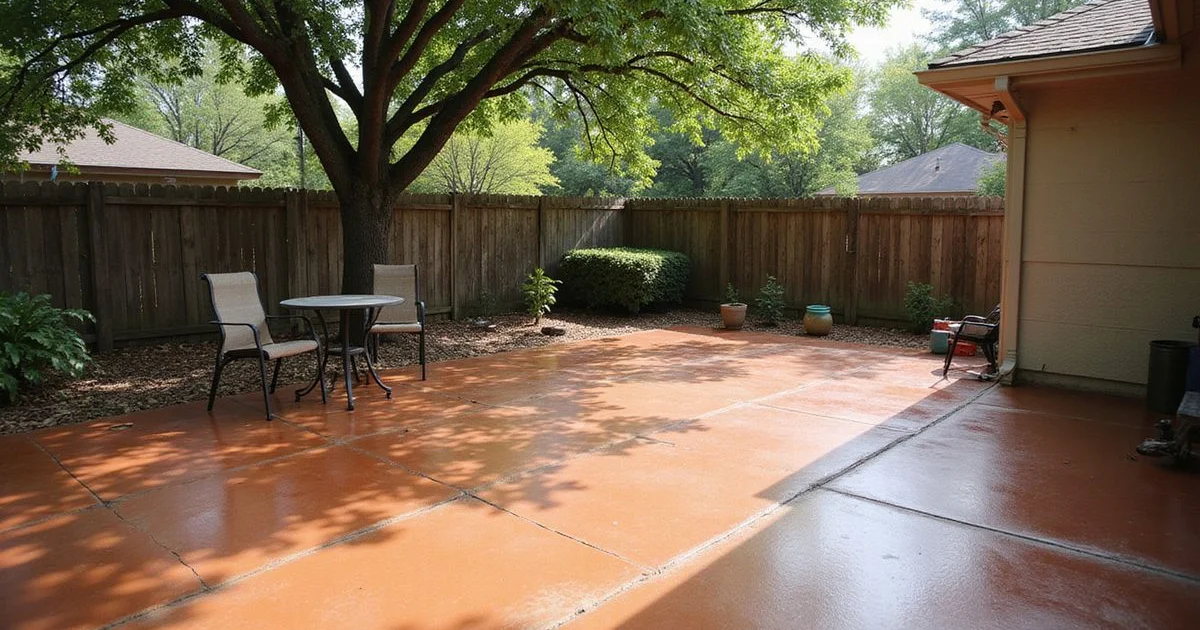
An interior stained floor deals with furniture and foot traffic. A patio gets months of direct sun, driving rain, daily heating and cooling, standing water, leaf litter, barbecue grease, and bare feet.
The same kinds of stain work outdoors, but everything around them changes: the sealer, the texture, and how much upkeep to expect. We wrote this guide to help you figure out if a stained patio makes sense for you. Our patio resurfacing page covers what the service includes.
Is Your Patio a Good Fit?
The slab needs to be sound. Surface wear, discoloration, a little surface flaking (spalling), and a dated broom finish are all fine to work with. Sinking, cracks that are still growing, and structural failure aren't. Staining over those only puts color on the problem. That's structural repair, and it falls outside what we do as a decorative crew. We'll talk through your options during the consultation, including who handles that kind of repair.
Drainage needs to work. Water that sits on a patio wears the surface faster, grows mildew and algae, and soaks into anything that will take it. If the slab doesn't slope the right way, that needs fixing before any decorative finish goes down. Drainage and slope fixes fall outside our decorative work too. At the consultation, we can go over who takes that on.
Think about sun and shade. A slab facing west in full sun and a shaded one facing north are different projects, even at the same house. We pick color and texture based on that, not off a chart.
Picking a Color for Outside
Two things change how color works outside.
The first is heat. Darker colors soak up a lot more heat from the sun. In an Austin summer, that can make a big difference in how hot the patio feels under bare feet. We go deeper on this in keeping outdoor concrete cool and slip resistant.
The second is UV. Constant sun wears on both the color and the sealer, so outdoor finishes soften over the years in a way indoor floors don't. Reactive stains tend to hold up well, since the color bonds chemically with the concrete. Dyes are the weak spot, and many of them fade in direct sun.
Neither one is a reason to skip a stained patio. They're reasons to choose based on how much sun the patio gets, not the color you liked in a living room photo.
Texture Keeps You on Your Feet
Outside, texture matters for more than looks.
A smooth, sealed patio is slick when it's wet, and between rain, the hose, and pool splash, it will be wet. Textured finishes like knockdown, broom, or a cool deck style give you more grip and break up the hot surface at the same time.
Anti slip grit mixed into the sealer adds even more grip. We recommend it around steps, pool edges, and anywhere the level changes. It helps, but no wet surface is fully slip proof.
The regret we hear most
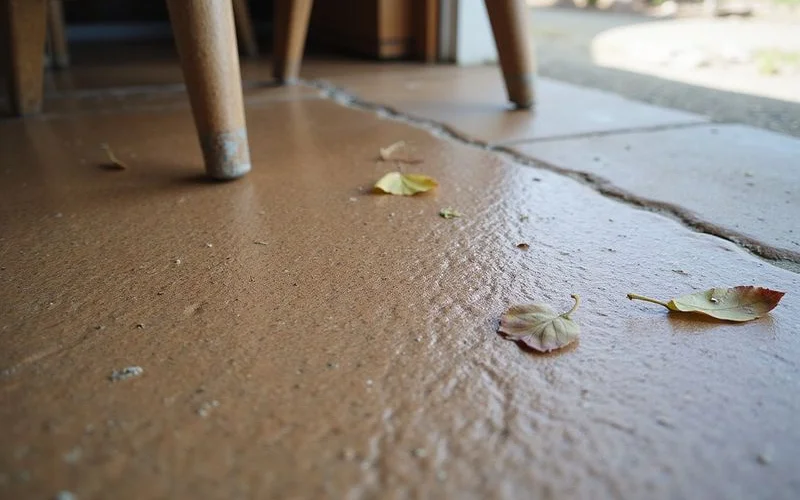
People pick a glossy outdoor sealer since it makes the color look deep and rich in the sample. It does that, but it makes the surface slippery and shows every leaf mark too. Outside, we steer people to a matte, textured finish. It usually ages better.
Which Sealer Works Outside
What makes an outdoor sealer different? The big thing is standing up to UV, since some indoor sealers turn yellow in the sun. Film sealers that sit on top can trap moisture and turn cloudy from underneath.
Penetrating sealers (the silane and siloxane type) soak into the surface instead of forming a film. That suits patios out in the open and lowers the chance of trapped moisture. Decorative film sealers make the color look deeper, but they need more upkeep.
Whichever one you go with, plan on resealing. Outdoor sealers work harder and need redoing sooner than indoor ones. That's the price of being outside in Texas, not a defect.
Pool Decks Need Extra Thought
A pool deck is the toughest outdoor job, since every problem above gets worse there.
It's wet all the time, so traction stops being nice to have and becomes the top priority. People walk on it barefoot, so how hot it gets matters more there than anywhere else on the property. It takes chlorinated or salt water, which is harder on sealers than rainwater. And with all the splashing, it rarely gets the long dry spells that help other outdoor concrete.
There, we typically recommend lighter colors and a finish with real texture, not a light sprinkle. We usually suggest a fine plastic grit in the sealer for more grip under wet bare feet. We look for an outdoor sealer designed to handle pool chemicals and UV, too. Your written proposal lists the exact products for your job, and no pool deck is fully slip proof.
Pool decks are where we most often talk people out of a dark color or a glossy finish. The photos that inspire them are usually taken dry, in the evening, with nobody walking on the surface.
Keeping It Looking Good
Sweep often, since leaves left on a damp surface will mark it, and hose it down every so often. Move planters now and then, since spots that stay wet under pots will discolor. Clean up barbecue grease right away. And watch for signs the sealer needs work: water stops beading, the color looks flat, and marks that used to rinse off start to stick around.
Done right and kept up, a stained patio typically holds up well in this climate. Done with indoor products and methods, it won't last long. At the end of the job, we walk you through care, cure times, and upkeep. How long it lasts depends on following that guidance, too. If questions or concerns come up after the job, reach out and we'll talk it through. This is general information. Follow the product maker's instructions, and bring any questions to a consultation with us.