
Outdoor Jobs Are Priced Differently
Two things make outdoor quotes different from indoor ones: shape and weather.
Patios are hardly ever simple rectangles. Curved edges, steps, pool edges, planter corners, and doorways all take hand work. That time doesn't track square footage the way it does on an open indoor floor. Many outdoor sealers need temperatures between about 50 and 90 degrees for a full day after they go on, so the calendar is part of the cost talk.
The patio resurfacing page explains the service itself. Here we stick to what moves the price, and where you can save without hurting the finish.
What Drives the Price
1. Area and shape. Square footage sets the starting point, and the shape moves it up or down. A simple rectangle costs the least. A curved patio with two steps and a planter corner can be the same size and take a lot more labor.
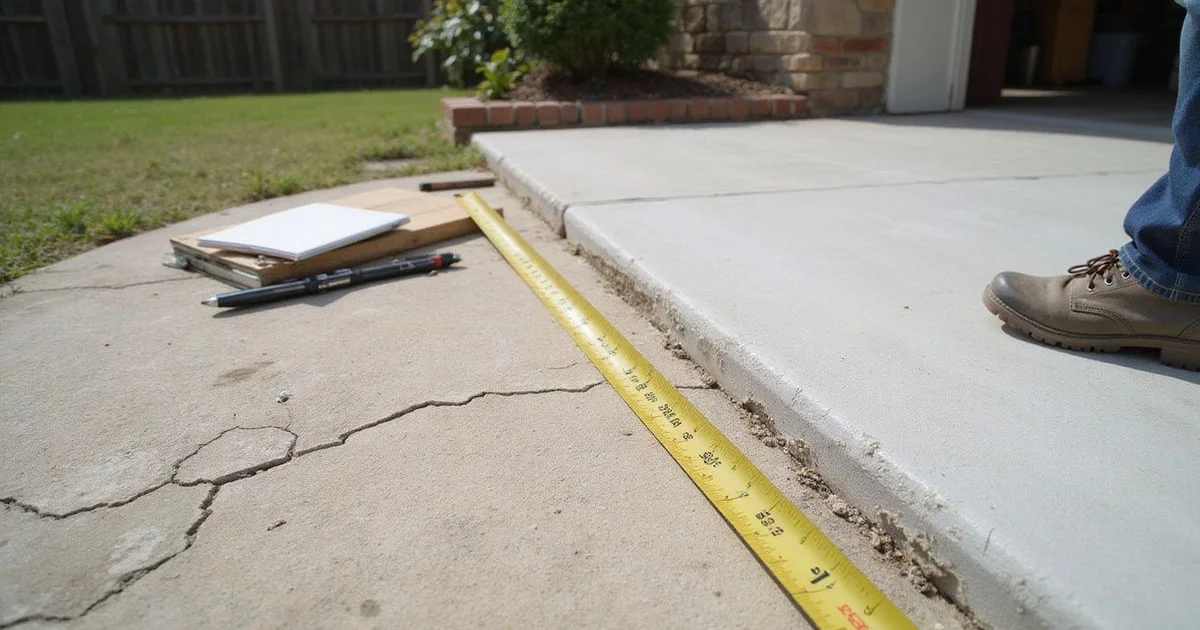
2. How your concrete is holding up. Concrete that's solid but tired is easy. Flaking or chipped spots, old coatings, paint, or a badly damaged surface all add prep work. Anything stuck to the slab has to come off, or the new surface won't hold.
3. Which approach you go with. Staining and sealing the concrete you have is the simplest, and a resurfacing overlay costs more since it gives you a new surface with the texture you pick. Once we see the slab, we'll tell you which one it can take.
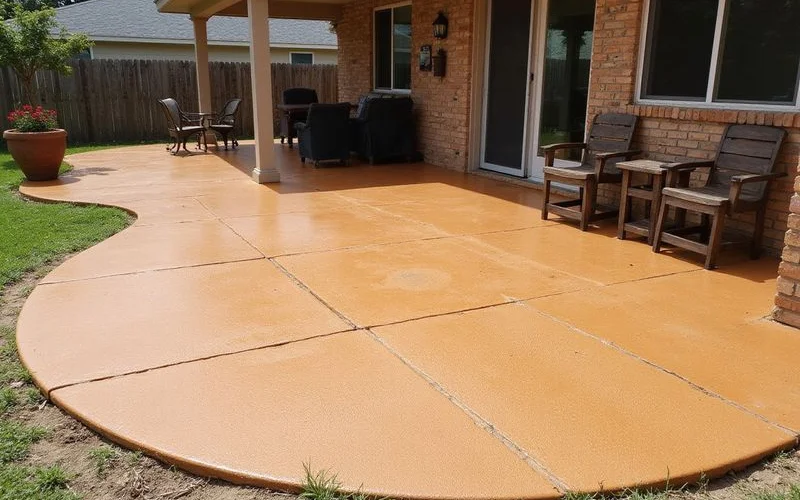
4. Texture and finish. Plain finishes are quickest. Knockdown, cool deck style, scored patterns, and borders add time. This is what people change most often when a quote comes in higher than they hoped, and that's a fair place to save.
5. How you use color. One stain color costs less than layered or accent color work.
6. Outdoor sealer and grip additives. Outside, you need a UV stable sealer made to resist yellowing in the sun. Grip additives are a small line on the quote, and they help reduce slipping by the pool or the back door. No wet surface is fully slip proof, so keep wet areas dry and use mats where people walk in from outside.
7. Drainage and repairs. If the slope needs fixing so water runs off, that happens before the finish. Slope and drainage work is outside our decorative work, and we'll talk through options during the consultation, including who handles it. Surface crack repair is typically its own line in your proposal.
8. Steps and edges. It's slow hand work, so we typically price it by length, not by the square foot.
What we won't cover up
We won't resurface a patio where water pools or the slab has sunk. If you resurface over either one, you're paying for looks the water or the sinking will undo. Fixing the drainage or the slab comes first. That isn't part of our decorative work, but we'll go over options with you at the consultation, including who handles it.
How to Compare Patio Quotes
Ask the same questions you would for an indoor job, plus two more: which outdoor sealer they're using, and whether a slip additive is included.
Then ask what happens if the weather doesn't cooperate. An overlay or sealer put down when it's too hot, cold, or wet for the product can leave you with a weaker finish. Keeping the date isn't worth that.
Smart Ways to Spend Less
Pick a simpler texture, and do the whole area at once instead of in stages. Keep curves and edge work to what you need, and go with one color instead of layered custom work.
What not to cut: prep, the outdoor grade sealer, and grip additives. With proper care, those three do the most to keep an outdoor surface holding up and cut down on slips.
The Cost That Comes Later: Resealing
The install price is only part of what an outdoor surface costs you. The part people forget is resealing.
Outdoor sealers deal with sun, rain, standing water, and heating up and cooling down every day. They work a lot harder than indoor sealers, and they need redoing sooner. How long they last depends on the product, sun, water, and upkeep. So where does yours land? Sun and water decide that. A shaded patio facing north with good drainage will usually go far longer than one facing west in full sun that collects water at one end.
Resealing is a small job next to the original work. It's usually a good clean and a fresh coat or two (as long as the old sealer hasn't worn through anywhere yet). Wait too long and the surface itself starts getting damaged. Then the job turns into stripping it all off and starting over, not a quick refresh.
So when you compare quotes, ask how often each contractor expects your patio to need resealing. A cheaper job that uses an indoor sealer outside isn't a saving. It's a bigger bill later, and it usually shows up as yellowing or clouding.
We'd rather give you an honest idea of what to expect for your patio than a number that fits nobody.
Planning the Timing
Book earlier than you think you need to. Spring and fall dates tend to fill up, and Central Texas summers and rainy stretches both knock days off the calendar. Planning next summer's patio in the spring is easy. Deciding in July hardly ever is.
Before you settle on color and texture, read our guide on how stained patios hold up outside. How much sun and water your patio gets should guide both choices more than a color chart.