The Two Complaints We Hear Every Summer
It's too hot to walk on, and someone slipped on it.
Both are easier to handle when we're picking the finish, and hard to fix later. That's why we talk about them before the work starts. Our patio resurfacing page covers the service itself. This guide is about the choices that make a patio usable in August.
What Actually Keeps It Cooler
Color does the most. Lighter surfaces bounce back more of the sun's heat and stay cooler than dark ones. That's plain physics, not a sales line. On a slab in full sun in August, the difference can be big enough to decide whether you use the space at all.
Dark charcoal and deep walnut patios look good in photos, so this one is a hard call. During the consultation, we'll talk through what a dark color outside means for bare feet before you commit.
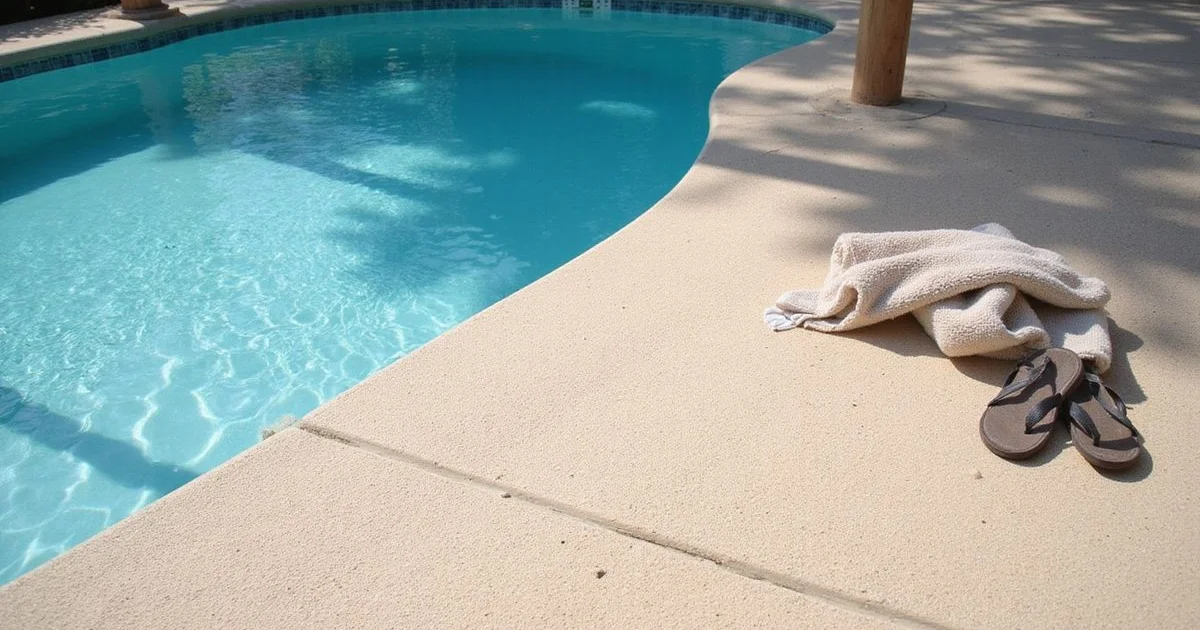
Texture helps next. A textured surface touches less of your foot and holds less heat right at the top than a smooth, dense, sealed one. That's why we lean on cool deck style and knockdown finishes outside, the rough, splattered textures you see around pools.
Shade beats both. A pergola, an awning, or a tree does more than any finish you pick. On a slab that faces west with no shade, color and texture will help but won't fix the heat. We'd rather tell you that than sell you a finish that lets you down.
Grip Has to Be Planned, Not Added Later
Wet concrete outside is where people get hurt. How well a surface grips gets decided before the sealer ever goes down.
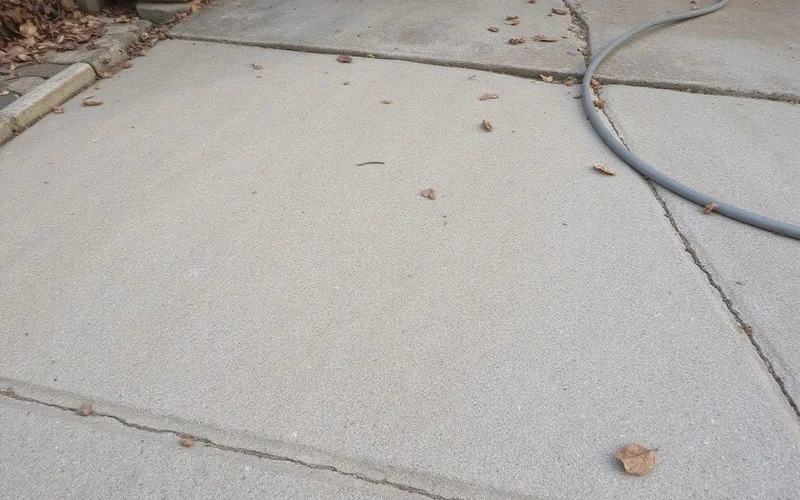
Surface texture does most of the work. Knockdown, broom, and cool deck finishes all leave a rough surface that gives shoes and feet something to grab.
Slip resistant additives get mixed into the sealer and leave fine grit right at the surface. Coarser grit grips better but holds more dirt. Finer grit is easier to clean but grips less. We typically match the grit to the spot: rougher on steps and around water, gentler on a patio where you eat.
Sheen matters too. Gloss itself isn't what makes a surface slick. The sealers that give you gloss leave a smooth film, though, so we steer you away from high gloss outside.
Where not to cut corners
As a rule, we put the rougher grit on steps, pool edges, doorways, and any sloped surface. That's where a slip turns into an injury, and extra grip there costs little next to someone getting hurt. No wet surface is fully slip proof, though, so keep wet areas dry and use mats where people walk in from outside.
Sealers Made for the Sun
Sealers outside deal with UV, daily heating and cooling, and water in a way indoor sealers don't have to. Outdoor sealers built for UV are designed to hold their color and resist yellowing longer. Penetrating sealers (the label usually says silane or siloxane) soak into the concrete instead of sitting on top. That suits slabs out in the open and helps lower the chance of cloudy spots from trapped moisture. Sealers that form a film on top give richer color, but they need more upkeep.
Expect to reseal sooner than you would indoors. That's the price of being outside, not a sign the product failed. How often depends on sun, traffic, and following the care steps we walk you through. If you know it going in, the upkeep feels like part of the plan instead of a letdown. If you have questions or concerns after the job, let us know and we'll go over them with you.
What We'd Put on a Hot Patio
| Choice | What we recommend for full sun |
|---|---|
| Color | On the lighter side |
| Texture | Knockdown or cool deck style |
| Sealer | An outdoor sealer made for sun, low sheen |
| Additive | Slip resistant, matched to the spot |
| Shade | Worth more than all of the above |
Things People Try That Don't Work
A few fixes come up a lot, and they deserve a straight answer.
Painting the patio a light color. Paint on an outdoor slab usually peels. It peels fastest right where people walk most and the sun hits hardest, which are the spots you wanted to fix. Color needs to go into the concrete or into a real resurfacing system, not sit on top like a coat of paint.
Hosing it down before use. It doesn't last long. And in the meantime you've got a wet, more slippery surface.
Outdoor rugs. They feel nice underfoot, but they trap moisture under them. The trapped water can stain bare concrete and cloud a sealed surface. If you use them, lift them after rain and let the slab dry out.
A clear sealer over a dark existing surface. It adds shine, not coolness, and a shinier surface is more slippery. Of everything on this list, this one is the most likely to make things worse.
Shade, lighter color, and surface texture make the difference, in that order. Everything else only helps a little.
Getting It Right Before Next Summer
Many sealers are labeled to go on between 50 and 90 degrees, and Austin's normal highs sit above 90 from June into September. Planning your patio in fall or spring leaves plenty of good days before the heat. Deciding in July doesn't.
Still wondering if a stained finish suits your patio at all? Start with stained concrete patio suitability and care, then come back here.