
Both Sides of It
Stained concrete looks right at home in some rooms and is plain wrong in others. Sales pages usually stop at the first half. We'll cover both. It's easier to decide when you know what you're signing up for.
If you already know you want it and need the details on process and what's included, our stained concrete floors page covers that. If you're still on the fence, read on.
What Stained Concrete Does Well
It wears well. The color isn't a top layer that peels off, and there are no seams to open up or planks to warp. The color is in the slab. With proper care, a sound slab, and the sealer kept up, the floor can typically last a long time.
It's easy to take care of. Sweep or dust mop, damp mop with a neutral cleaner, and wipe up spills. There's no grout to scrub, no wood to refinish, and nothing that holds dust the way carpet does.
It handles Central Texas humidity well. Concrete doesn't react to humidity swings the way wood does, and it gives dust fewer places to settle than carpet.
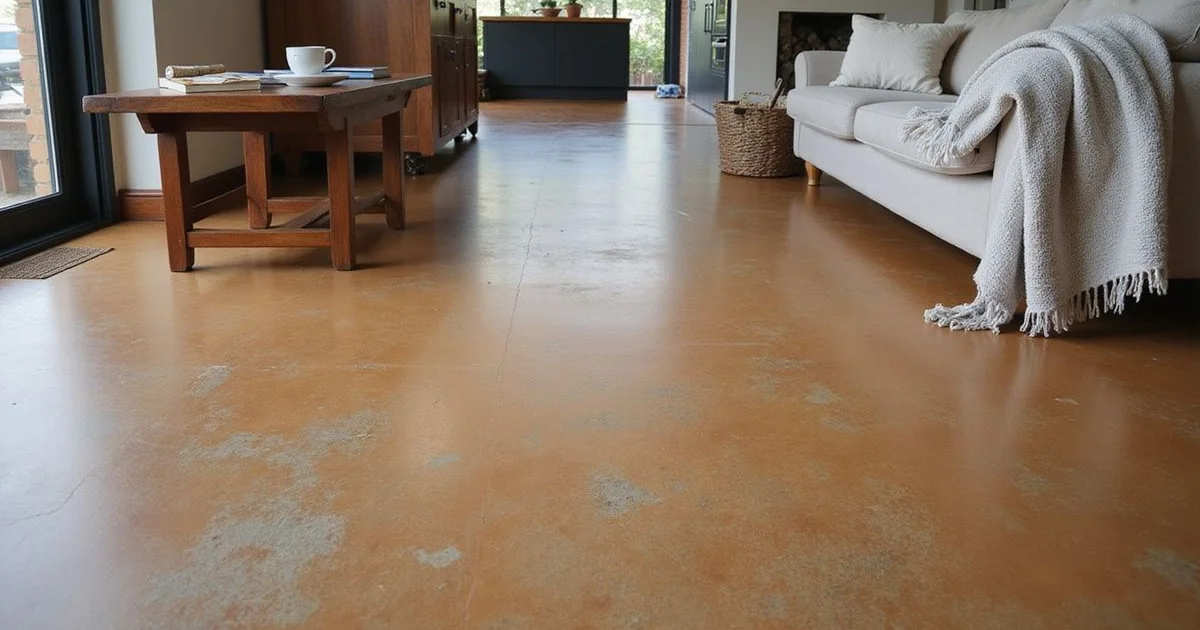
It looks like nothing else. See through, mottled color that shifts across the room is a look other flooring tries to copy and rarely gets right.
It's often one of the lower cost ways to finish a slab you already have, since you aren't buying and installing new flooring on top. Concrete Network lists it as costing less than tile, wood, or stone.
What You're Signing Up For
It's hard. Dropped glassware breaks, and standing at a kitchen counter for an hour feels different from standing on wood. Rugs and anti fatigue mats help a lot, and they're part of the plan, not a sign something went wrong.
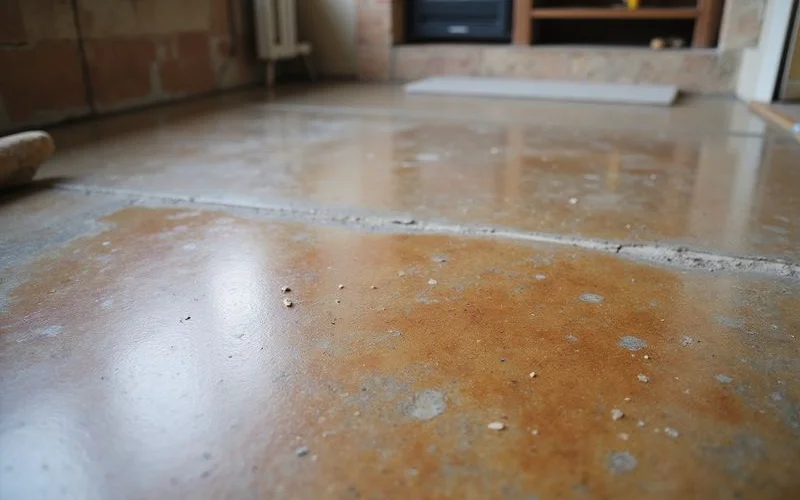
It shows the slab. Saw cuts, patches, trenches, and the line where a wall used to stand will all show through the color. On the right floor, that's character. On a floor where you expected a clean, even look, it's a letdown.
Color comes in a range, not an exact shade. Reactive stain works with the chemistry of your own concrete. Put the same product on two floors and you'll get two different results. Water based products narrow the range, but we won't promise an exact match.
It reflects sound. Hard floors plus hard walls make a room echo. Rugs, curtains, and soft furniture help a lot. Nothing about the floor does.
The sealer is what needs upkeep, not the color. It wears down where people walk most (think of the path from the back door to the fridge) and sooner or later needs redoing. How soon comes down to how the floor gets treated.
The one question that tells you if you'll be happy
“Do you want a floor with visible history, or a floor that looks new?” People who answer the first way usually love stained concrete. People who pick the second are better off with an overlay or another material, and there's nothing wrong with that.
Where It Fits
Stained concrete works well in open living areas, kitchens, entries, hallways, and anywhere with good natural light. It's a good fit for businesses too, where the floor should look intentional and handle lots of foot traffic with regular sealer upkeep.
It's a harder fit in bedrooms, where people often want something soft. Small dark rooms are tough too, since the color needs light to show its movement. And it's wrong for any space that needs to stay quiet.
Where Another Finish Wins
If you need a floor that stands up to chemicals, cars, and heavy impacts, that's a job for epoxy. We cover it in stained concrete versus epoxy floors.
If you want a smooth, shiny surface with no coating on top, go with polished concrete. You can add color to it too. If the slab is too damaged or patched for stain to look right, an overlay gives you a fresh surface you can color.
And if softness, warmth, or a quiet room is your top priority, none of the concrete options are the honest answer.
How to Decide
Go and stand on a real stained floor, in a real room, for longer than you think you need to. Photos flatter this floor. They can't tell you how it feels to walk on or how much variation you're OK with.
Then look hard at your own slab. The real decision is what your slab is, what it's been through, and how much of that history you're willing to see. The rest is picking products, and we're glad to help with that part.