
The Short Answer, and What Changes It
Most existing concrete floors can be stained. Whether yours should be is a different question. The answer is in the slab, not the product catalog.
Staining colors the surface of the concrete you already have. It doesn’t add anything on top, it doesn’t level the floor, and it doesn’t hide what’s underneath. People choose it for that reason, and it’s the same reason your slab decides how the floor turns out.
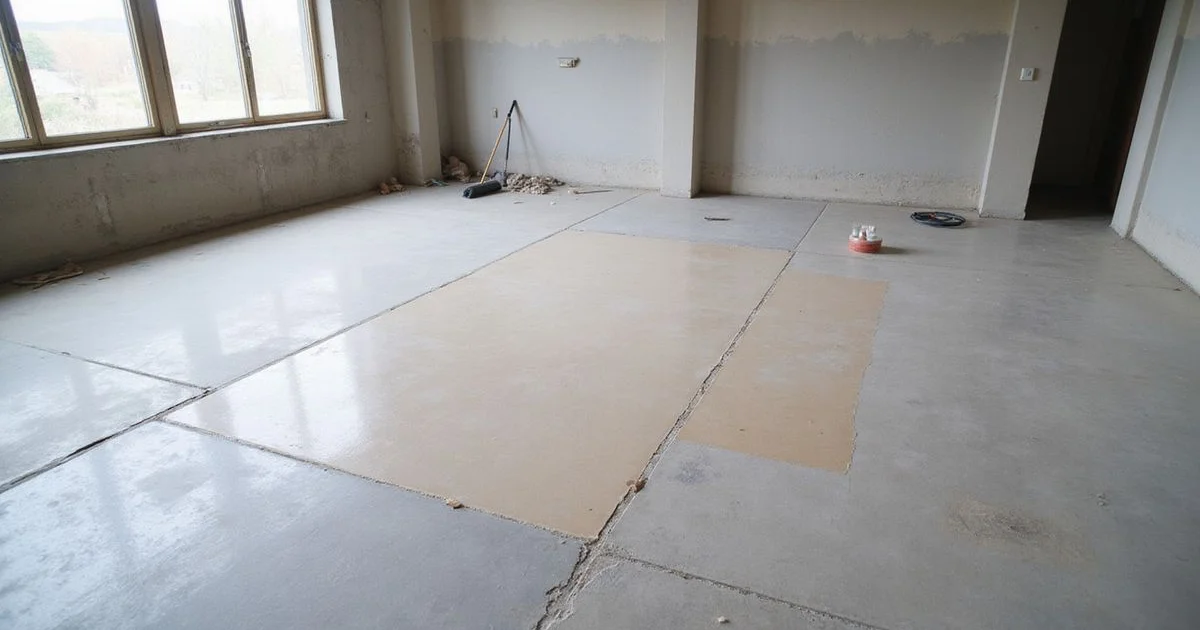
Before we quote stained concrete floors, we look at four things. We check what’s stuck to the surface and how much the concrete soaks up. Then we note the repairs it already has and any signs of moisture coming up through it.
What Tile and Carpet Leave Behind
Almost every stained floor job in a home people already live in starts with pulling something up, and each floor covering leaves its own marks.
Ceramic tile leaves thinset. Even after the tiles come up, ridges of mortar stay stuck to the slab, and they have to be ground off. Pulling tile tends to chip the surface where it was stuck on hardest. That usually leaves a slab that needs roughening and some repair.
Carpet leaves tack strip holes around the edges and spots of glue from the underlay. The holes are small, but they don’t go away on their own. Leave them unfilled and they’ll show up as small dark dots in the finished floor.
Vinyl and linoleum leave mastic, a glue that can take real work to get off. It’s a film that seals the surface completely. Stain can’t get through it, and any patches left behind give you a blotchy floor that matches the glue pattern exactly. Black mastic under flooring from 1980 or earlier can contain asbestos, so have it tested before anyone grinds it.
Hardwood leaves glue or damage from fasteners, depending on how it was put down. Floating floors (the kind that click together instead of gluing down) usually leave the slab in better shape than any of these.
None of this rules out staining. All of it is work, and all of it belongs in the quote.
What to watch for
Blotchy color that follows old glue lines comes from uneven prep. If residue is left in patches, the stain only takes in patches. That’s not the product failing. It's the prep.
What the Bare Slab Tells You
Once the floor is bare, the next question is how the concrete will take the stain. Porosity, meaning how much the concrete soaks up, is the big factor. A slab that was machine troweled smooth is tight and dense, so it takes color slower and often lighter. An older, more open floor drinks stain and can come out a lot deeper than the sample did.
Newer slabs often have a curing compound on them, a coating sprayed on as the concrete dried, and it can soak into the pores. You can’t see it. But it keeps stain from soaking in at all until it’s removed.
Patches are the other wild card, and they’re the honest reason we talk about what to expect before we talk about products. A repair poured later, with its own mix and its own stone, won't take acid stain the same way the original concrete does. Neither will a filled trench where plumbing was run, or the strip where a wall used to sit. Acid stain shows all of it.
For some people that history is the whole appeal. A floor that shows its past looks real to them, not damaged. For others it’s a dealbreaker. Knowing which one you are before work starts saves a hard conversation later. If the slab is too patchy for stain to give you a result you’ll be happy with, we’ll point you to an overlay instead. It typically gives you a fresh, even surface, and color goes on it far more predictably.
Why We Test on Your Floor First
A sample board made on someone else’s concrete tells you what a product can do. A test area on your floor tells you what it will do.
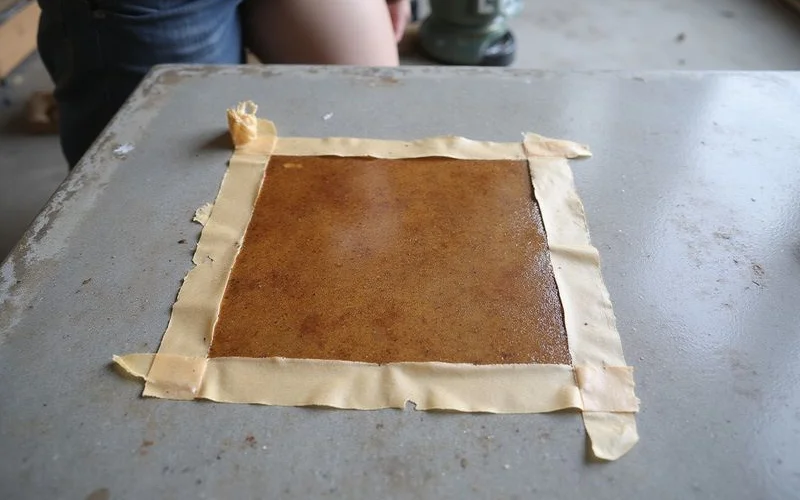
Acid stain works by reacting with the lime in the concrete, so the same product on two slabs gives you two different results. The only way to see your result is to put the product on your slab, in a prepared area, in the room’s own light. We do this when the color is in doubt. That small step helps head off color surprises.
Test areas catch other problems too. You might find residue that got past the first round of prep, or a patch that reacts in its own way. Sometimes one area soaks up more than it looked like it would.
Before You Ask Anyone for a Quote
If a corner of the flooring lifts without a fight, pull it back and take a daylight photo of what’s underneath. Make a note of any cracks, especially ones that run the same direction or where one side sits higher than the other. Look for damp spots, white powder, or a musty smell. Any of those can mean a moisture problem to sort out before any sealer goes down. This is general information. Follow the product maker's instructions, and bring any questions to a consultation with us.
Then read how stained concrete is prepared and installed. Prep drives much of the cost and most of how the floor turns out.
If your slab is a good fit, next we talk about color, sealer, and what the job includes. If it isn’t, we’d rather tell you now than after you’ve paid for it.