
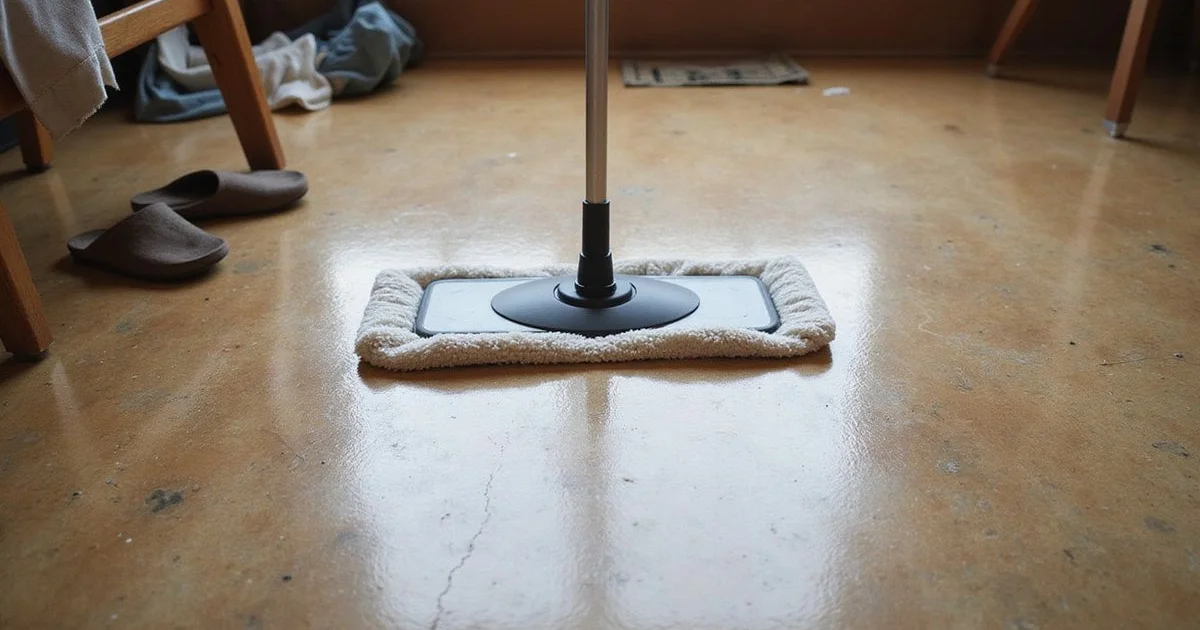
Your Sealer Decides How You Clean, Not the Floor
Which cleaner should you use? That’s the question we hear most, and the honest answer comes down to what’s on top of your floor, not the stain under it.
A stained concrete floor is two things working together: color in the surface of the slab, and a sealer protecting it. Almost everything about everyday care comes down to the sealer. A sealer that soaks in, an acrylic film, and a polyurethane each act differently, wear differently, and can handle different products.
That’s why, when the job is done, we walk you through care for the system we put down. Before you follow any cleaning advice, find out what’s on your floor.
What to Do Every Day and Every Week
Grit is the enemy. Sand and dust tracked in from outside act like fine sandpaper under shoes. Hallways and main walkways go dull from that grit far more often than from spills.
So the routine is simple:
- Daily or as needed: dust mop, sweep with a soft broom, or vacuum with a hard floor attachment. Skip the spinning beater bar.
- Weekly: damp mop with a pH neutral cleaner, and wring the mop out well so it’s not sopping.
- At the door: mats inside and out. That one change often does more for how a floor looks over five years than any product.
- Under furniture: felt pads on chair and table legs, and lift furniture instead of dragging it.
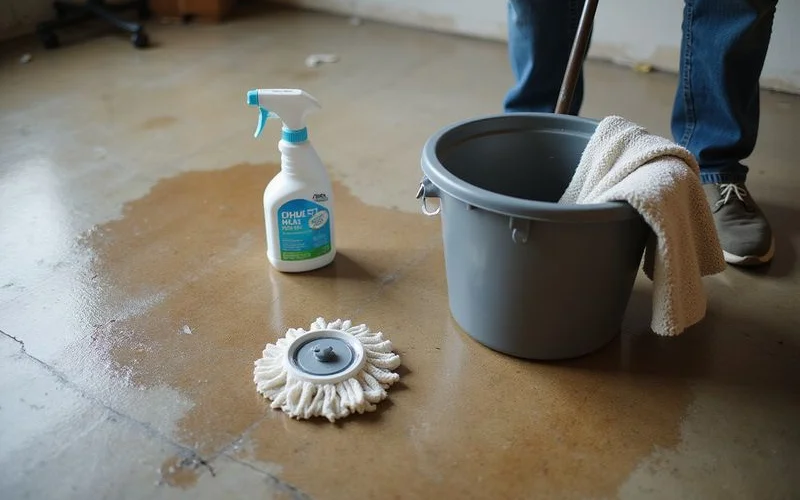
What to Keep Off the Floor
Some of the household cleaners people recommend most are the worst thing you can put on a sealed decorative floor.
Vinegar and citrus cleaners are acidic, and acid eats at both concrete and many sealers. Products loaded with bleach and strong degreasers can dull or discolor the sealer. Anything labeled as a stripper is made to lift coatings off, and that’s the last thing you want. Scouring powders and scrub pads scratch the sealer. Once the shine is scratched, cleaning won’t fix it, and only refinishing will.
Our rule of thumb
If a label says it cuts through anything, it will probably cut through your sealer. Neutral, diluted, and boring is what you want.
Spills, Marks, and What to Expect
A sealer that’s been kept up holds off most household spills long enough for you to clean them up. But it’s protection, not a force field.
Acidic spills are the urgent ones: wine, citrus, cola, and salad dressings made with vinegar. Oil and grease come next, since they can darken the surface if you leave them. Clean up pet accidents fast too, before they soak in.
If a mark won’t wipe away, don’t reach for something stronger. Scrubbing with a harsh product usually trades a stain for a dull spot. That dull patch shows more than the mark you were trying to get off. Ask us before you go after it.
Signs Your Sealer Needs Work
Don’t go by the calendar. Watch the floor for these signs:
Water stops beading up. It soaks in and leaves a dark spot until it dries. The paths you walk most look flat next to the edges of the room. Marks that used to wipe away now need effort. Or the floor looks tired when low sunlight hits it, even right after cleaning.
Any of those means the sealer isn’t protecting the floor like it used to. What happens next depends on your sealer, and we cover that in sealing stained concrete. The fix can be anything from a light refresh to a full strip and reseal.
Rooms and Homes That Need Extra Care
Pets. Treat accidents as urgent. Urine lingers, and a sealer that’s worn thin will let it through to the concrete. Claw scratches show up more on a glossy finish than a matte one too, so keep that in mind before you pick a sheen.
Kitchens. Cooking oil spatters farther than people think, and it builds up as a film that slowly dulls the floor instead of leaving an obvious stain. A regular damp mop around the stove takes care of it.
Entries and back doors. This is where most of the grit comes in. Put mats inside and out, and try a shoes off habit (if your house can manage it).
Building work. Cover the floor well any time other trades are working in the house. Use a covering that breathes, not plastic sheeting taped down, since plastic traps moisture against the surface.
Large plant pots. Water sitting under them leaves a stained ring that can outlast the plant, so put them on feet with saucers and move them now and then.
How Often Should You Reseal?
We don’t give a set schedule. Foot traffic, grit, sunlight, how you clean, and the sealer type all change the answer. A floor in a quiet home with only adults can go years longer than the same floor with three kids, two dogs, and a back door onto the yard.
Watch the floor. It’ll let you know, usually before the damage gets expensive.
How the finish holds up depends a lot on following the care steps we walk you through. If you have questions or concerns after the job, let us know and we’ll go over them with you. This is general information. Follow the product maker’s instructions, and bring any questions to a consultation with us.