
Color on Concrete Works Differently
Picking a color for a stained concrete floor isn't like picking paint. Paint covers. Stain tints what's already there, and you can still see through it. So the finished floor is the product plus your slab, not the product alone.
That's what most people love about it. It's why we start with what to expect, not with a color chart.
The Color Ranges You're Choosing From
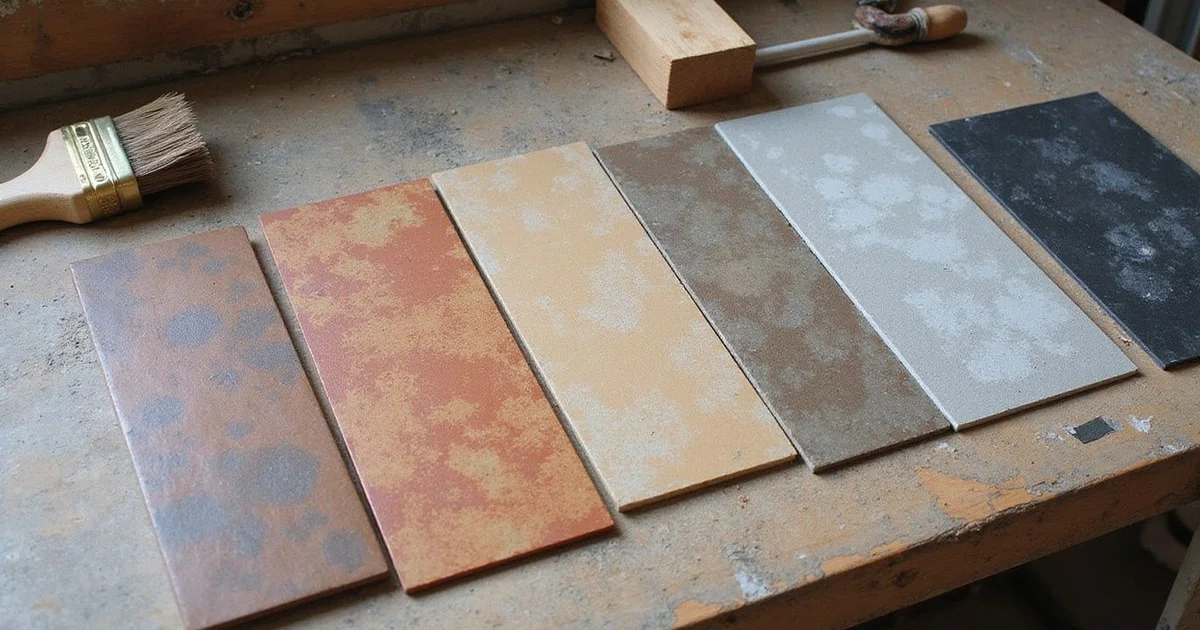
Reactive acid stains give you earth tones: tans, ambers, browns, warm reds, and greens, plus grays and colors close to black. The color comes from metallic salts reacting with the lime in the concrete, so chemistry sets your choices, not a pigment catalog. You can see through the color, it's mottled, and it changes across the room. It looks more like natural stone than something made in a factory.
Water based stains carry pigment instead of reacting, so you get a much wider range of colors. That includes cooler, more modern tones that acid stains can't reach. The color comes out more even, but it still depends on how much each part of the slab soaks up.
Dyes give the strongest color and the most even coverage. We often put them over an acid stain base to add depth and still keep some of the natural movement.
We put the two main types side by side in our guide on acid stain versus water based stain.
Mottling Is the Point, Not a Defect
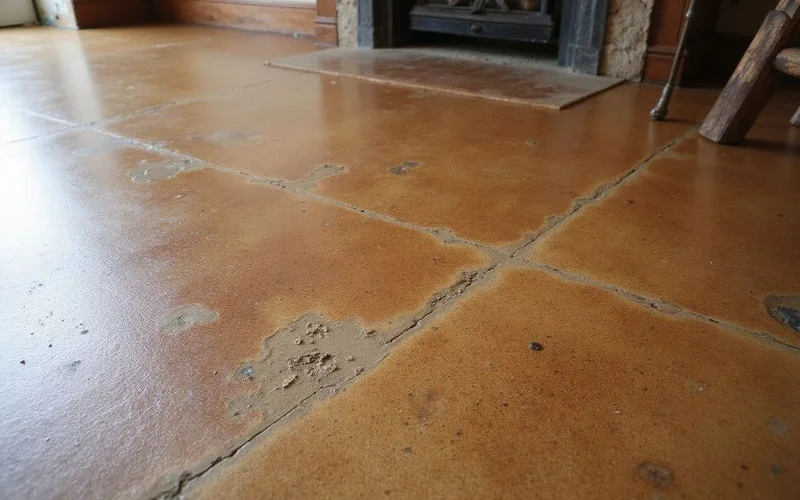
The biggest thing to expect is variation. An acid stained floor isn't one color. It's a range of lighter and darker areas, with soft cloudy patches where the concrete's chemistry changed. You'll often see a difference where the slab was finished differently or patched. People who love stained concrete love exactly this. People who wanted an even floor end up disappointed, and often they only saw one close up photo instead of a whole room.
Why would one stain look different in two parts of the same floor? The slab's history is part of the answer. Saw cuts, patches, old trenches, and the line where a wall once stood will all take the stain differently.
On the right floor, that's honest character. In a room where you wanted a calm, even look, it's a problem. If an even look matters more to you, we'd point you to an overlay (a thin new layer over the slab), which takes color far more predictably.
Ask for a room, not a swatch
A sample four inches across shows the color. It can't show the variation, and the variation is what you live with every day. Ask to see whole floors, in different light, before you commit.
The Sheen Changes the Color You Picked
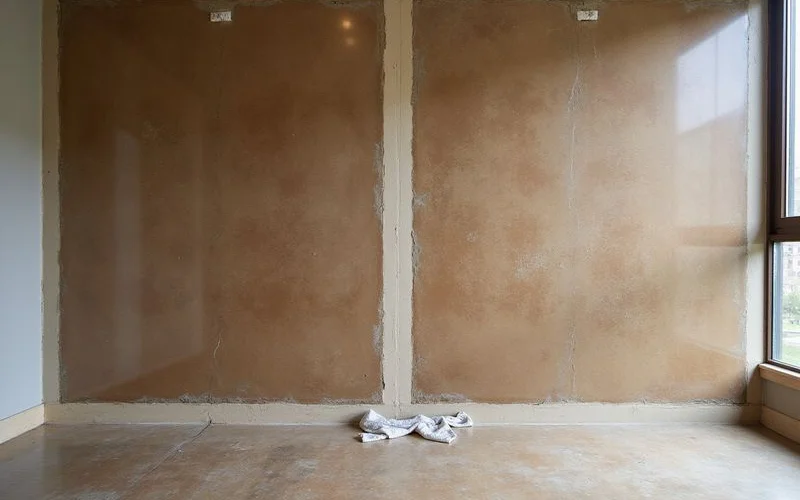
How shiny the sealer is changes the color more than most people expect. The same stain under a gloss finish looks deeper, richer, and noticeably darker than under a matte one. Gloss bounces more light around too, and that changes the whole room.
| Sheen | What it does to color | Day to day |
|---|---|---|
| Matte | Softest and lightest look | Hides dust and scuffs well, looks most natural |
| Satin | Some added depth | The usual choice for living spaces |
| Gloss | Deepest, richest look | Shows everything, most slippery when wet |
Pick the sheen at the same time as the color, not after, and look at samples sealed, not bare.
How to Pick the Right Color
Watch the light in the room over a full day. A room facing north and one facing west can make the same floor look like two different floors by late afternoon. Think about what sits next to the floor. Cabinets, wood, stone, and wall color all play off a floor you can see into.
Then test on your own slab. Put a test patch in the room itself, in its own light, with the sealer you'll use. That's the only honest way to settle on a color. It's a small step, and it's the difference between choosing a floor and hoping for one. We'll go over test patches, and any cost, during the consultation.
And if you want an exact, even color you can repeat, tell us early. That's a fair thing to want. It points to a different product, not a disappointing version of this one.