
Read the Floor, Not the Calendar
There's no set schedule for resealing a stained concrete floor. The “every year or two” you see online is a rough average, not a read on your floor.
What you do have are signs you can read. Once you know them, you know when to act.
Acting early is what keeps a simple touch up from turning into a floor restoration.
Signs a Reseal Will Do
Water stops beading. Drop a little water on a spot that looks worn. On a well sealed floor it sits in a bead. On a worn one it spreads out and darkens the surface for a bit. That dark spot means the water is getting into the concrete.
Traffic paths look flat. Compare the middle of the walkway (say, the path from the back door to the fridge) with the area under a piece of furniture or against the wall. If the shine looks different, the sealer has worn thin where you walk.
Marks stick around. Spills that used to wipe right up now take some scrubbing, or leave a faint shadow.
The floor looks tired when clean. If a floor still looks dull after a good cleaning, even with light coming in low across it, it isn't a cleaning problem.
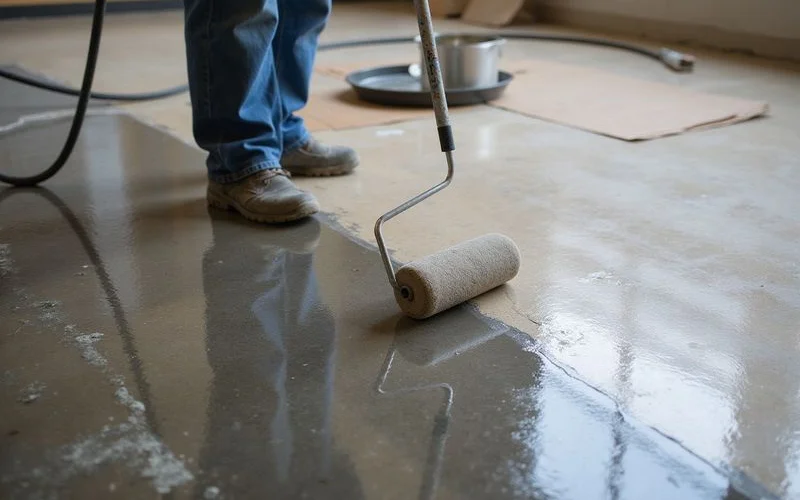
If you see any of those and the color underneath still looks good, a reseal is usually all you need. It's a small job that typically brings back the look and the protection.
Signs It Needs a Full Restoration
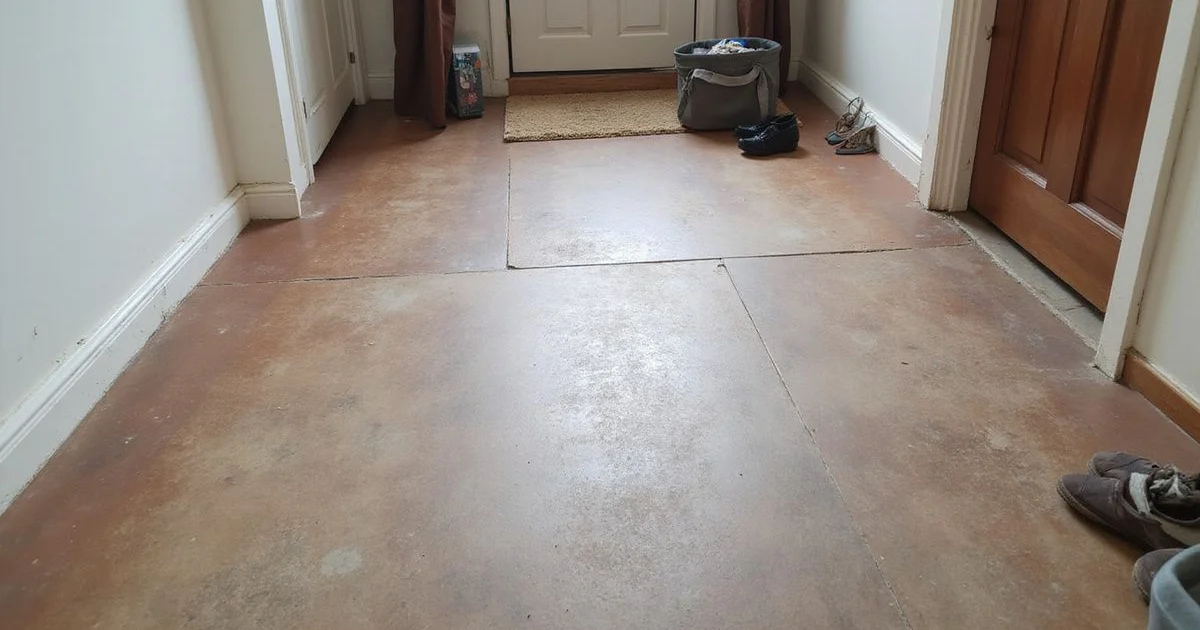
The color is worn through. Traffic paths are lighter than the rest of the floor, and the difference is in the color itself rather than the sheen. The stained top layer has been worn off.
The sealer is peeling, not wearing thin. Flaking, lifting at the edges, or coming off in sheets means the sealer isn't sticking anymore. That's not wear. And a new coat over it will fail the same way.
Whitening or cloudiness. That usually means moisture, and the moisture has to be fixed before anything else. If the fix involves drainage or the slab itself, that's outside our decorative work, and we'll talk through options during the consultation.
Damage below the sealer. A new coat can't cover etching, deep scratches, or stains that have soaked into the concrete.
Those signs mean the finish itself needs redoing. Another coat of protection on top won't be enough. We explain how the two jobs differ in resealing versus full floor restoration.
Why waiting costs more
If you reseal before the old coat has worn through anywhere, it's a simple job. But if you wait until the sealer wears through where people walk, the color gets scuffed and stained. At that point you're paying to bring back the color and the protection.
What Wears a Floor Out Faster
Grit is the main one. Sand and dust under shoes grind down any surface. Mats inside and outside the door do more good than anything else, and they cost almost nothing.
Harsh cleaners eat away at sealers. Acidic products, strong alkaline cleaners, and anything made to strip a coating all wear sealer out faster, sometimes a lot faster.
Dragged furniture scratches the sealer. Felt pads help. So does lifting a chair or table instead of sliding it.
Sunlight wears down the sealer wherever it hits, and it can fade dye colors too. That's why the spot in front of a west facing window often looks older than the rest of the room.
Skipped care adds up. A floor that's cleaned right with mats at the doors can go much longer between reseals than the same floor in a house where nobody looks after it.
Can You Reseal It Yourself?
Sometimes. It comes down to whether you know what's already on the floor.
If you put a sealer over something it doesn't work with, it can turn cloudy, fail to stick, or lift the old layer underneath. Most people don't know what was used, especially if someone else put the floor in or it was there before they moved in. The honest first step is a small test in a spot nobody sees, not a confident afternoon with a roller.
The other common DIY problem isn't the product. It's how it goes on. Sealer shows lap marks, where one pass overlaps the last, plus roller texture and thick and thin spots. It shows them far more than paint does. A floor with streaks and roller lines is harder to fix than one that was only dull. Keeping the edge wet as you work across a big open room takes practice.
If your floor has a simple sealer that soaks in, you can usually do it yourself as long as you prep well. If it has a coating on top, an unknown history, or a big open room, we'd test a small patch before touching the whole floor. Don't know what's down there? Ask before you apply anything. Figuring out what's on a floor is quick, and it costs a lot less than stripping off a product that went on over the wrong thing.
How Often to Check
Check your floor twice a year. Do the water bead test, compare where people walk with the spots under furniture, and look at it with low light across it after cleaning.
That habit catches the floor when a reseal is still all it needs. You learn how your own floor wears, and that's worth more than any schedule you read online.
This is general information. Follow the product maker's instructions, and bring any questions to a consultation with us.