
Polished Concrete Is a Process, Not a Product
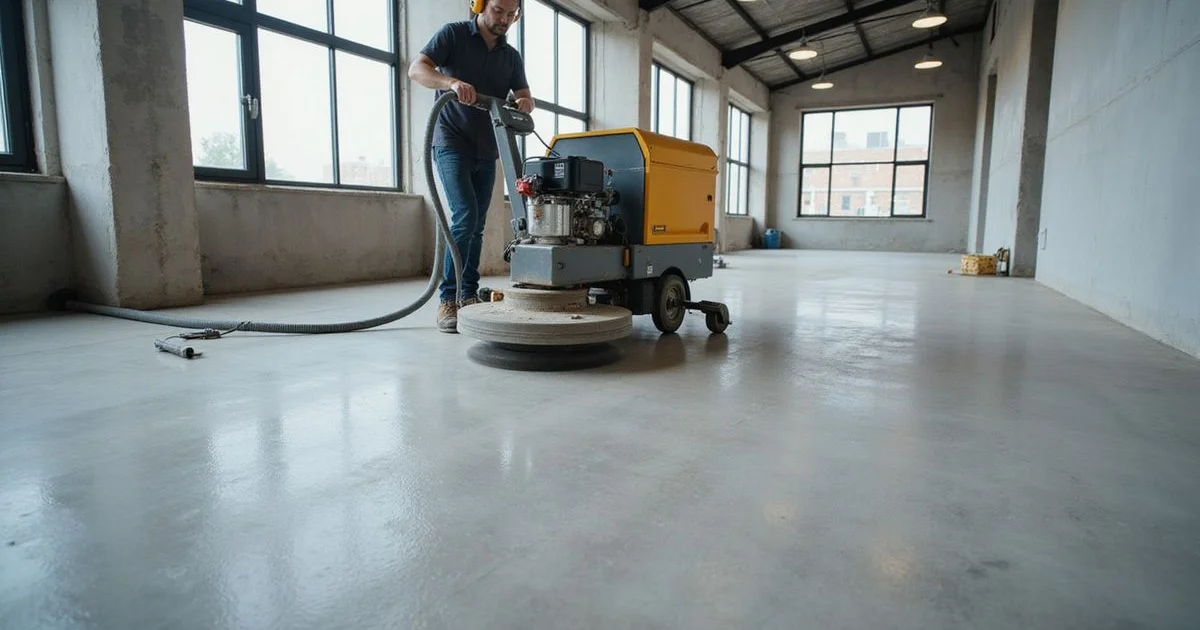
You can't buy polished concrete in a can. It's done by machine. We grind the slab with finer and finer diamond pads and keep polishing until the concrete itself reflects light. Depending on the job, we harden it partway through with a liquid called a densifier.
That's all it is, and it explains why polished concrete acts the way it does. No film coating sits on top, so there's little to peel, blister, or wear through in a doorway.
How the Grinding Steps Work
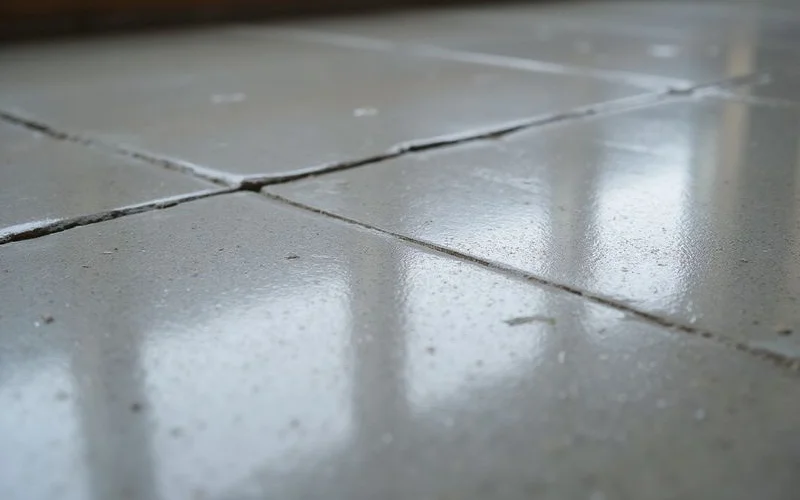
We work through a series of diamond pads, from coarse to fine.
The first passes use metal diamond pads that cut into the surface. This is where we decide how much stone shows. The depth of those first cuts sets whether you see only the smooth top layer, fine sand, or the bigger stones in the mix. Once we cut that deep, later passes can't undo it.
In the middle stages we switch to resin pads, which smooth out the scratches each earlier pad left behind. Why not skip one to save time? Every step is there to take out the marks from the one before. That's why skipping steps leaves a floor that looks hazy instead of clear.
The last steps build the shine. By now the machine is polishing instead of cutting, and the floor starts to throw back light.
Hardening the Surface
Partway through, depending on the job, we put down a densifier, often a lithium silicate, which is a liquid hardener. It soaks in and reacts with lime in the concrete to make it harder. That lets the floor take a higher polish and stand up better to wear.
It's a common step in real polishing, and it isn't a sealer. After this step the floor is harder and soaks up less, but it's still concrete, not a coating.
How to tell what you're actually buying
Ask which hardener they use and at which step they put it down. Ask how many grinding steps the price includes. If the quote doesn't answer either one, ask whether it's a grind and seal. That's a different product at a different price. We compare the two in polished concrete versus grind and seal.
The Two Choices That Shape Your Floor
How much stone shows. A cream finish barely cuts into the smooth top layer, so the floor stays even and plain. A salt and pepper finish shows fine sand and small stones. Full exposure brings the bigger stones to the surface for a look close to terrazzo. Which one you can get comes down to your slab: how it was poured, how it was finished, and how deep the stone sits.
How shiny it gets. People usually rate it from one to four, from flat matte up to a finish that looks wet. The more grinding steps we go through, the higher it gets. More shine means more passes and more cost. A shinier floor shows more dirt and scuffs too (muddy paw prints by the back door stand out).
These two choices are separate. You can have a low shine floor with lots of stone showing, or a high shine cream finish.
What a Polished Floor Is Good At
On a sound slab with regular cleaning, it typically handles heavy foot traffic well, and there's no film coating to keep up. You clean it with water and a pH neutral cleaner. It reflects light, which helps in rooms without many windows. It doesn't need stripping and recoating every so often. In stores and offices, it usually costs less to keep up over the years than vinyl tile that needs waxing.
What It Can't Do
It can't make a bad slab good. Polishing shows what's there. Soft spots, patches, trenches, and uneven areas all get more noticeable once the floor is polished, not less. Most overlays have no big stone in them, so polishing one won't give you the same look.
And you can't rush it. Each grinding step takes the time it takes.
Polishing isn't a way to add color, either. We can add dye during polishing. But if you want warm, see through, mottled color, go with staining instead.
Will Your Slab Work?
The only honest way to know is to look at it. We check how hard and flat it is, how much patching there is, the joints and saw cuts, and whether anything is stuck to the surface. That gives us a good idea of how much stone and shine you can get. We typically do that check before we quote, not after we start.