
What You're Actually Paying For
Polishing costs come down to labor and supplies. The diamonds wear out, the machines take time, and every step up in gloss is another full pass over the floor. That's why there's no honest single rate for polished concrete. The same slab can draw quotes far apart depending on what you ask for.
Here's what moves the price.
What Drives the Cost
1. Area and layout. This one works in your favor on large floors. A polishing machine works fastest in long, open passes, so the price per square foot drops as the floor gets bigger. Small, chopped up rooms with lots of edges, like hallways and closets, cost more per foot. Edges take smaller machines and more handwork.
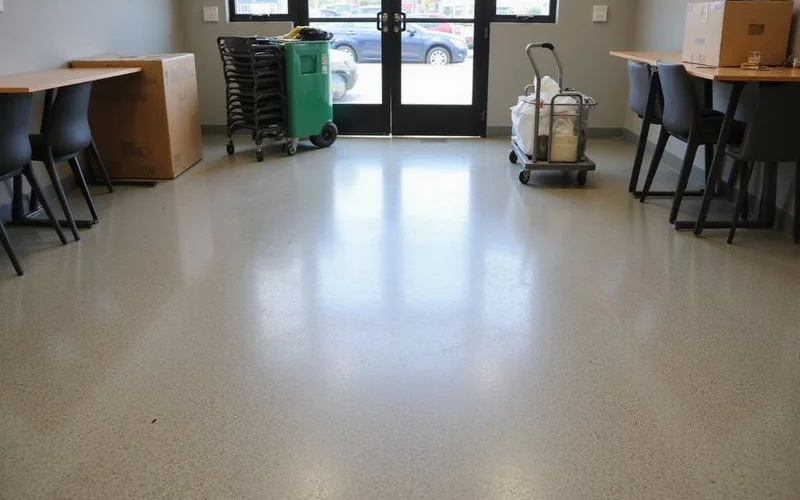
2. Gloss level. Each step from matte up to high gloss is another round of passes with finer diamonds. Going from satin to high gloss isn't a small bump in price.
3. How much stone shows (aggregate exposure). A cream finish takes the lightest cut. Salt and pepper takes more. Showing the full stone takes the deepest cutting and wears out the most diamonds. Our guide to gloss and stone levels shows both side by side.
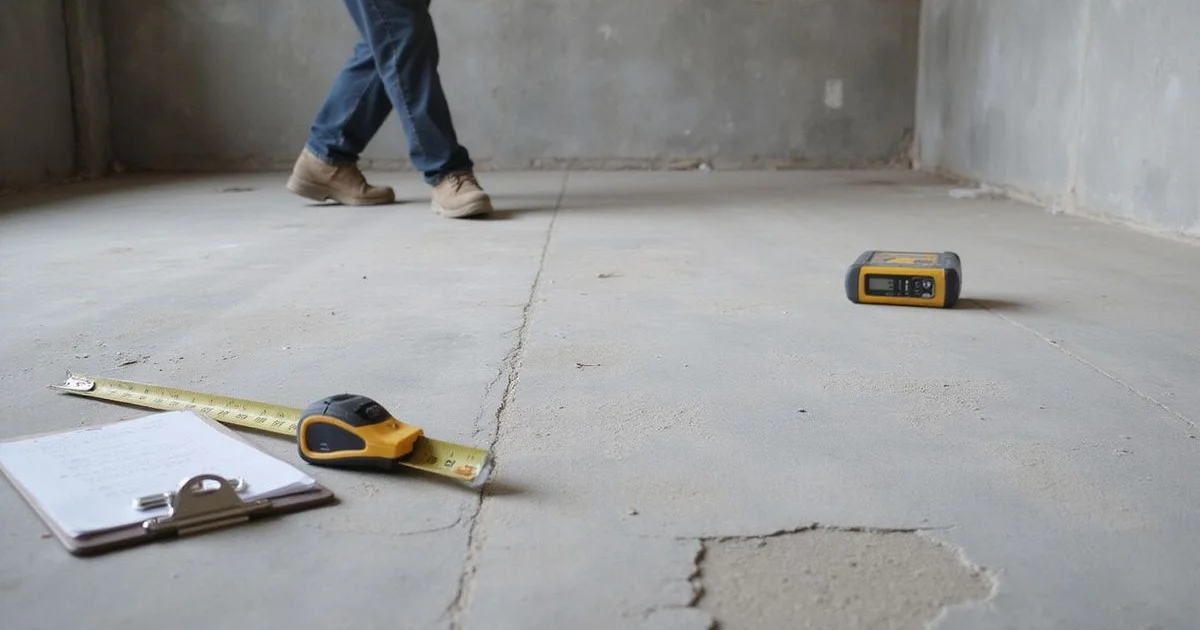
4. Slab condition. Soft concrete wears out the diamonds faster. Hard concrete cuts slower. Uneven slabs need extra grinding to get them flat before the polishing can start. A badly out of level floor can need so much grinding that it's almost a separate job.
5. Preparation and removal. Old flooring, glue, coatings, and sealers all have to come off before we polish. Tearing out tile and the glue under it (mastic) is a big line item, and it's a common reason quotes don't match.
6. Repairs. This covers fixing cracks, filling joints, patching, and repairing chipped or flaking spots (spalls). They usually aren't optional, since polishing shows every flaw instead of hiding it.
7. Densifier (a hardener) and treatments. Depending on the job, polishing can include hardening the concrete with a densifier. Stain guards and other protective treatments cost extra. They're worth it in restaurants, commercial kitchens, and hotels.
8. Access, hours, and minimums. This covers stairs, tight parking, after hours work in businesses open during the day, and small areas that hit a minimum charge. Setup takes the same time no matter how small the floor is.
Why one quote may come in much lower
If one polishing quote is way cheaper than the rest, check whether it's a grind and seal quote. That's a shorter process where a sealer on top gives the shine. It's a real finish at a fair price. But it isn't the same thing, so ask which process each quote describes.
Where Polished Concrete Saves Money
Polishing often wins when you look at what the floor costs you over the years, not the day it goes in.
There's no coating to strip and recoat, so upkeep typically comes down to dust mopping, damp mopping, and a buff now and then. Skipping that strip and recoat cycle adds up year after year in a commercial space. And there's no recoat that makes you shut the space down.
If you already have the slab, you're not paying for new flooring on top of it. The floor you'd have covered up becomes the finished floor.
When It Doesn't Make Sense
A small room in a house is rarely worth hauling the equipment out for. A slab that's soft, badly patched, cut up with trenches, or way out of level won't polish evenly no matter what you spend. We'd rather tell you that when we look at it than halfway through the job.
If the slab isn't a good fit for polishing, the honest options are a grind and seal, a stained and sealed floor, or an overlay we finish on top. Each has its own price, and any of them beats paying for an expensive polish on concrete that can't take it.
How to Compare Quotes
Ask every contractor the same five things. How many grit steps? Which densifier, and when does it go on? What gloss level, and how much stone will show? Which removal and repairs are included, and what's left out?
Then compare the answers, not the totals. Two prices that look close can be for completely different floors, and you'll often see the gap years later, not the day the crew packs up.