
Why Polished Concrete Is Easy to Care For
A polished concrete floor has no coating sitting on top. That one fact takes away most of the upkeep other floors need. There’s usually nothing to strip, nothing to recoat on a schedule, and nothing to peel at a doorway.
What’s left comes down to two habits: keep grit off the floor, and use cleaners that won’t eat into it.
Your Everyday Routine
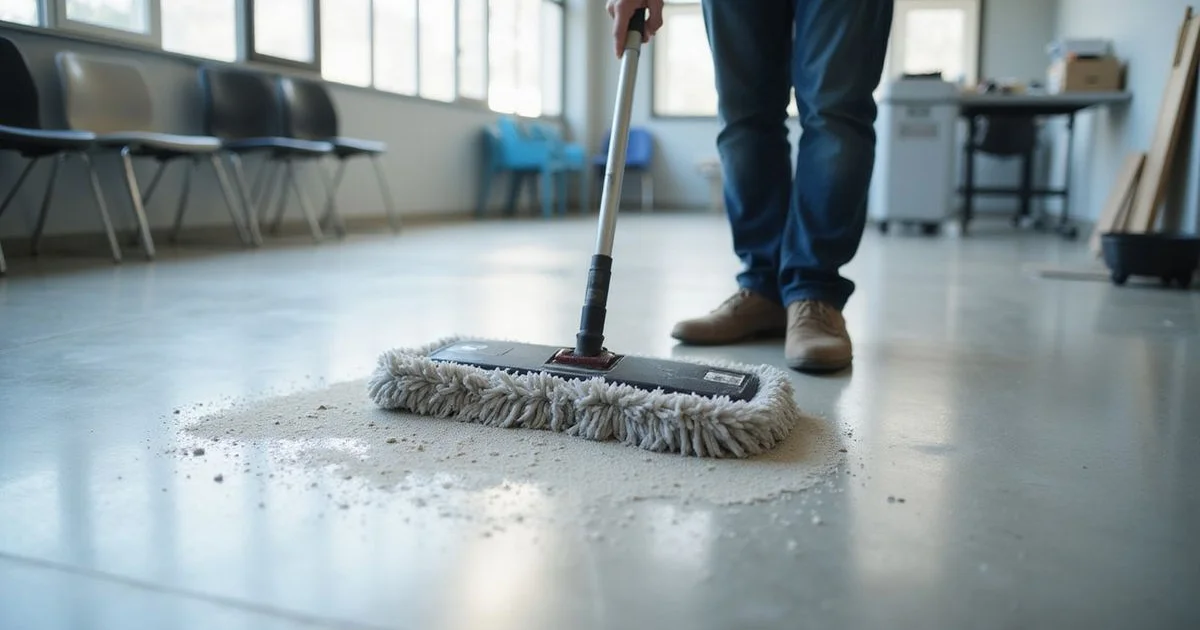
Daily or as needed: dust mop with a microfiber mop head, or vacuum on the hard floor setting. Sand and dust tracked in from outside act like fine sandpaper under every shoe. That grit dulls the paths you walk most faster than anything else.
Weekly, or more often in a business: damp mop with a pH neutral cleaner, the gentle kind that says so on the label, mixed at the right strength. Change the water once it turns gray, or you end up spreading grit back across the floor.
At the entries: put floor mats inside and out. In a business, mats are often money well spent, and they usually cost less than a cleaning plan.
Spills: wipe them up fast. Concrete still soaks things up even after it’s hardened. Acidic liquids (wine, lemon juice, salsa) can eat into it if you leave them.
What to Keep Off Your Floor
Acidic cleaners are the biggest risk. Vinegar, citrus cleaners, and anything made to dissolve mineral buildup will eat into the hardened surface. That leaves dull patches cleaning can’t fix.
Strong alkaline cleaners and coating strippers are the other group to avoid. They’re made to break down coatings, and on a polished floor they dull and cloud the concrete itself.
Scrub pads and scouring powders scratch the polish. So do kitchen chairs you drag back from the table, appliance feet with no pads, and carts with hard wheels that have grit stuck in them.
The mistake that costs the most
It’s grabbing an all purpose “concrete cleaner” off a store shelf. Many are made for driveways and are harsh on purpose. On a polished floor indoors, one use can eat into the surface, so if the label doesn’t say pH neutral, leave it on the shelf.
Burnishing and Repolishing
Over time, the paths you walk most lose some of their shine. That’s normal, and it doesn’t mean anything failed. The floor itself is wearing down a little, not a coating wearing through.
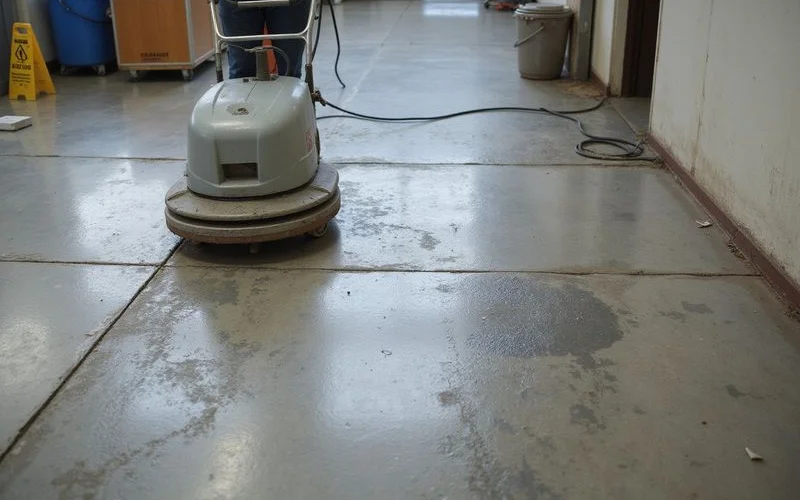
Burnishing uses a fast spinning machine with a fine diamond pad to bring the shine back in those spots. It’s quick and usually costs less than recoating. Many businesses burnish every month or every three months.
Repolishing means going back over the floor with finer diamond pads to smooth the surface again. It’s a bigger job for neglected or hard worn floors, and it can bring a tired floor back close to new.
Neither one adds a coating to the floor, which is a big reason polished concrete often costs less to own over the years.
What About Stain Guards?
Some polished floors get a stain guard after polishing, mostly in restaurants, hotels, and other places where spills happen all day. A few leave a thin film on top, and others soak in. They wear out and get redone on their own schedule.
If your floor has one, ask which cleaners it can take before you buy any. Some stain guards react to certain chemicals that bare hardened concrete handles fine.
Care Plans for Businesses
For shops, restaurants, hotels, and warehouses, a written maintenance schedule can pay for itself. It usually covers daily dust mopping, a regular pass with a scrubber and neutral cleaner, clean mats at the entries, and a burnish every so often.
Without one, what we often see is six good months of upkeep, then nothing. A couple of years later, the dull floor needs a full repolish instead of a burnish.
Common Damage and How to Fix It
Etch marks are dull patches left by acidic spills. The spill ate into the surface and nothing is sitting on top, so cleaning won’t take them off. The fix is to polish that one spot.
Scratches from dragged furniture or grit under a heavy load are usually shallow, and a burnish can often take care of them. Deeper gouges mean going back over that spot with finer diamond pads.
Rust marks from metal furniture feet left on a damp floor can soak in, mostly on floors with no stain guard. Put pads under metal feet, and deal with any rust early instead of after weeks of sitting damp.
Oil and grease in a garage or workshop will soak into the surface if you don’t clean it up fast. Hardening the concrete slows that down. But it doesn’t stop it.
The rule is the same as with any decorative concrete: when a mark won’t budge, don’t reach for something stronger. A harsh product on a small mark usually leaves a bigger, duller spot that’s more work to fix than the mark was.
Before You Choose a Gloss Level
How much upkeep you want should help pick the finish, not the other way around. A high gloss floor shows dust and scuffs more, and it pays off only if you keep up with it. A satin floor is more forgiving in a busy household. We cover that tradeoff in polished concrete gloss and aggregate levels. So how often will you dust mop in a normal week? Answer that honestly before the machine starts, not after.
How the floor holds up depends a lot on the care it gets day to day. This is general information. Follow the product maker’s instructions, and bring any questions to a consultation with us.