Planning a Cooler, Slip Resistant Patio Before Next Austin Summer
Now's a good time to plan a cool, slip resistant patio for the Austin summer ahead. Here's how a lighter color, a textured finish, and a sealer made for full sun can help a resurfaced patio stay cooler and grip better when wet.
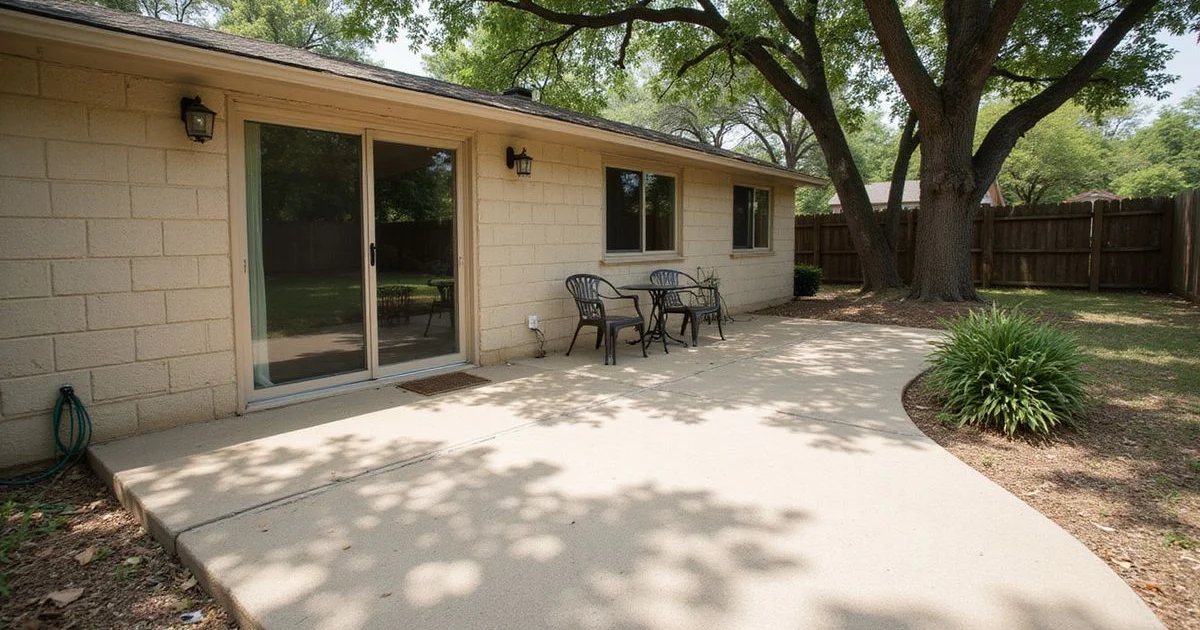
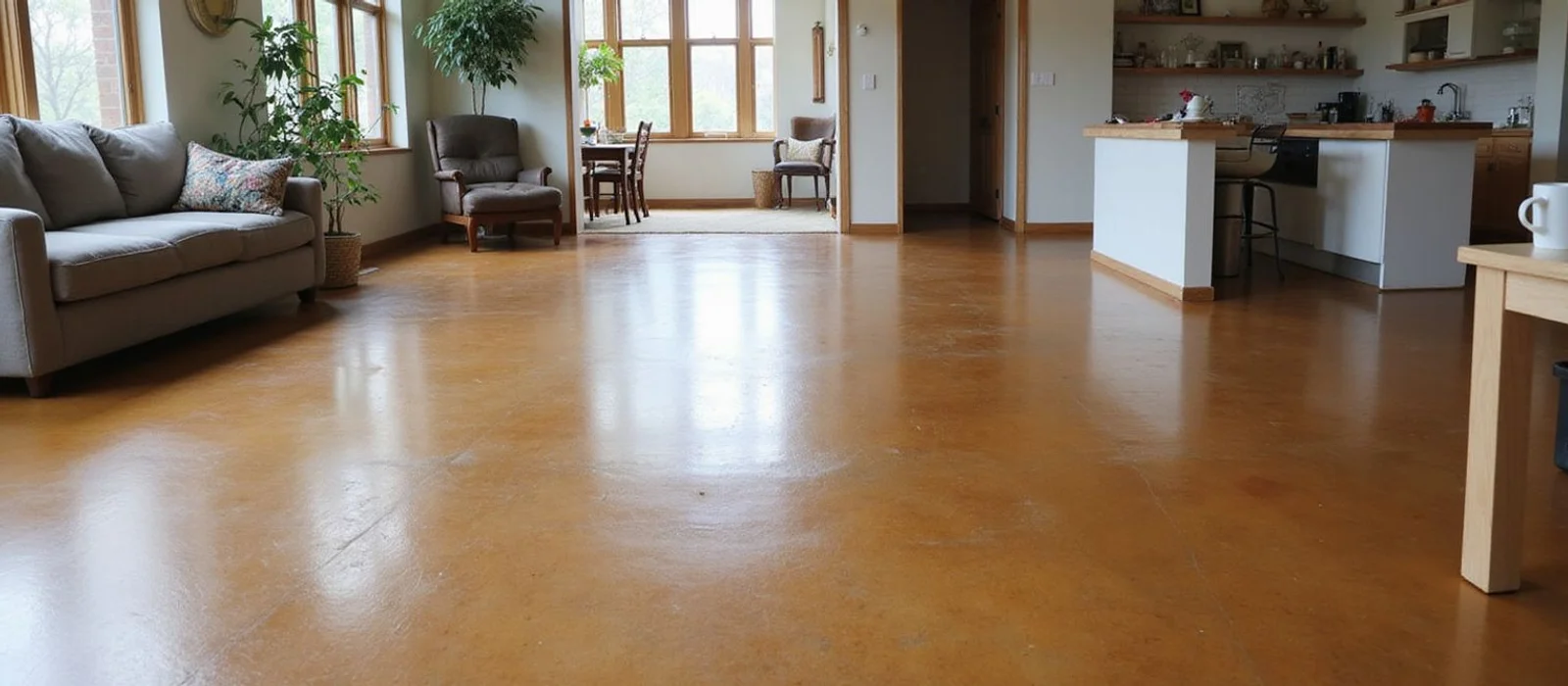
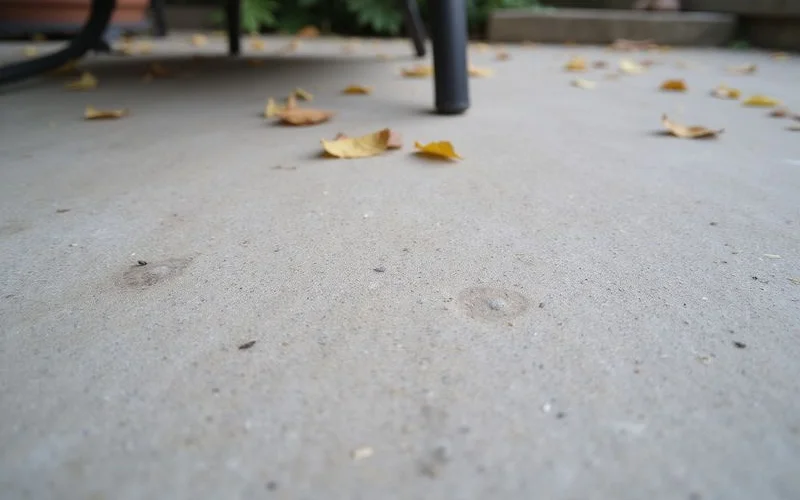
The images in this post are illustrations, not photos of our finished jobs.
Every year we have the same conversation at about the same time. Someone spent the whole summer staying off their back patio. It was too hot to stand on. Or they watched a guest slide on wet concrete near the pool. Either way, they want it fixed before next summer.
The work itself is straightforward. The planning is what trips people up. Most sealers want the air and the slab between about 50 and 90 degrees, and an Austin August averages a high near 98. That's why we try to schedule outdoor decorative concrete work in Austin well before the heat hits.
Why Patios Get Too Hot or Too Slick
Two things make a concrete patio miserable in an Austin summer. In both, the pick that looks richest in a photo feels the worst underfoot.
The first is color. Dark surfaces soak up more heat from the sun than light ones. That's physics, not a sales pitch. A patio stained deep charcoal or dark walnut looks rich in photos at sunset. In the middle of an August afternoon, you can't walk on it barefoot.
If bare feet will be on it, we'd steer you to a lighter color from the same product line. It reflects more sun, so it usually feels cooler underfoot.
The second is texture. A smooth, dense, sealed surface puts hot concrete against your whole foot, and it gives you little grip when it's wet. A textured finish breaks up that contact and adds grip too. Common ones are a broom finish, a cool deck coating, or a knockdown, which is splattered on and troweled flat. Texture is one of the few choices that can make a patio both more comfortable and less slick when wet.
What a finish can't fix
Color and texture help a hot patio. They won't fix a slab that faces west and sits in full sun with no shade. If that's your patio, adding shade will help more than anything we can put down. We'd rather tell you that than take your money for a finish that lets you down in July.
Slip Resistance Gets Planned In, Not Added Later
Wet outdoor concrete is where people get hurt. How well a surface grips gets decided when the job is planned, not after it's done.
Texture does most of the work. On top of that, we can add a slip resistant additive to the sealer coat. It's a fine plastic grit that's nearly clear, so it adds grip with little change to the look. We typically add it around the pool edge, on steps, and anywhere the patio slopes.
A common mistake we see is a glossy outdoor sealer picked for how rich it makes the color look. And the color does look deeper. Then the first rain comes and the surface turns slick. On a patio that gets wet, we'd pick a lower sheen or add grit to the sealer. No wet surface is fully slip proof, so keep wet areas dry and use mats where people step in from the pool or yard.
Sealers Built for Sun
Outdoor sealers are a different kind of product from indoor ones. Use the wrong one outside and the damage shows up slowly, not on day one.
The main difference is how well they stand up to the sun's UV rays. Some indoor sealers that form a film on top, like epoxy, can turn yellow in the sun. And film sealers that trap moisture can turn cloudy from underneath. Penetrating sealers (the silane and siloxane kind) soak in and work inside the concrete instead of sitting on top. That suits a patio out in full sun. Decorative film sealers make the color look richer, but they need more upkeep in return.
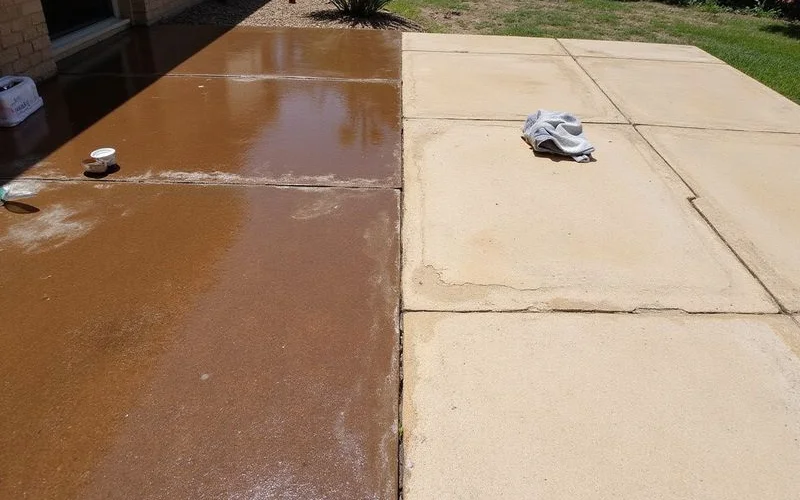
Whatever you pick, an outdoor sealer typically needs redoing sooner than an indoor one. How soon depends on sun, foot traffic and how well the surface is cared for. That's not a defect. It's the price of being outside in Texas.
The Scheduling Part Nobody Enjoys
Outdoor work depends on the weather in a way indoor work doesn't. Heat is only part of it, since humidity matters for overlays and sealers too. Put them down in the wrong conditions and the finish may not cure right, or it can bubble and blister.
That means two things for planning. First, book earlier than you think you need to. The weeks with good weather fill up fast. Second, expect us to move a date instead of forcing a job in bad weather. We'd rather reschedule than hand you a patio that starts failing before the season's over.
| What you pick | How it feels | Grip when wet |
|---|---|---|
| Lighter color | Usually cooler on bare feet | No change |
| Textured finish | Cooler, with less hot surface touching your feet | Better grip when wet |
| Slip additive in sealer | No change | More grip when wet |
| High gloss sealer | Deeper color, no cooler underfoot | Worse when wet |
What to Do Before You Call Anyone
Look at where water goes after a storm. If it pools, the slope may need fixing. Standing water works its way into any coating sooner or later. Then check whether the slab is solid or has settled and cracked. Resurfacing can refresh the look, but it doesn't fix the structure. Slope and structural repair are outside our decorative work, so we'll talk through options during the consultation, including who handles that work. Last, think about how you use the space: barefoot, with kids, with furniture dragged around, or mostly seen through a window.
Those answers change what we recommend more than the color chart does.
Our guides go further on keeping outdoor concrete cool and slip resistant, and on stained concrete patios and how to care for them. Want the patio ready before next summer? Read what patio resurfacing involves, then send us a few photos and we'll tell you what we see.
Austin Stained Concrete Floors
Editorial & Technical Review Team
We write our decorative concrete advice for Austin homeowners and builders, and we check the technical details ourselves. It all draws on what we've learned serving Austin since 2001.
Serving Austin since 2001. We publish our editorial standards and our technical review process.
More on the work itself: patio resurfacing