
Why Overlay Quotes Vary So Much
The word overlay covers a lot of different jobs. A thin microtopping over a clean, solid slab gets called a concrete overlay. So does a leveled decorative overlay with repairs and hand texture. They don't cost the same.
Before you compare prices for overlays and microtoppings, find out which product each quote is for and what prep it includes. If a quote doesn't say, ask before you sign.
What Drives the Price
1. Product and thickness. A microtopping uses the least material and the fewest passes. A thicker decorative overlay uses more of both. If the floor needs flattening, self leveling underlayment (a pourable layer that evens out the floor) is a separate job on top of that. It can be one of the bigger lines on the quote.
2. Area and layout. Open floors cost less per square foot than small, chopped up rooms, since every edge and tight corner takes a lot of hand work.
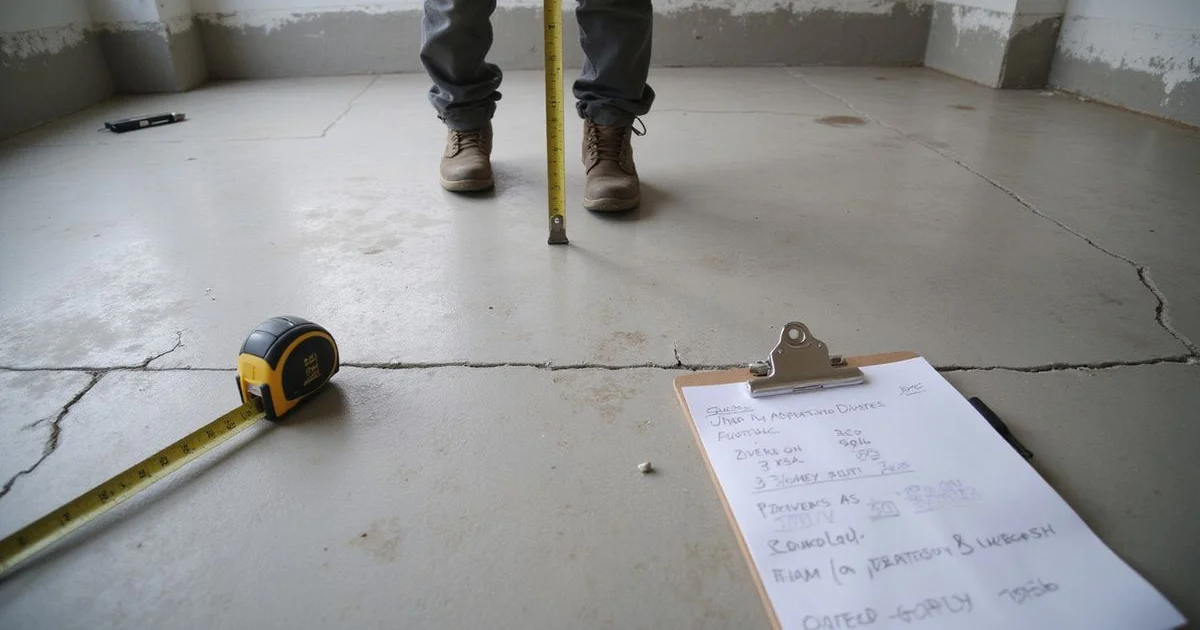
3. Getting the slab ready. That means roughening the surface and taking off old coatings, sealers, glue, or anything loose. A floor that's been coated or tiled before costs more to prep than a bare, solid slab.
4. Repairs. That means fixing cracks, filling holes, and patching chipped or flaking spots. This work has to happen, and we only know how much once the floor is bare.
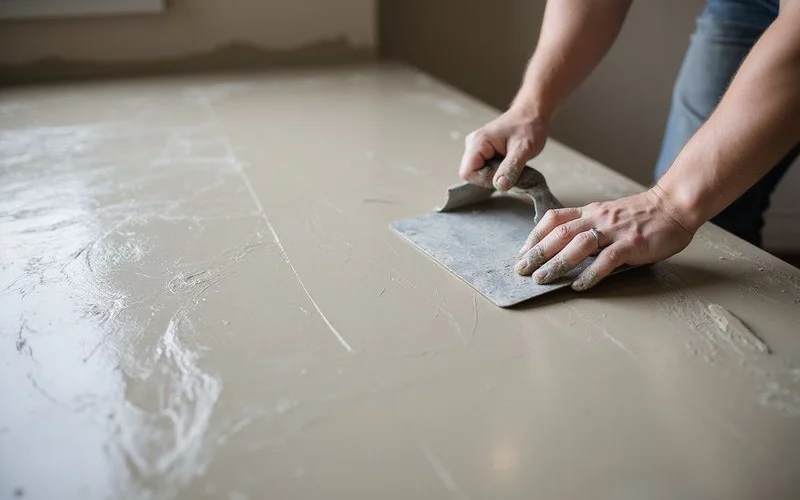
5. How detailed the texture is. This is the one people underestimate. A plain smooth finish is quick. Knockdown, hand troweled swirls, scored patterns, and borders are all slow, skilled work, and the time grows with the size of the floor.
6. Color and sealer. That's the color on the new surface, plus which sealer we use and how many coats. Indoor and outdoor jobs call for different sealers, and that choice changes the price.
7. Joints and doorways. We have to decide whether the joints carry through the new surface, how doorways get finished, and how the overlay meets the floor next to it. They're small areas that take a lot of labor.
8. Access and minimums. Moving furniture, working on stairs, and minimum charges on small rooms all add to the price.
Where an Overlay Saves Money
The real comparison is against tearing out the slab and pouring a new one. Breaking up a slab, hauling it off, prepping the ground underneath, pouring, and curing is a much bigger job than resurfacing. On a solid slab, you don't need it.
A basic overlay can cost about the same as a pricier carpet or tile floor. And the slab you already have becomes the finished floor.
Where it stops saving you money
A slab that's still moving is where the savings fall apart. If you resurface a failing floor, you're paying for looks the moving slab will undo. Overlay versus replacement shows how to tell the difference. Read it before you spend anything.
Smart Ways to Spend Less
Pick a simpler texture. Smooth finishes cost the least and often look the most modern. Do the whole area in one visit instead of in stages, since each trip out can carry its own setup cost. Clear the room out before the crew shows up. And go with a standard color instead of layered custom color work.
What not to cut: prep, repairs, and sealer coats. Those three, along with slab conditions and care, typically decide how well the overlay holds up over time.
What We Can't Know Until the Floor Is Bare
Overlay quotes have more real unknowns than most flooring jobs. A good quote says so up front, before day two.
Until the old flooring comes up, nobody knows how much glue is stuck to the slab or how many patches are under there. Nobody knows if it's been coated before or how flat it is, either. Carpet can hide a slab that's been cut open and patched (for an old plumbing repair, say). A tiled kitchen can hide a second layer of glue from an older floor.
So what does a good quote do with all that? Two things. First, it prices the work we can see. Second, it spells out how changes get handled: what counts as one, how we price it, and that you hear about it before we do the work.
A quote with no change clause isn't more certain. The same unknowns are still under the floor. Ask how that quote would handle them before you sign.
We'd rather show you the range and what would change it than give you one confident number we can't stand behind once the floor is open.
How to Get Quotes You Can Compare
Ask each contractor which product and thickness they're quoting and what prep and removal are included. Ask what repairs they've allowed for and what happens if they find more. Then ask about texture, color, sealer, and what's left out.
Your written proposal typically lists all of that, plus any minimum charge, with the price. A handful of past jobs isn't the same as an Austin market average.