
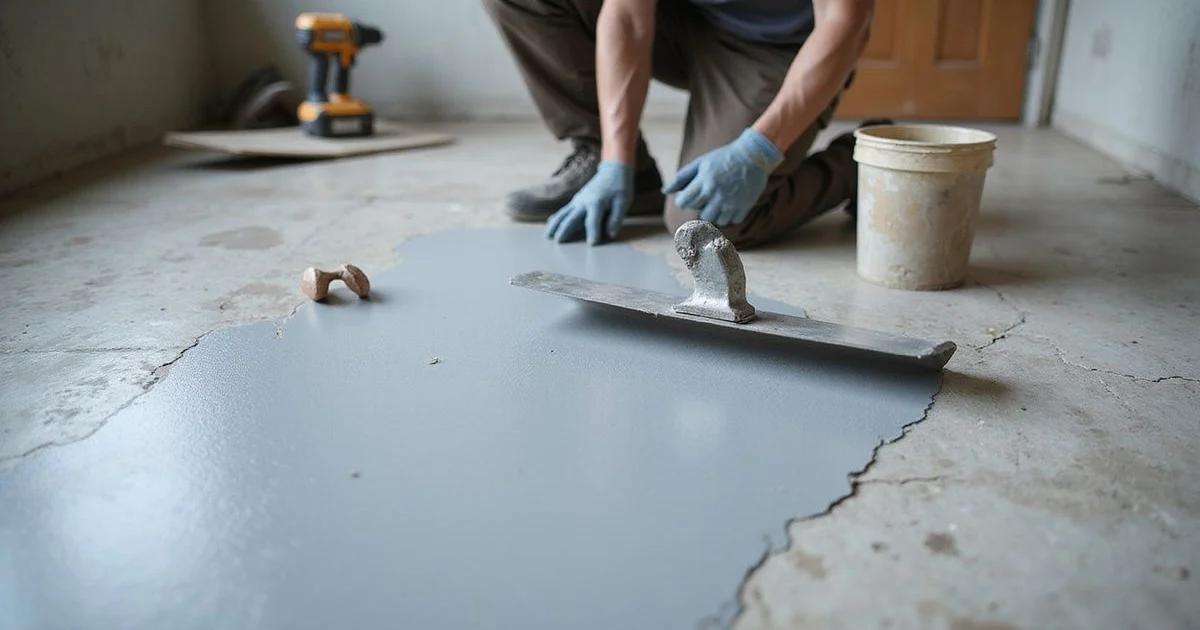
What an Overlay Is
An overlay is a thin cement based layer we spread over your existing concrete to give it a new decorative surface. Polymers in the mix help it flex and stick, so it's designed to go on that thin without cracking off. A plain sand and cement topping spread that thin would pop loose.
There are three main kinds of overlays and microtoppings, and the biggest difference between them is thickness:
- Microtopping. A skim coat, often a millimeter or two thick, that gives the surface a new look and barely raises the floor.
- Decorative overlay. Thicker. It can take textures like knockdown or hand troweled finishes and cover more bumps and dips.
- Self leveling underlayment. Poured to flatten the floor, usually as a base for the decorative finish that goes on top.
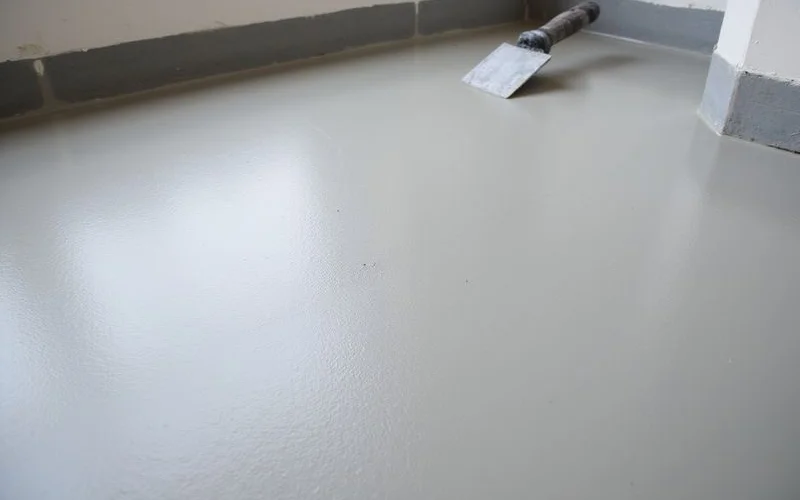
What an Overlay Can Actually Fix
How the surface looks. A slab that's stained, discolored, marked up by old glue, or worn out gets a fresh, even surface.
Patchy color. This is the big one. A slab with patches, a filled trench, and thirty years of uneven wear won't take acid stain evenly. An overlay gives you one even surface, so the color comes out much closer to what you expect.
Texture you don't want. An old broom finish, a floor power troweled glassy smooth, or one with an old coating pattern ground into it can get a completely new texture.
Minor surface damage. The new layer usually covers shallow chips and flaking, light pitting, and surface scratches.
A new style. An overlay can take textures, scored lines, and patterns that a bare slab can't.
What They Can't Fix
Structural problems. Nothing else on this list matters as much. An overlay is a decorative layer stuck to the slab, so it moves when the slab moves. If the slab is settling, cracking, or shifting, all of that will show up again in the overlay.
A floor that's badly out of level. A microtopping follows the shape of the floor underneath. If you need the floor leveled, that means pouring a self leveling underlayment first. That's a separate job with its own cost.
Moisture problems. Water vapor coming up through a slab causes trouble for overlays and their sealers, the same as it does for any other floor. That has to be handled first, or the materials have to be made for it. We talk through the options during the consultation.
A bad surface underneath. Old glue, a failing coating, or loose material all count. So does curing compound, a film sprayed on new concrete. If any of it's left on the slab, the overlay sticks to that instead. And it fails wherever that layer fails.
The short version
An overlay renews the surface. It doesn't renew the slab. If the concrete underneath is failing, an overlay only makes it look better until the next crack shows up. We'll tell you if that's your situation.
What We Do About Cracks
Cracks are one of the first things people ask about. Will the overlay hide them? That comes down to whether the crack has stopped moving.
A dormant crack is one that has stopped moving. We can treat and fill it, and with some systems we lay mesh over it to help keep it from showing through the new surface. This usually works.
An active crack is still moving, from settling, soil that swells and shrinks, or a structural problem. It will open back up. No thin layer stuck on top can stop that. We look for signs of which kind you have before quoting. If it's still moving, the cause needs fixing before you pay for an overlay. That's outside our decorative work, and we'll talk through options during the consultation, including who handles it.
What the Slab Underneath Needs
An overlay needs solid concrete underneath that isn't moving. After prep, the slab has to be clean enough that the first coat grabs onto concrete, not leftover residue. Depending on the slab, prep can mean grinding the surface rough, taking off any coating, sealer, or glue, and fixing loose or flaking spots. Some other surfaces can take an overlay with the right system and prep, but we need to look at them first instead of guessing.
Watch the Height at Doors and Edges
The thing people forget is height. Every system adds some, and anywhere the new floor meets something else, that extra height has to be dealt with.
A microtopping adds so little that most doorways and thresholds aren't affected. That's a big reason people like it for renovations. But thicker decorative overlays add enough to matter. Self leveling systems add the most, and it piles up at the low end of a floor we're bringing level.
Start with the doors: inside doors and the gap under them, plus outside thresholds and weather seals. Then look at where the floor meets carpet, tile, or wood in the next room. Kitchen kickboards, the space around appliances (a dishwasher that won't slide back out is no fun), and the top step at the stairs need a look too.
None of these are hard to handle if we catch them when we quote. All of them are awkward, and sometimes expensive, if you find them after the overlay is down. We make a point of bringing them up when we look at the floor. Your written proposal notes how each edge gets finished.
When an Overlay Is the Right Call
If your slab is solid but ugly, an overlay is usually where we'd start. You get a new floor surface without replacing anything.
A failing slab is a different conversation. Read our guide on overlays versus resurfacing versus slab replacement before you spend anything. Sometimes the honest answer is replacement, and it's cheaper to hear that now. Replacing a slab is outside our decorative work. At the consultation, we can go over who handles that.