
Three Ways to Go, One Thing to Check First
When a concrete floor looks bad, you have three real options. You can resurface it with a thin decorative coat, build it back up with a thicker overlay or leveling layer, or tear it out and pour a new slab.
Picking one comes down to what your slab is doing, not taste. That's why we look at the slab first and quote second. You can read about the systems themselves on our overlays and microtoppings page and in our guide to what overlays can fix.
The Big Question: Is the Slab Still Moving?
Everything turns on this.
A stable slab stays flat and stays put. If it has cracks, they've stopped growing. Neither side of a crack sits higher than the other, and nothing changes with the seasons. Nothing rocks, nothing sounds hollow, and the same damage doesn't keep coming back. A slab like that is usually a good fit for any of the resurfacing options.
An unstable slab is still moving. How can you tell? You'll see cracks that have gotten wider or have one edge higher than the other. Doors and frames shift with the floor, damage comes back after repairs, and some spots sound hollow when you walk on them.
Central Texas makes this worse. East of I-35 especially, the clay soil shrinks when it's dry and swells when it's wet, and that's a big reason slabs move around here. A floor that has moved once with the seasons will likely move again.
The Three Options Side by Side
| Topic | Microtopping / resurfacing | Thicker overlay or leveling | Slab replacement |
|---|---|---|---|
| Fixes how it looks | Yes | Yes | Yes |
| Fixes small dips and bumps | No | Yes, within limits | Yes |
| Fixes structural issues | No | No | Yes, if the cause gets fixed too |
| How much height it adds | Barely any | Noticeable, plan for doorways | None, the new pour sets the level |
| Mess and downtime | Low | Moderate | High: tear out, then cure time |
| Cost | Lowest | Middle | Highest |
| Right fit when | Slab is solid, surface is worn | Slab is solid, floor isn't flat | Slab is failing or wrong for the job |
When Resurfacing Is the Right Call
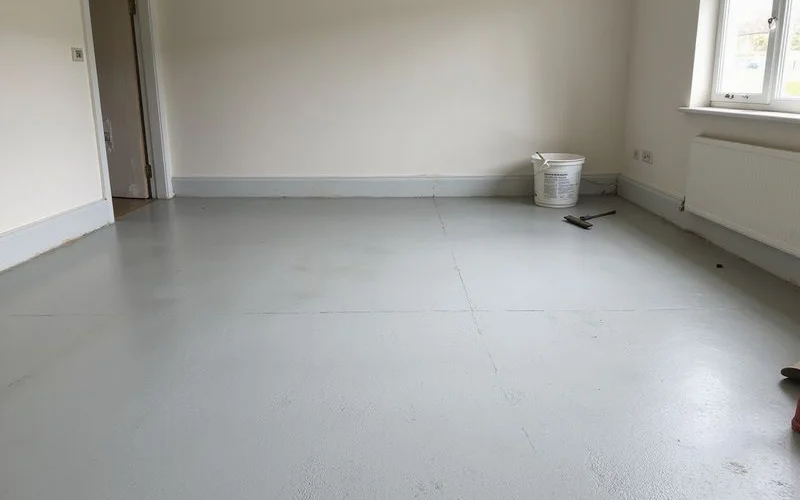
The slab is solid and the problem is only how it looks: old glue, patches, stains, a dated texture, or a surface that won't take stain evenly. It's a common case, and a decorative overlay is usually where we'd start.
It's the right call too when you can't add much height. Doorways and the spots where the floor meets other flooring limit how much you can build up, and a microtopping adds the least.
When Replacement Is the Honest Answer
The slab has sunk, is still cracking, has sections that have failed, or wasn't built for how it's used now. Same goes when the floor is so far out of level that a leveling layer would have to be too thick to make sense. Replacement is the answer, too, when the real problem sits under the slab: drainage, plumbing, or fill dirt.
We'd rather tell you this and lose the job than take your money for a floor where the same crack soon shows back through. Slab replacement and structural repair are outside our decorative work. We'll talk through your options during the consultation, including who handles that work.
Where people waste money
It's resurfacing a failing slab twice. Each round costs money, takes the room out of use, and leaves the real problem right where it was. Two rounds often cost more than replacing the slab once.
The Middle Path People Forget
There's a fourth option: replace part of the slab, then resurface the whole thing.
Say one section of the slab has failed and the rest is solid. That area can be torn out and repoured on its own by whoever handles slab work, since that's outside our decorative work. Then we can resurface the whole floor to tie old and new together. That can cost far less than a full replacement, and it can still deal with the real problem. The new concrete needs time to cure before anything decorative goes on it, so the job takes longer. In exchange, you're fixing the cause, not just the look.
This works when the damage stays in one area and the cause is clear. Think of a section over a filled trench, an area poured at a different time, or damage from a leak that's been fixed. It doesn't work when the whole slab is moving. Then you're patching one spot of a problem that runs through the whole floor.
Ask about it during the consultation, especially on a big floor where full replacement is a major job and a thin resurface won't be enough. Sometimes the right answer sits somewhere in between.
What We Check When We Look at Your Slab
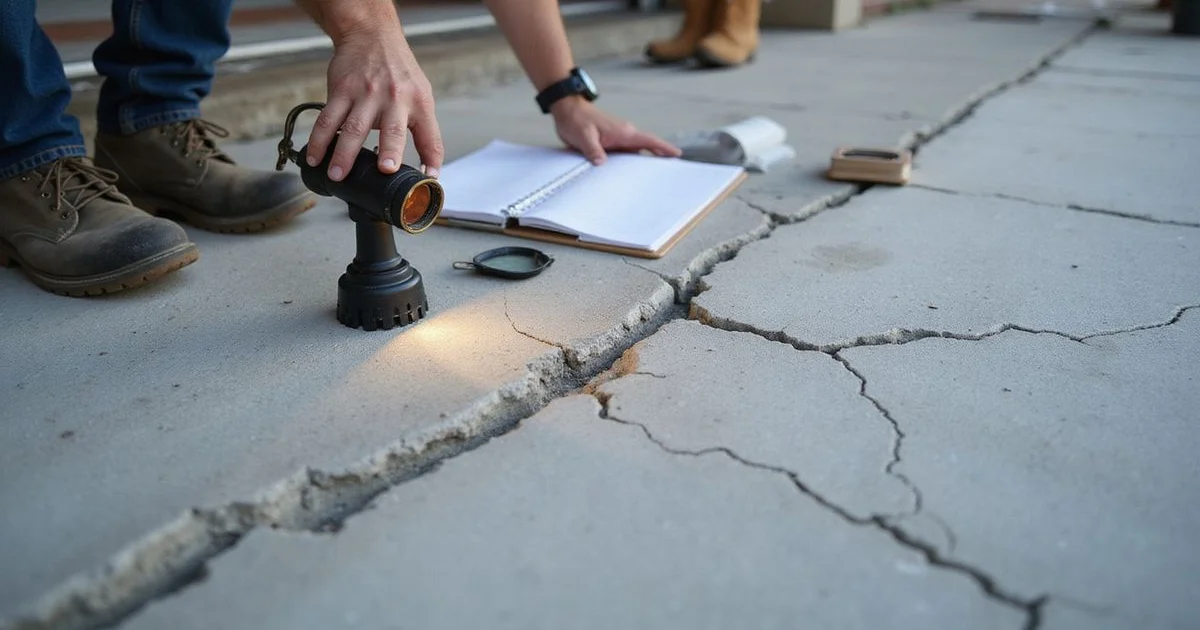
We typically start with how the cracks run and whether one side sits higher than the other. Then we ask whether damage came back after earlier repairs. Spots that sound hollow get marked (they can mean nothing solid sits under them). Doors, frames, and baseboards tell us whether the floor has moved.
We look for signs of moisture, too. Old coatings and residue matter, so we note whatever is on the floor now. Where flatness matters, we take level readings across the room. Your written proposal lists the exact steps for your job.
That check usually doesn't take long. It's meant to give you a good read on whether the money you're about to spend goes onto a sound base or a slab likely to crack again soon.